
Joel Neoh, founder of KFit.
Malaysia-based Kfit, which offers subscribers cheap, convenient health and wellness options, is one startup from Asia to watch closely. The company raised over US$15 million in less than a year and is backed by high-profile investors Sequoia Capital and 500 Startups, among others. It’s also broadened the scope of its business: it started out simply offering unlimited gym classes – akin to US-based Classpass – but now covers massage services, spas, and salons as well.
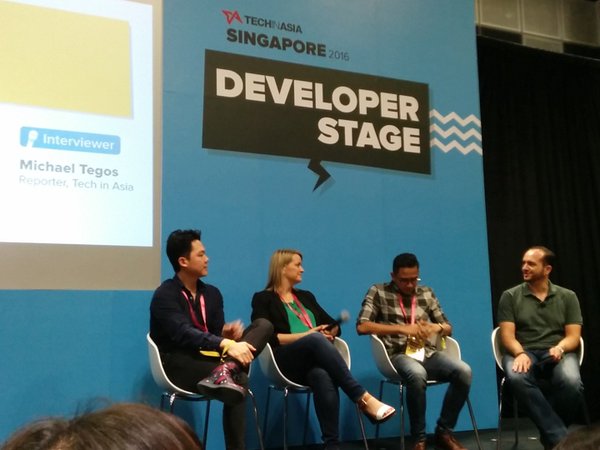
Speaking today at Tech in Asia Singapore 2016 were Kfit founder Joel Neoh, CTO Arzumy MD, and head of product Audra Pakalnyte.
Looking back at his journey and the decision to start Kfit, Joel indicated that one of the things that fascinated him was local commerce – sending “real customers to real businesses.” Joel, who previously headed APAC operations for Groupon, said he believed fitness was largely an untapped category in Asia and the challenge of building something greatly appealed to him.
“For a consumer to get into a gym, you had to subscribe for a year. At the same time the Classpass model was doing very well [in the US], it had just raised US$40 million and I thought it would work here,” added Joel.
So that’s really how it all started. Joel sensed an opportunity and decided to dive right in. He contacted his friends, convinced them to join the team, and got things up and running.
Culture trumps all
Kfit’s initial hiring philosophy was also just that: to hire people the founders liked. Invariably, more of their friends joined. “We never rushed to hire a team, we examined it very carefully to make sure there’s a culture fit,” added Audra.
One of the biggest problems faced by the founding team at the start of their journey was the lack of developers specializing in mobile. Almost the entirety of their dev team were people who had been trained to build on web exclusively. So the startup got creative: it worked with freelancers and contractors across the world to lay the foundations of the business.
“As a startup you work with what you have,” explained Arzumy.
For the first three months it functioned only as a web-based service. That’s despite the fact that rival Passport Asia (now out of the gym membership game) already had a mobile app out.
Kfit ultimately understood that it couldn’t just continue outsourcing. To build a true, scalable product, it had to engineer one in-house. And the philosophy was to get everyone on the team thinking about the product – consumer reaction, ease of use – in order to take ownership.
“It’s important to hire engineers who care about the product. There are so many things that can go wrong that you need to be constantly thinking. You can’t just follow orders, you have to think out of the box,” affirmed Arzumy.
More cash





Stay updated on the go with our mobile app.
Get latest insights with smoother, more personalized experience through TIA mobile app.