Daniel Tay · · 6 min read
Myanmar’s startups are on their own for now, but founders have hope
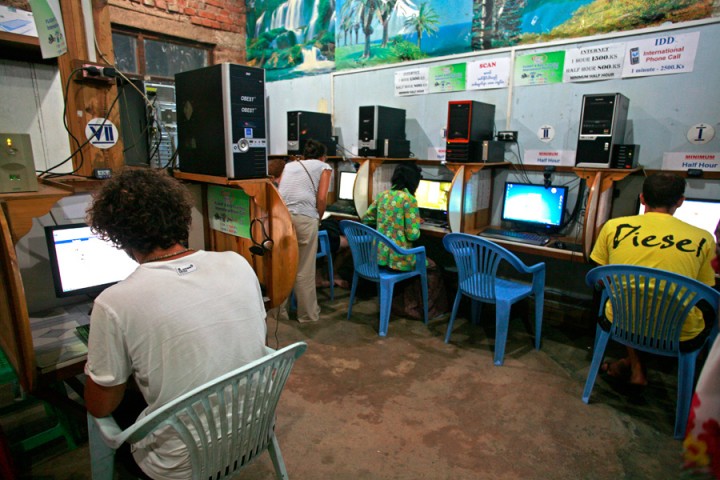
Sitting across the table from four budding Burmese entrepreneurs, it felt like any other meeting that I’ve had with startup founders. These guys were young, talented, and clearly passionate about what they were building.
The differences became stark, however, when the conversation turned towards the problems they faced in building their respective businesses. All of them bemoaned the unstable yet very expensive broadband internet connections they were using. The installation alone cost them nearly US$560 two years ago, and a 2Mbps line today requires a monthly fee of US$125 – extremely steep prices for a country with a per capita GDP of around US$1,105, one of the lowest in East Asia and the Pacific.
A couple of them also revealed that they had purchased backup power generators for those times when the electricity went out – which was often, especially during summer. The other two said they simply didn’t have the cash to do the same, and were resigned to putting up with recurring power failures.
Welcome to Myanmar.
According to these founders, interest in the country has been growing over the last three years, but remains little more than that – interest. Government support continues to be scant, angel investor and VC interest remains low, and infrastructure is still struggling to catch up to the rest of the world. It’s not an easy life for the business-minded Burmese.
Min Zeya Phyo, founder of development firm Code2Lab, sums the startup life in Myanmar as such: “It is not just about validating your startup idea, but also having to deal with the small details of day-to-day operations.”
Coming back home, building a legacy
Be that as it may, it’s clear that the Burmese have an insatiable appetite for entrepreneurship. When Tech in Asia ran our flagship Meetup event at Yangon last week, the room was full, and one entrepreneur remarked that almost every startup in the city was in attendance. Barcamp Yangon, a yearly technology-based conference, attracted a massive 6,400 participants in 2013, dwarfing every other Barcamp held in the region.
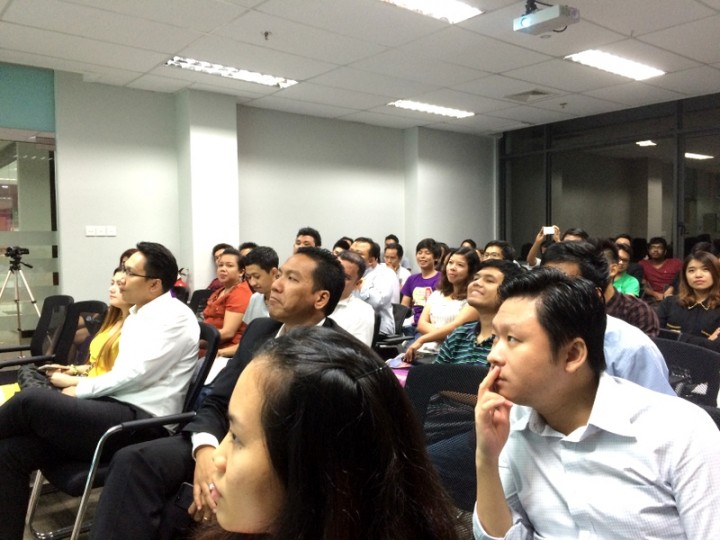
Many Burmese entrepreneurs at our Yangon Meetup, all eager to learn.
You have to wonder what keeps them going. In particular, the four local founders I met had all lived in Singapore for a period of time, and only recently returned to Myanmar to found their startups. Why choose to come back when Singapore is one of the best places in the world for business?
It might seem cheesy, but Wai Yan Lin, founder of online classifieds portal builder Rebbiz, tells Tech in Asia that it’s simply because Myanmar is home – and home is where the heart is. “When I was thinking of doing my own startup, Myanmar came into my mind first. This is the place where I was born and raised – I know the people and I know the culture,” he recalls. “I want to help my fellow countrymen do business more efficiently and easily with our technology and solutions.”
Another reason – one that many other foreign businesspeople share – is that there are so many opportunities ripe for the taking in Myanmar. “The opening of Myanmar [in 2012] is a once-in-a-life chance. With a 51 million large local population that is generally quite young, there is high potential for startups to make it big here,” Code2Lab’s Min explains. He points out that there is plenty of ‘blue ocean’ – or uncontested market space – locally.
He’s right on that point. Myanmar is currently bypassing an entire generation of personal computers and DVD players, and jumping straight into the future with tablets and smartphones. Already, Qatari telco Ooredoo and Norway’s Telenor have sniffed out the opportunities in the telecommunications sector, and are now battling for market share with ever-decreasing prices – which is good news for Burmese consumers.
Startups must rely on themselves
Myanmar isn’t ready – yet





Stay updated on the go with our mobile app.
Get latest insights with smoother, more personalized experience through TIA mobile app.