- Premium Content It takes our newsroom weeks - if not months - to investigate and produce stories for our premium content. You can’t find them anywhere else.
 Samreen Ahmad · · 5 min read
Curves ahead for IPO-bound Ola Electric
Bhavish Aggarwal, the founder of Indian electric vehicle manufacturer Ola Electric, is seen by some as “India’s Elon Musk.”
Apart from founding EV companies, both entrepreneurs have the ability to build businesses in completely different industries, be it in EVs or AI.
See also: ‘India’s Elon Musk’ is on a warpath
It was fitting, then, that Ola’s entry into the EV market in 2020 was built on the acquisition of Amsterdam-based Etergo, a company referred to as the “Tesla of the scooter world.”
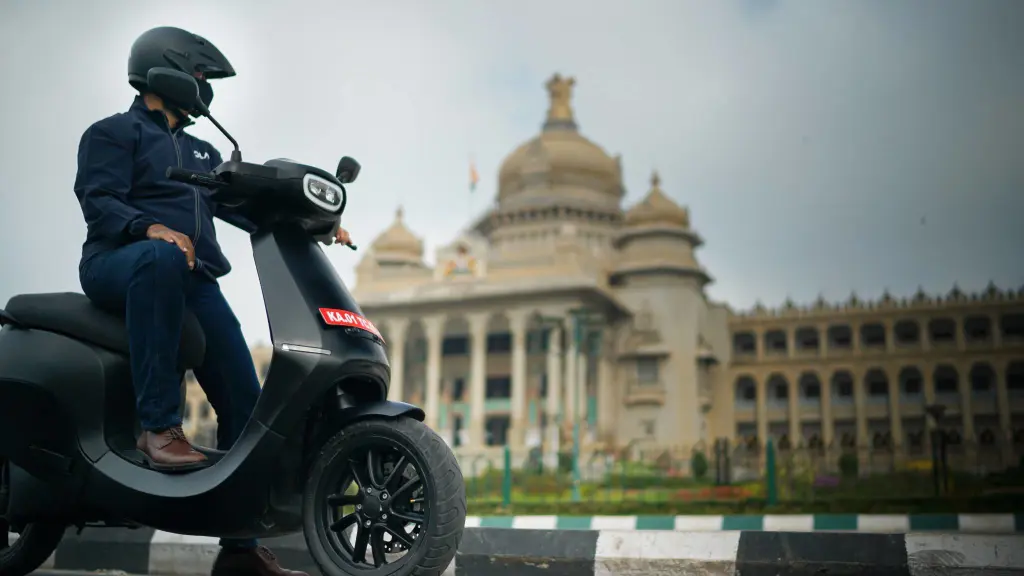
Ola Electric / Photo credit: Ola
Ola Electric is soon going to be a publicly traded company, much like Tesla. In its IPO, which is going live on August 9, the Indian EV firm is expected to raise over US$700 million.
However, the valuation of the company – at US$4 billion – marked a significant drop from the company’s US$5.4 billion valuation during its September 2023 funding round.
According to Aggarwal, the cut was done to make the public offering accessible and attractive to a wider range of investors.
Here are Tech in Asia’s key takeaways after reviewing the firm’s IPO document.
True market leadership or smoke and mirrors?
Ola Electric is banking on a home-field advantage. India is the world’s second-biggest market by domestic sales volumes of two-wheelers, even as the penetration of e-bikes remains low.
Of course, there is room for improvement: Government incentives for EV production and tax breaks should help to increase the adoption of EVs.
Within the country’s two-wheeler EV space, Ola is the market leader with a share of around 35% in Q4 of FYE 2024.
It has maintained its leadership in the two-wheeler EV market for three consecutive years, even as legacy players – such as TVS Motor, Bajaj Auto, and Hero MotoCorp – compete in the same field.
Reports have indicated, however, that Ola Electric sold some of its vehicles to its parent company ANI Technologies, which has been doing business as Ola Cabs. This could have allegedly helped the EV firm bump up its sales figures.
Bottom line is up
Flexing in-house muscle
Overseas expansion
Stay ahead in Asia’s tech landscape
This is premium content. Subscribe to read the full story.
Ola Electric may be hard-pressed to keep its market leadership as legacy players continue to target the two-wheeler EV market.
We know this is not ideal. ⌛ Sign up in 20 seconds. Cancel anytime.
Our subscriber community includes professionals from these companies:





Stay updated on the go with our mobile app.
Get latest insights with smoother, more personalized experience through TIA mobile app.