Miguel Cordon · · 6 min read
AI cities are coming. So are the attacks
Welcome to The Prompt, your Monday dive into the world of AI that puts Asia front and center. From Big Tech’s power players to the region’s scrappy disruptors, we cover it all. Want full access to all our AI reporting? Subscribe to us here.
Hello reader,
One of the early promises of AI was simple: automate the routines of daily life and, in doing so, return time to the people living it. That ambition now helps underpin projects like India’s planned US$650 million AI city in Bengaluru, which my colleague Samreen dives into in this edition’s top AI story from our desk.
But as that vision edges closer to reality, the trade-offs are becoming harder to ignore. Handing over more of the physical world to machines carries risks, ones that grow more pronounced as AI agents become more capable and less predictable.
Take Mythos, for example. Anthropic’s new model has the capacity to be an elite cybersecurity researcher, matching the capabilities of multiple human experts.
Mythos uncovered over 2,000 unknown software vulnerabilities in seven weeks. It’s so capable at finding these exploits that Anthropic deemed it too dangerous for public release, restricting it to trusted partners. But even those guardrails failed. This week, unauthorized third-party users hijacked access to Mythos.
If the world’s most advanced security AI can’t even be kept safe behind closed doors, what hope do we have for consumer-grade systems?
And if malicious actors can breach a top-tier model, the implications extend further still. The prospect of an entire city’s AI backbone being compromised no longer feels remote, particularly as modern cities are already strained by climate pressures, congestion, and population growth.

Image credit: Made by Tech in Asia with the help of AI
Risks aside, the AI race is only getting wilder by the day. DeepSeek launched the V4 foundation model, and OpenAI dropped GPT-5.5 and a new ChatGPT image model all within the past week.
Naturally, our in-house designer had to play with OpenAI’s ChatGPT Images 2.0 to get a feel for the hype, you can see the result in this week’s featured illustration.
Picture a control room where humans and machines work side by side to keep an AI city from spiraling under attack. Want in?
Miguel Cordon, journalist
TOP AI READS FROM OUR DESK
1️⃣ Inside India’s $650m AI city bet
The 500,000-square-foot facility offers 400 Gbps connectivity to four major AI clouds and plans to power future phases using a hybrid solar and nuclear microreactor model.
By 2030, the project aims to host 25,000 researchers and thousands of humanoid robots. The project, which is collaborating with Nvidia, has already attracted 25 startups and is looking to be the playbook for regions like Southeast Asia and West Asia.
With this project, India is looking to create the world’s first physical lab for agentic AI, testing the waters on whether autonomous systems can actually manage daily tasks for humans and if the money behind AI-powered life management is worth it.
2️⃣ Why Singapore family offices are missing out on the AI gold rush
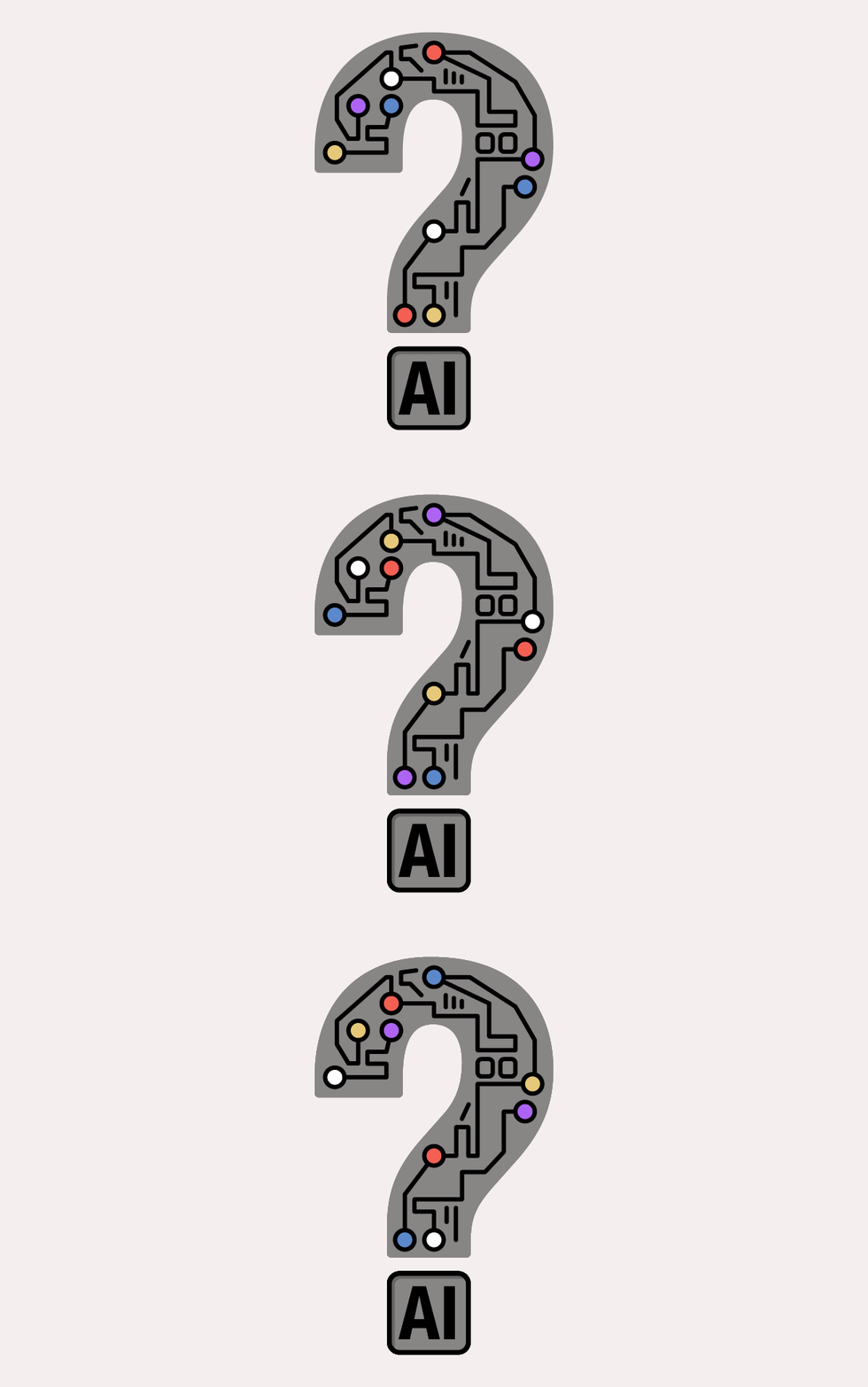
Image credit: Timmy Loen
A survey of 25 Singapore family offices shows that while 96% use AI tools for operations, none of them are currently investing in the technology.
Of course, access to the top players like OpenAI and SpaceX remains relationship-driven, often locking out even the wealthiest Asian investors.
Still, VCs like Scale Asia and Mesh Ventures are serving as a bridge, connecting these family offices to startups. And with these family offices having deep pockets, there may be a rise of a new class of specialized VC bridges.
WHAT WE THINK
1️⃣ OpenAI’s on a roll with launches”

Image generated using Image 2.0 / Photo credit: OpenAI
While competitors like Google’s Imagen 3 and Nano Banana 2 boast impressive photorealism, OpenAI’s push into accurate multilingual text rendering can help it capture more global markets.
Meanwhile, as Anthropic takes its time with the rollout of Mythos, OpenAI is striking while the iron is hot with GPT-5.5. The ChatGPT maker’s newest model scored 82.7% on the Terminal-Bench 2.0 assessment – which evaluates how well AI can do work in a command-line environment – narrowly surpassing Mythos Preview’s 82.0%.
But the glue that holds OpenAI’s launches together is its super-app play. The company’s co-founder and president, Greg Brockman, even claimed that the GPT-5.5 launch brings it closer to creating this all-in-one platform.
With these new products slated to be accessible on a single platform, it creates an attractive package for businesses to strongly consider.
2️⃣ Legitimacy has to beat hype in AI reporting
There were good intentions, presumably, behind The New York Times’ profile of Medvi. It’s a scrappy healthtech firm that was said to be targeting US$1.8 billion in sales, powered by only two people on payroll – its founder and his brother.
But while the billion-dollar target might have been true, the rose-tinted glasses still have to come off.
The profile glossed over the fact that Medvi had been served a warning letter from the US Food and Drug Administration over its use of misleading marketing claims tied to its core GLP-1 products.
It was also reported that Medvi had used an army of fake doctor profiles on social media to help peddle its products more. This was also not mentioned in the NYT piece.
Of course, the realization of Sam Altman’s one-person unicorn dream would certainly bring in the clicks, deceit shouldn’t be part of the story. But it did succeed in getting more eyes on Medvi, though in a negative way.
STANDOUT AI DEALS
1️⃣ SpaceX eyes $60b deal for AI coding startup Cursor
SpaceX’s deal to acquire the AI coding platform could be its answer to the advantages that OpenAI and Anthropic have in the developer tools space.
The hefty price tag also makes sense, as a JetBrains report recently found that Cursor’s use in the workspace matched that of Anthropic’s Claude Code as of January this year.
The deal amount can also signal that AI-assisted software development has become a highly lucrative market, with Elon Musk willing to place an 11-digit dollar bet on it.
2️⃣ US AI startup NeoCognition exits stealth with $40m seed
A US$40 million seed round is large. It’s not topping charts, but it is still significant. It shows that there’s a demand for AI systems that can continue to learn on their own and hone in on a specific expertise.
Ultimately, if NeoCognition successfully enables AI to autonomously build without the need for much supervision and manual training, it could eliminate the need for expensive model customization and accelerate enterprise AI adoption.
3️⃣ Chinese robotics firm Pudu raises $150m
The deal, which boosts the company’s valuation to over US$1.5 billion, signals confidence in the commercial use of robotics.
Backing this confidence up is Pudu’s plan to deepen its global presence. As of this funding round, it has deployed more than 120,000 units worldwide across 80 countries and regions.
WHAT’S BUZZING
1️⃣ “The experimental phase is behind us,” said Google Cloud chief Thomas Kurian during this year’s Google cloud conference.
At the event, Google set AI agents at the center of its strategy to monetize its investments in the space. But Kurian followed this quote, saying the real challenge – actually landing enterprise deals – begins.
With the recent developments around Mythos and GPT-5.5, it’s going to be an uphill battle for Google.
2️⃣ “The AI revolution has begun,” Reese Witherspoon wrote on the caption of an Instagram video.
The actress drew mixed reactions from her followers with the video. In the polarizing post, she urged women to explore the use of and learn more about AI, as she says that the jobs they hold now are “3x more likely to be automated by AI.”
I think encouraging people to adapt early is practical advice, but hearing it from a person who’s built a career in the realm of the arts does leave a bad taste in someone’s mouth.
Catch up on past issues of the newsletter here. In the meantime, if you have any feedback or ideas, feel free to get in touch with Huong, our managing editor, at huong@techinasia.com.
Editing by Thu Huong Le and Jaclyn Tiu
(And yes, we’re serious about ethics and transparency. More information here.)



📅 Upcoming Events
30-31 March 2027
Upskill Fest