 Samantha Cheh · · 5 min read
Crowdsourcing tech solutions to drive industry-wide innovation

For businesses, it’s no longer enough to put “implement digital solutions” on their to-do list. The reality is, they should already be in the midst of implementation and scaling, or they risk getting left behind by their competitors. It’s a difficult task, especially for large, established companies.
That said, the vast number of solutions out there can be overwhelming. Over the last 15 years, the global digital economy has exploded: It’s now valued at US$11.5 trillion and growing 2.5 times faster than the entire world’s gross domestic product. Accompanying this growth is the expansion of the IT services industry, with spending on IT services, infrastructure, and software projected to rise by 3.7% in 2020.
How can businesses sort through all of these options to find solutions that actually work for their unique challenges?
Opening the gates
This was a real dilemma faced by Japanese insurance firm Sompo, which is in the process of digitally transforming its international business. “We’re not looking for technologies for the sake of technology. [Instead, we’re seeking] technologies that can activate our digital culture,” says Patrick Chin, the company’s head of digital and branding for Asia Pacific.
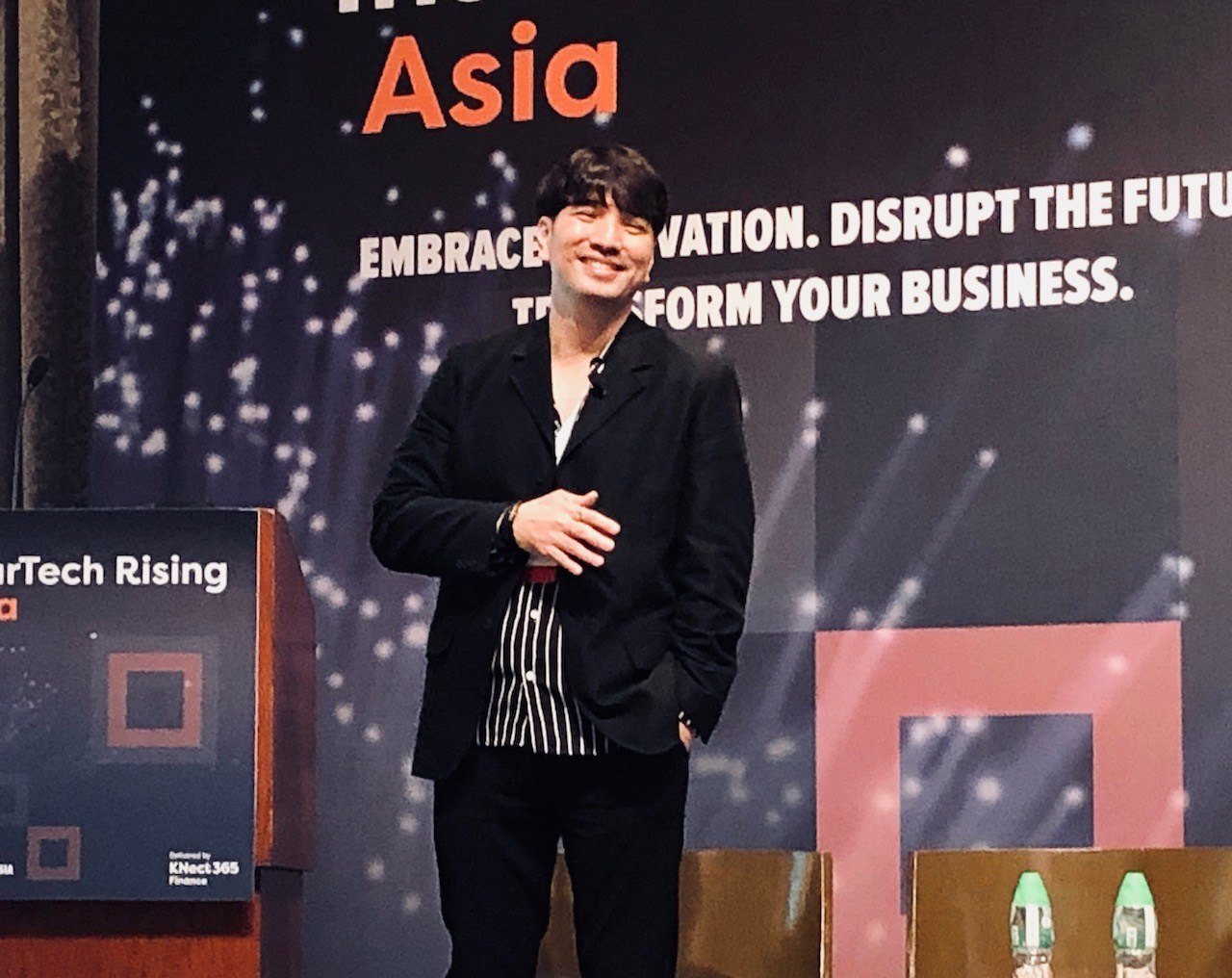
Patrick Chin, Sompo’s head of digital and branding for Asia Pacific / Photo credit: Sompo
The firm decided to seek outside help for a solution and landed on the Open Innovation Platform (OIP).
A brainchild of Singapore’s Infocomm Media Development Authority (IMDA), the program aims to accelerate digital innovation by serving as a platform that matches problems with tech solutions.
While most multinational corporations (MNCs) are likely unfamiliar with turning to crowdsourcing for help, there are benefits in doing so. With the platform, a company that wants to pursue cutting-edge technologies but lacks the resources can find a fix that’s both effective and tailored to its problem.
Many of the entities offering their solutions on OIP are also quick, agile, and ambitious startups.
“They are quite hungry to try new things and are quite flexible,” says Chin, sharing Sompo’s experience with the platform.
“In insurtech, we already have a lot of solutions that are coming to us, but they are sometimes too expensive, not scalable, or may not be in line with best practices. We wanted to explore different technology solutions that make a business impact,” he adds.
Solving for specifics
According to Chin, Sompo’s digitization strategy had two big stumbling blocks: general insurance remains a largely traditional and paper-based industry and many countries under his purview have diverse digital needs. The OIP presented an opportunity to address a number of these issues simultaneously, so the team submitted four entries for the problems it faced in three markets: Singapore, Malaysia, and Thailand.
Each country had its own challenges, Chin explained. In Malaysia, the company wanted a more efficient way to issue quotations to customers. With the OIP’s assistance, Sompo connected with a problem solver to create a system that quickly and accurately generates and delivers quotations.
In Singapore, on the other hand, the company wanted to improve its call centers’ efficiency, which receive an average of 30,000 calls a year. The solution: AI-powered chatbots. “It’s another way of talking to our customers as and when they need it,” Chin says.
Through the OIP, Sompo partnered with enterprise tech startup Zumata. The Singapore-based firm was able to quickly build a prototype and got generally positive results, says Chin. Plans are already underway to launch the chatbot in Sompo’s other markets.
Not just for one
It’s one thing to solve issues for the digital needs of businesses, but what about organizations like trade associations and councils whose mandates cut across the bounds of a single company? IMDA made sure its platform could cater to this market as well, creating a new category for sector-wide challenges. It aims to help find solutions that have the potential to be scaled across and benefit entire industries.
One of the OIP’s problem-owner partners is the Singapore Manufacturing Federation (SMF), a trade association and chamber which represents more than 3,000 member manufacturing companies, consisting of small and medium-sized enterprises as well as MNCs and affiliate members.
“We want to become a manufacturing sector that leverages technology to address a lot of old, labor-intensive types of problems,” says Nicholas Ngoh, the director of corporate and council affairs at SMF. Labor and resource limitations and human error are just some examples of such legacy challenges.

Nicholas Ngoh, director of corporate and council affairs at Singapore Manufacturing Federation / Photo credit: SMF
To overcome these obstacles, the federation, with help from the OIP, is developing a manufacturing-as-a-service (MaaS) platform. The MaaS would be designed to match factories’ spare capacities with small or nascent businesses that are interested in testing out new products but are hampered by inadequate resources. “If you are a new business owner, you don’t have to start your own factory,” Ngoh explains. Instead, they can log into the MaaS portal and search for factories with the available capacity.
The tie-up also gave SMF an opportunity to learn about the diversity of available solutions.
“By going through the open-source kind of market place, you never know what may turn up,” Ngoh says.
Supporting the movement
With both Sompo and SMF, IMDA provides support and plays the parts of advisor and liaison. This is especially crucial when legacy companies are trying out digital prototypes, and IMDA provides guided assistance and support throughout the entire innovation process.
“At this point, the tech market is quite diverse, so it really depends on track record, which is really what we are looking for,” Ngoh says. “[The OIP] is kind of a semi-regulated environment because it’s got the IMDA behind it, we have confidence.”
He adds that the agency assisted with everything from drafting the problem statement and creating the presentations with the problem solvers, as well as collating and managing responses. “IMDA was brilliant at making it a pain-free journey and just leaving it to us to make the decisions that mattered,” shares Ngoh.
Chin echoes the sentiment. “For us to do a transformation is not easy. When there are other motivators like IMDA or the OIP program that can help us along the way, it allows me to engage better with my internal stakeholders.”
IMDA’s Open Innovation Platform provides tech startups with the opportunity to work with large enterprises and have their solutions adopted on a sector-wide scale, while problem owners can find tailored tech-based solutions to the issues they face. Find out more on the OIP’s website.
Stay updated on the go with our mobile app.
Get latest insights with smoother, more personalized experience through TIA mobile app.
Recommended reads
 Southeast Asia pulls ahead of global average on AI adoption
 Engineering the future of banking across ASEAN
 Gen Z Harvard dropout builds AI platform for architects
 Sarvam is here, but will India’s startups use it?
 Freeze headcount until AI becomes the true production line
 The self-driving truck problem is no longer about software
 Asia’s AI divide: Creators vs. experimenters
 A middleman model makes free patient tracking possible
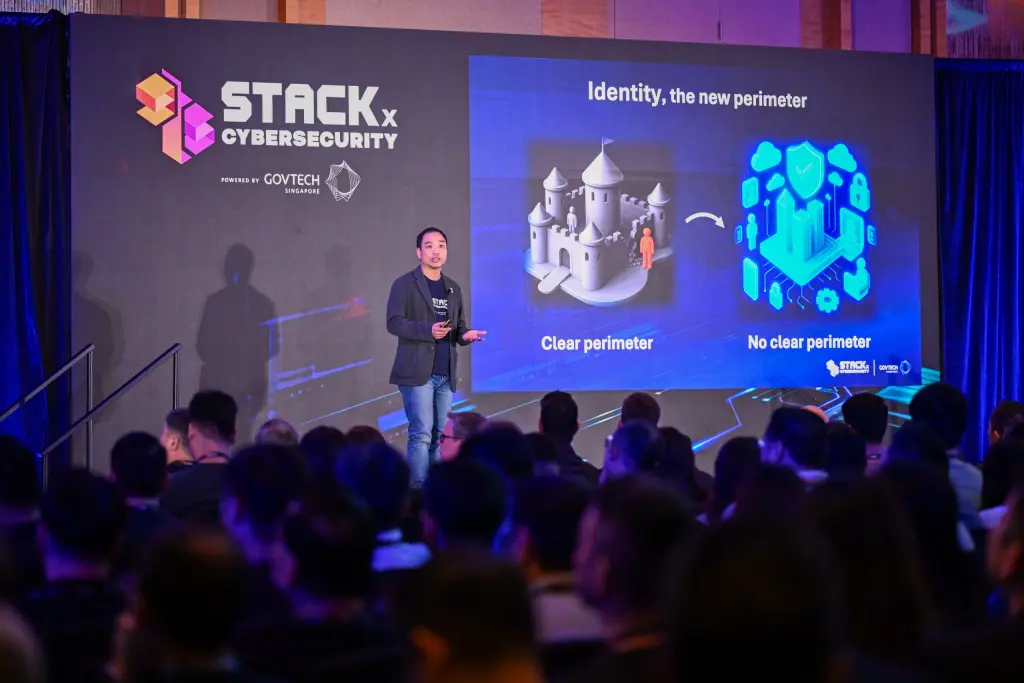 QuickBytes: How GovTech Singapore is fighting fire with fire in cybersecurity
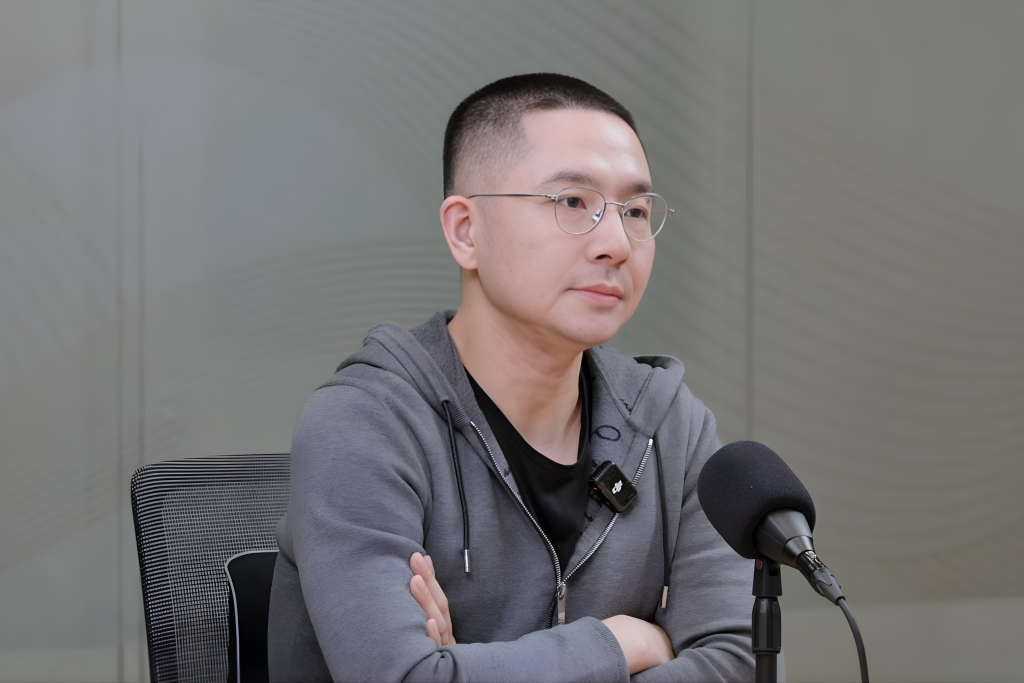 Will cars drive the future of AI? This Chinese company thinks so





Editing by Winston Zhang, Jaclyn Teng, and Eileen C. Ang
(And yes, we’re serious about ethics and transparency. More information here.)




📅 Upcoming Events
22 October 2026
Payoneer x CSPN Summit 2026