Eric Ng · · 4 min read
Hong Kong-based AI healthtech startup opens up resources to global drug firms for free
Insilico Medicine, a Hong Kong-based startup, has partially opened up its database of drug compounds to global pharmaceutical companies, hoping to find a cure quickly for the deadly Covid-19 disease.
The five-year-old AI software developer last week published on its website the molecular structure of several hundred chemical compounds, which are designed to work on a key “target” of the 2019-nCoV. It is now seeking feedback from medicinal chemists, and aims to synthesize and test up to 100 of them with partners.
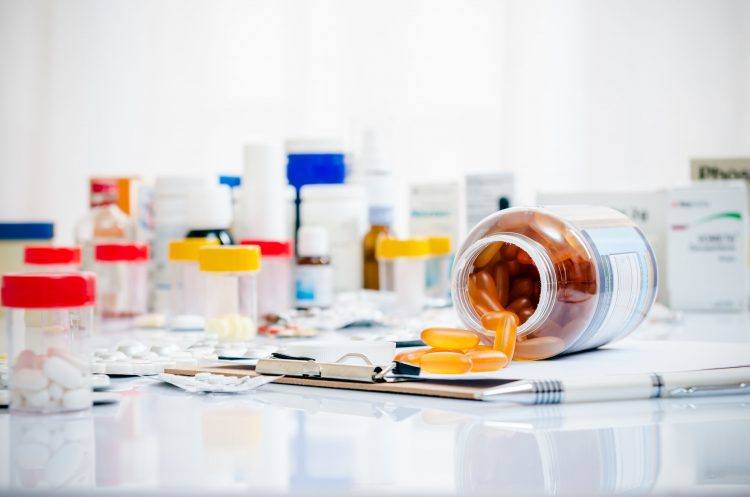
Photo credit: Karuna EM / 123RF
“In the short term, repurposing existing molecules [drugs] originally developed for other diseases such as HIV is the right strategy since their safety profile is already known,” said Alex Zhavoronkov, co-founder and CEO.
“But those might not be the most ideal since they are designed for something else,” he added. “Our approach is more long term, aiming for a dedicated molecule for that virus. When people learn to trust our algorithm, they will be willing to put resources on the molecules’ synthesis and tests.”
Since the highly infectious Covid-19 caught the world by surprise in January, anti-HIV, influenza drugs, and even herbal Chinese medicines have been touted as potential cures. The number of infected coronavirus cases had reached more than 69,000 and claimed more than 1,660 lives, mostly in mainland China.
Zhavoronkov it will take at least a year for an effective vaccine to be found, while it could take longer to develop drugs, even if their development is fast-tracked.
For drugs, two tracks are being pursued, antibodies derived from organisms and small molecules, the company said. The small molecules or drug compounds taken in the form of pills work by slowing the replication of a virus. And developing a new drug could take years.
Zhavoronkov, who has a doctorate in physics and a master’s degree in biotechnology, said by opening up its resources, Insilico wants to show that the algorithms it has developed can design drug compounds quickly for the next epidemic or for the current one if it persists.
It took the company four days to generate the chemical compounds which, he believes, are “not distinguishable from those designed by experienced medicinal chemists” who would require much more time.
By developing AI “imagination” and “deep reinforcement learning” capabilities, Insilico’s 85 data scientists – most of them winners of AI problem-solving competitions – in eight countries have generated new drug compounds not already known to chemists.
The four-day exercise involves using the cloud-computing power of internet giant Amazon and its own data centers in the US and Taiwan.
It plans to synthesize and test between five and 10 of the drug compounds on its own. It can cost anywhere from US$2,000 to tens of thousands of US dollars to synthesize one, and US$10,000 to US$15,000 to conduct laboratory tests on each, he said.
Zhavoronkov expects some non-profit research institutes to join the research and development effort this month, including University of Toronto. The Canadian university’s AI and quantum computing scientist Alán Aspuru-Guzik will be taking part in the study.





Stay updated on the go with our mobile app.
Get latest insights with smoother, more personalized experience through TIA mobile app.