- Insights This article was written by a TIA community member. Insights pieces undergo the same rigorous editorial process that newsroom-produced articles have.
 Benedict Leong · · 5 min read
How things will look for Southeast Asian ecommerce post-Brexit
Uncertainty’s been looming since the UK voted to leave the European Union (EU) in 2016. And UK Prime Minister Theresa May now faces a huge challenge: negotiating a deal that will satisfy both the UK Parliament and the EU before March 29, 2019.
While many want to avoid a no-deal or “hard” Brexit, such a possibility seems increasingly likely. But what would it mean for ecommerce trade? And considering the far-reaching consequences of Brexit, how would Southeast Asia be affected?
Risks and potential problems to trade and ecommerce
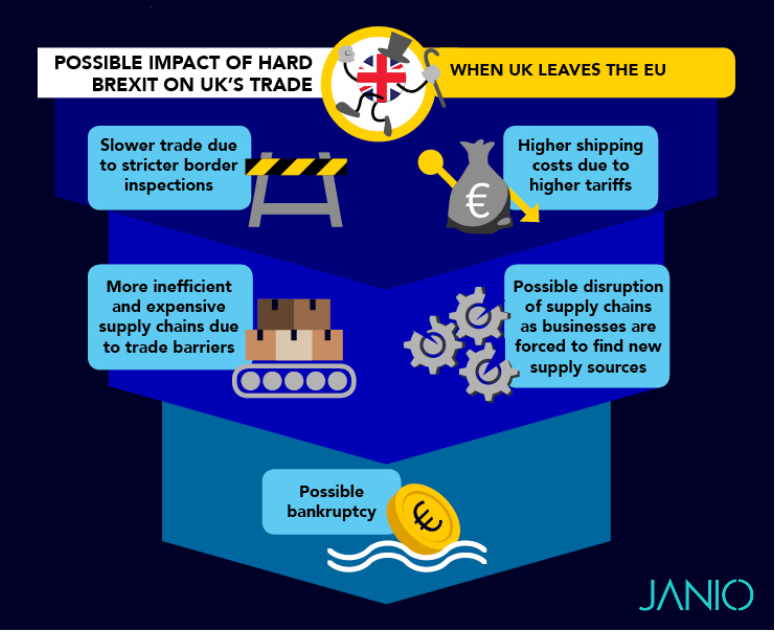
A hard Brexit could result in the UK no longer being able to enjoy the European Single Market’s trade benefits. This would cause stricter border controls, slower cross-border shipments, higher tariffs, and increased operating costs for companies with operations in the UK and the EU.
Businesses like cross-border ecommerce merchants, which rely heavily on frictionless supply chains between these two areas, could be particularly affected.
For instance, sellers in the UK can no longer benefit from rules on distance selling. These rules simplify EU tax regulation by allowing ecommerce merchants based in EU countries to sell to other EU countries without registering for value-added tax (VAT) in those countries, as long as sales in the target country don’t exceed a certain value.
Many ecommerce merchants in the UK would have to register for VAT in at least one of their target EU countries if they continue to sell from the UK. Alternatively, they’d need to set up a logistics distribution hub in an EU country. Both these moves are costly and inconvenient for UK merchants.
The Brexit referendum was also followed by the most severe devaluation of the pound sterling in three decades. This devaluation makes UK imports more expensive, which will negatively affect foreign ecommerce merchants who sell to the UK. In addition, the cheaper sterling makes British exports cheaper, stimulating demand for exports.
However, not all foreign imports have suitable domestic versions, so they still need to be imported. This could lead to higher costs of living and increased manufacturing costs. EU citizens would see a similar impact when it comes to some of the goods that the EU imports from the UK. In an effort to avoid some of these issues, both parties are searching for new long-term trading partners.
In summary, a hard Brexit would mean slower and more expensive UK-EU trade because of increased trade barriers and higher tariffs. This leads to costlier and possibly disrupted supply chains from the UK to the EU. On the other hand, the need for the UK to find trade partners beyond the EU could lead to higher UK trade with the rest of the world, such as Southeast Asia.
Long-term opportunities for Southeast Asia
The ASEAN is seen as an up-and-coming regional economy, with both the EU and the UK looking to trade more with it. With ASEAN member countries located along major trade routes near the South China Sea, it’s considered a hub in the movement of international goods. In addition, it’s also perceived as the next frontier for ecommerce boom.
However, the benefits of building trade relations with the ASEAN will take some time to bear fruit. The UK and the EU are still highly dependent on each other in the short run, and these trade agreements could take time to develop. The UK’s plan still sends a strong signal that it wants to trade more with markets other than the EU in the long term, though.
UK strengthening trade ties with the ASEAN
To rely less on the EU, the UK is developing a more global business-friendly economic plan. This includes lowering corporate tax rates, increasing support for the UK’s exporting businesses, and connecting more with businesses overseas, among other initiatives.
Regional plans to expand ecommerce capabilities
So what does this mean?





Stay updated on the go with our mobile app.
Get latest insights with smoother, more personalized experience through TIA mobile app.