Steven Millward · · 2 min read
Baidu revamps its ‘Siri’ so that it helps you order stuff online
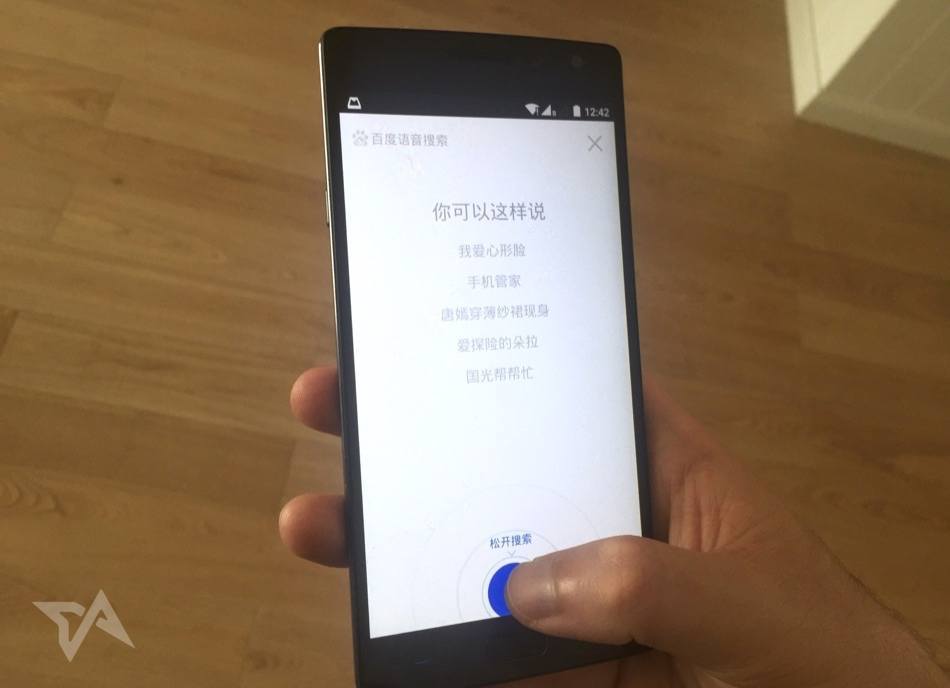
Baidu’s revamped voice assistant, Du Secretary, pictured in action today.
At Baidu’s annual corporate conference in Beijing today, the company showed off a radically upgraded version of its Siri-esque mobile voice assistant. Rather than just telling you simple stuff like the weather, the revamped Baidu digital assistant will help users in China order takeout or buy movie tickets.
In the near future, the company says it will expand to include more local on-demand things like ride hailing, designated driver services, housekeeping, manicure and pedicure, and healthcare.
Robin Li, Baidu’s founder and CEO, demoed the new artificial intelligence-powered assistant – called Duer in China, which translates to Du Secretary – by emphasizing the integration with on-demand local services in the updated Baidu Mobile app.
The new Du Secretary replaces the old voice assistant program that Baidu launched in late 2012, shortly after Siri and Google Now.
“This is a quantum leap, with its ability to integrate all sorts of different service verticals all from one dialogue-based, intelligent, speech-activated system,” Kaiser Kuo, Baidu’s director of international communications, tells Tech in Asia.
AI meets O2O
Baidu’s revamped voice assistant is the latest product from the search engine company that focuses on AI. Baidu’s AI division is headed by Stanford researcher Andrew Ng and focuses on “deep learning” – how computers could learn for themselves by processing data.
Baidu describes its new Siri as going “beyond simply indexing information, and beyond indexing services in the real world, to actually facilitating conversational interaction and providing a multitude of life services with the convenience of a personal assistant.” All that means is millions of dollars of clever AI tech is going into helping humans be even more lazy when it comes to ordering pizza.
The on-demand services and online-to-offline (O2O) aspects of Du Secretary are no coincidence. Baidu is currently expanding and investing in its Baidu Takeout Delivery and Nuomi daily deals sites as the company seeks to make up for its ecommerce failures by jumping on the new wave of local O2O services.
See: O2Overload: the past, present, and future of China’s on-demand explosion
Editing by Judith Balea
(And yes, we’re serious about ethics and transparency. More information here.)





Stay updated on the go with our mobile app.
Get latest insights with smoother, more personalized experience through TIA mobile app.