 Peter Cowan · · 6 min read
Will countries keep their climate commitments this new year?
Welcome to The Offset! Delivered once a month via email and through the Tech in Asia website, this free newsletter breaks down the biggest stories and trends in greentech. Get it in your email inbox by registering here.
Hey there,
It’s a new year and for many of us, that means New Year’s resolutions. These are normally written off as a bit corny, but for me, they’re only corny if you fail to follow through.
You could look at some of the pledges from the recently concluded COP28 as resolutions for the world. Except it would be more than corny if we failed to follow through on them.
Today’s deep read takes a look at the concrete action countries and companies have agreed to take on climate change, with some detail on how tech can help them get there.
— Peter
THE BIG STORY
Wastewater recycling can be greener, cheaper with this Singapore firm’s solutions

Traditional wastewater treatment / Photo credit: DedMityay / Shutterstock
Waste not, want not, especially when it comes to water. Unfortunately, treating wastewater isn’t as simple as spitting out a pithy phrase, and the process can produce additional waste and use a lot of energy.
Hydropleap, a Singapore-based greentech startup, reckons it can build a profitable wastewater recycling business by offering companies solutions that require less energy and don’t use the chemicals that produce additional waste.
DEEP READ
COP28: the new climate commitments that really count

Image credit: Timmy Loen
December saw the conclusion of the COP28 conference in Dubai, and most of the focus was on an agreement to shift away from fossil fuels. However, some more specific pledges mentioning tangible actions are worth diving into. This Financial Times story looks at three of them.
First, while the world’s biggest oil companies did not agree to ramp down production, they did concede to reducing emissions from their own businesses. For example, 50 of the world’s top oil producers agreed to vastly cut down on leaks of methane from their operations.
New tech makes it easier to find where methane leaks are coming from, so the proof will be in the pudding.
In addition, over 120 countries agreed to triple the world’s renewable energy capacity by 2030. While an ambitious target, solar and wind still being very cheap sources of power gives hope.
China looks to be on track to hit the goal, but Japan, India, and Indonesia – among other countries – have more to do.
Finally, boosting energy efficiency was another key pledge. Continued adoption of electric vehicles can help this goal as they are considerably more efficient than their traditional counterparts. The International Energy Agency also said that more countries should follow India’s lead in heavy industry policies to boost energy efficiency.
TRENDING NEWS
Also check out Tech in Asia’s coverage of Asia’s ecommerce scene here.
1️⃣ Climate scientists hail 2023 as ‘beginning of the end’ for fossil fuel era
An increasing number of climate scientists believe 2023 may go down as the year that global carbon emissions peaked, heralding the decline of the fossil fuel era. However, scientists have warned that trends like EVs and renewable energy would have to continue for emissions to begin falling.
Why it matters:
Emissions decline would be a vital milestone in the race to reach net zero. Reaching this tipping point would also further justify the move toward EVs and other climate-friendly tech.
Fund managers and analysts believe demand for climate-sustainable finance products in China and Asia Pacific will remain high in 2024 despite increased interest rates. Firms that plan to lower their emissions and invest in greentech will be attractive investments.
Why it matters:
One study estimated that Asia Pacific needs to invest US$71 trillion to hit net-zero emissions by 2050, so continuing to be an attractive investment destination is vital.
3️⃣ The small and affordable EVs we lost in 2023
Fancy snapping up an EV that’s smaller and more affordable than Tesla’s Cybertruck? You may be out of luck, as this round-up piece looks at the small-sized EVs that were discontinued in 2023, including the Honda e.

The now discontinued Honda e / Photo credit: VanderWolf Images / Shutterstock
Why it matters:
If EVs are going to replace combustion engine vehicles altogether, consumers who don’t want (or can’t afford) massive SUVs must also be catered for.
4️⃣ Danish offshore wind farm installer targets push into Asia
Cadeler A/S, the world’s biggest offshore wind installation company, is planning to expand into Asia. The offshore wind industry suffered a tough 2023 due to canceled and delayed projects, particularly in the US and UK, but rapid growth is predicted in Asia.
Why it matters:
More green energy for a region that’s still largely dependent on fossil fuels can only be a good thing – as long as the projects in this part of the world can avoid the stumbles of those in the West.
5️⃣ Weak trading in carbon credits blunts world decarbonization drive
Carbon credit futures are down 90% from their peak, casting doubt on the financial instrument’s ability to play a role in decarbonization. Air travel firms and other major buyers of carbon credits have begun to shun them.
Why it matters:
Valid and difficult questions have been raised about the true environmental impact of carbon credits. Perhaps it wouldn’t be the worst thing if companies were unable to simply buy their green credentials.
STARTUP WATCH
1️⃣ India’s BluSmart raises $24m to develop large-scale EV charging hubs
BluSmart Mobility, which leases EVs and provides charging services, has raised US$24 million in a new funding round. The Indian startup previously secured US$42 million in May 2023.
2️⃣ Singapore’s EDP Renewables APAC secures $95m from parent firm
Solar energy supplier EDP Renewables APAC has received US$95 million in new capital. The Singapore-based firm builds and maintains solar photovoltaic systems.
3️⃣ Malaysia agritech startup Qarbotech lands US$700k seed funding
Qarbotech provides farmers with photosynthesis enhancement tech to increase crop yields and reduce their environmental impact. The Malaysia-based firm has received US$700,000 in seed funding and grants, with the round led by 500 Global.
4️⃣ Battery recycler BatX Energies raises $5m in pre-series A
Lithium-ion battery recycler BatX Energies has secured US$5 million in a pre-series A round led by Zephyr Peacock. The Indian firm has recycled 220 million batteries so far.
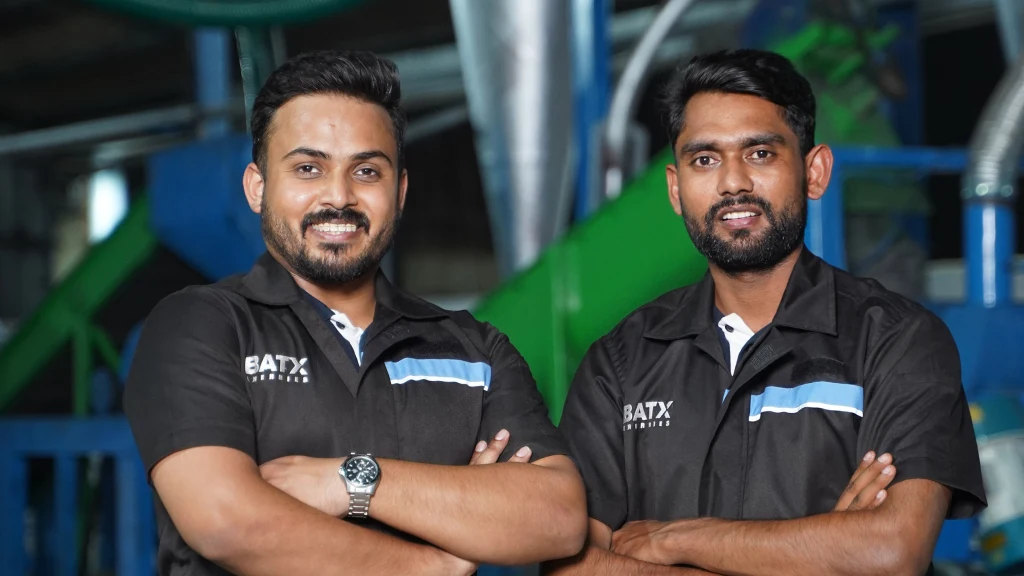
BatX Energies co-founders Utkarsh Singh (left) and Vikrant Singh / Photo credit: BatX Energies
5️⃣ UAE’s Zeroe raises $2.2m seed round
Indonesian investor Owen Rahadiyan led a US$2.2 million seed round in cleantech firm Zeroe. The United Arab Emirates-based startup provides enterprises with an AI-powered carbon management platform to help them reduce emissions.
That’s it for this edition – we hope you liked it! Do subscribe to continue receiving The Offset.
See you next month!
The Offset is made possible thanks to Taiwan Mobile.
It earned the best telco title in the Global Views CSR Awards.
Taiwan Mobile is on a mission to transit to 100% green energy by 2040. For more information, you can read the company’s 2022 ESG report here.
Stay updated on the go with our mobile app.
Get latest insights with smoother, more personalized experience through TIA mobile app.
Recommended reads
 Indonesian AI startup goes global
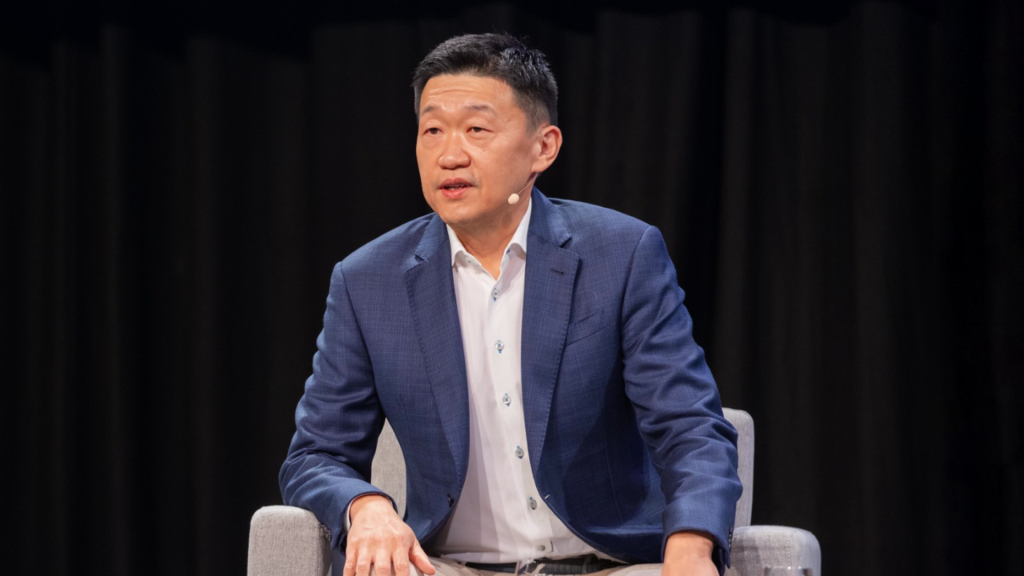 Forrest Li on scaling Sea, building smarter bots, and founder grit
 An AI assistant that joins sales calls and scores team skills
 SGX’s CEO says it doesn’t need a unicorn to win
 SMEs want AI too, but not the kind Big Tech is selling
 Oatside’s alt-milk rise hits a profitable gear
 Alibaba’s financial health in 12 charts
 Asia’s telcos bundle AI into mobile plans. Will it pay off?
 M-Daq chases bigger clients as revenue falls, losses grow
 VC tracker: Accel raises US$3.5b, including US$550m for India





Editing by Collin Furtado and Lorenzo Kyle Subido
(And yes, we’re serious about ethics and transparency. More information here.)




