- Premium Content It takes our newsroom weeks - if not months - to investigate and produce stories for our premium content. You can’t find them anywhere else.
 Elyssa Lopez · · 8 min read
Consumer apps in PH draw fire for betting on online gaming
It all began with a message from a job recruiter on Telegram.
Cairo (not his real name), a Filipino undergraduate student, was offered remote work promising US$10 daily, but he had to pay “processing fees” to get his earnings. After sending 13,500 pesos (US$237) as payment, he never heard back from the recruiter.
Panicked, he turned to a gambling game on GCash – the Philippines’ leading e-wallet – for the first time to recover the loss.
He placed bets costing between 100 pesos (US$1.74) and 10,000 pesos (US$174) but kept losing. In total, he has lost over US$1,741, including his tuition for next semester.
“Since March, I’ve vowed to never play again,” Cairo says.
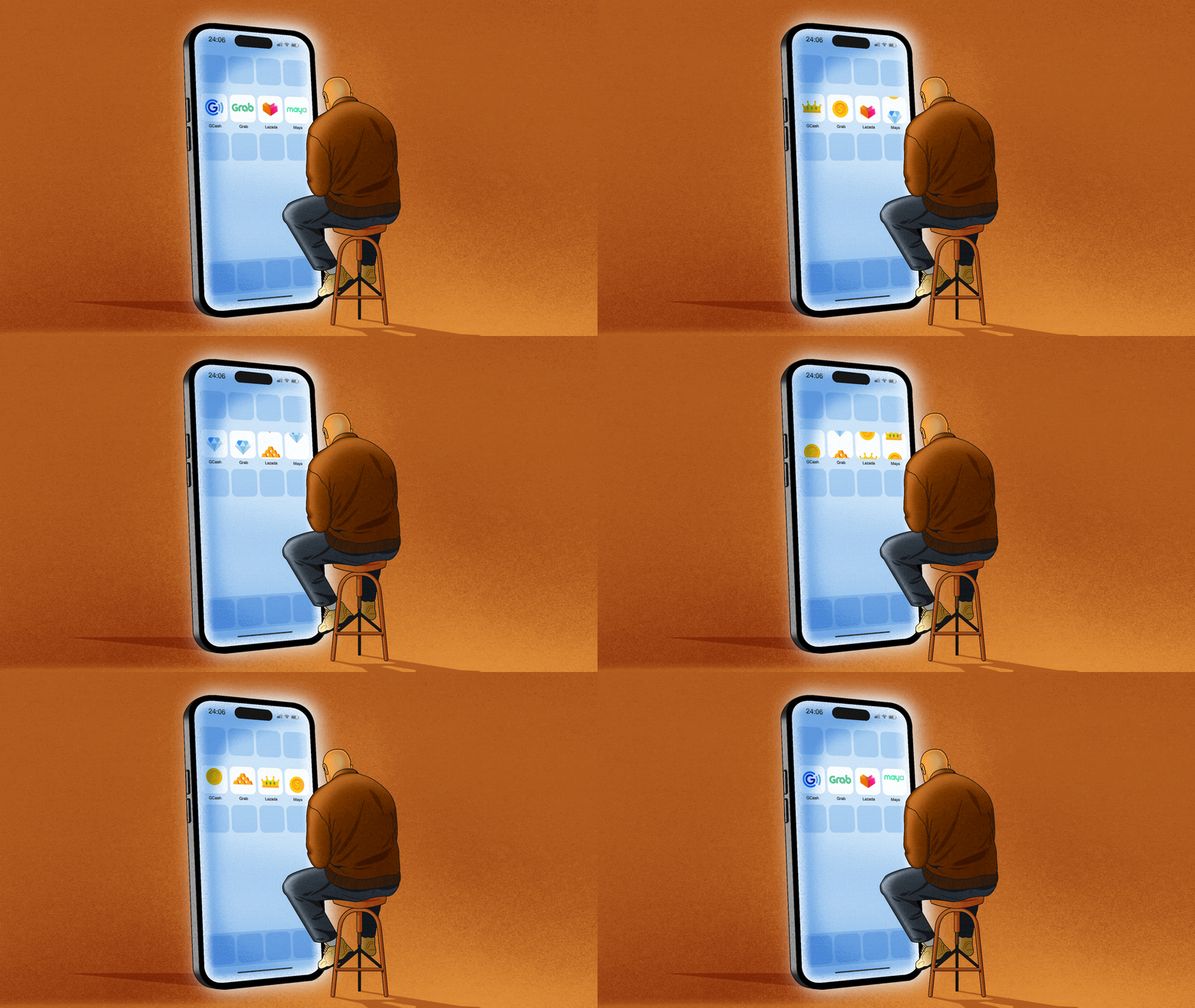
Image credit: Timmy Loen
That’s a hard promise to keep in a country where gambling is just a click away and now a licensed multibillion industry.
Gambling used to be a casual pastime for Filipinos – something done at wakes, birthdays, or any get-together with friends and family. But by the 2010s, investors had built casinos in Metro Manila and Cebu, turning it into more than just a social activity.
By 2021, casinos had reached smartphones, making gambling accessible in a country with a mobile penetration rate of 60.7% and growing. For many, it grew into a hobby; for others, it’s become an addiction that’s hard to shake.
This prompted the Philippines’ central bank, Bangko Sentral ng Pilipinas (BSP), to draft a circular in February aimed at banning gambling ads and access via super apps and digital banks. Meanwhile, the country’s lawmakers have recently proposed tighter rules for online gambling, including raising minimum bets to 10,000 pesos (US$174).
GCash hosts and prominently advertises gambling platforms, connecting them to its 94 million users – that’s around 80% of the country’s nearly 117 million population.
Maya, a digital bank whose e-wallet has 50 million users, features similar ads. On ecommerce platform Lazada, gambling app vouchers are available for purchase.
Ads for online gambling can be seen even offline via billboards, buses, and Grab cars.
As more Filipinos become hooked on online gambling, some are calling the phenomenon an “epidemic.” However, companies have been quick to defend their actions, saying they only host licensed “gaming” platforms, not gambling operators.
Bend it when it pays
From ban to regulation
Keep playing
Stay ahead in Asia’s tech landscape
This is premium content. Subscribe to read the full story.
Discover how e-wallets and super apps have become virtual casinos amid regulatory limbo in the Philippines’ booming online gambling scene.
We know this is not ideal. ⌛ Sign up in 20 seconds. Cancel anytime.
Our subscriber community includes professionals from these companies:





Stay updated on the go with our mobile app.
Get latest insights with smoother, more personalized experience through TIA mobile app.








📅 Upcoming Events
22 October 2026
Payoneer x CSPN Summit 2026