- Premium Content It takes our newsroom weeks - if not months - to investigate and produce stories for our premium content. You can’t find them anywhere else.
 Simon Huang · · 5 min read
Does combining Grab with asset-heavy Trans-cab make sense?
“So we’ll continue to focus on organic growth,” said Grab CFO Peter Oey, adding that “our bar on M&A is extremely high.”
This was in response to a question from an analyst, posed during the third quarter earnings call in November last year, about whether the company was considering M&A opportunities.
Yesterday’s news of Grab acquiring Trans-cab, Singapore’s third-largest taxi operator, for more than S$100 million (US$75 million) meant that the ride-hailing platform seems to have found a target that met its “extremely high” bar.
This might seem puzzling at first glance. Trans-cab is not a sexy tech startup but an old-school, asset-heavy taxi and car rental business, which also owns a maintenance workshop and fuel pump operations.
The company doesn’t even have its own app for customers to avail of its taxis. Passengers can hail one from the street, book a ride by calling a telephone number, or order a taxi (that isn’t guaranteed to be from Trans-cab) through a third-party app.
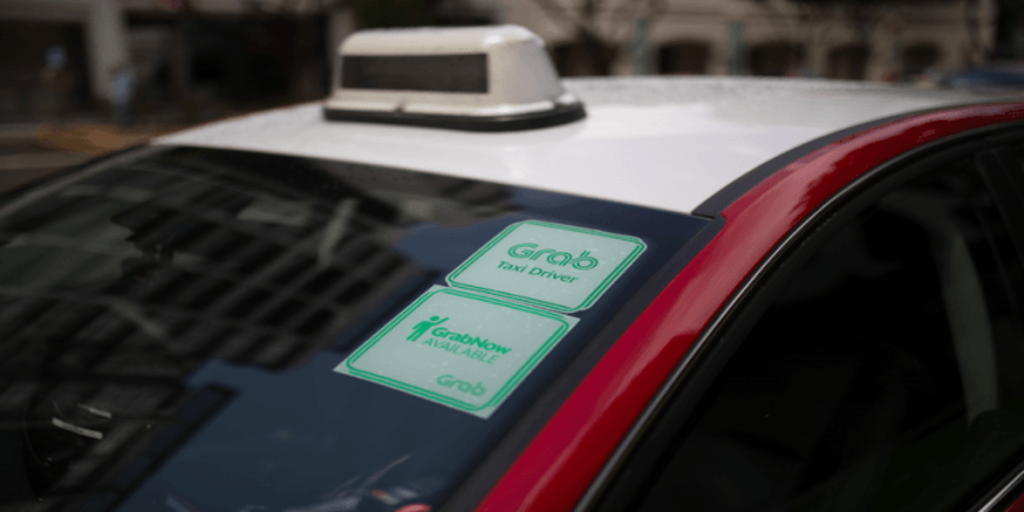
Photo credit: Grab
But there are good reasons for Grab to make this acquisition.
Easing choke points
With net cash liquidity (cash, long-term investments, time deposits, and cash investments less loans and borrowings) of US$5 billion on its balance sheet as of March 2023, Grab is in a strong cash position to do this deal.
The fact that Trans-cab is profitable would help assuage investors who may be concerned about how Grab is deploying its capital. In 2021 (the most recent year for which financials are available), Trans-cab recorded a net income of US$6.5 million on revenue of US$61 million. This compares to the US$639 million in revenue that Grab’s mobility business generated in 2022 along with segment adjusted EBITDA of US$494 million.
However, this deal is about more than accreting net income.
During that same Q3 2022 earnings call where CFO Oey spoke about Grab’s “extremely high” bar for M&As, COO Alex Hungate highlighted a choke point that the company faced in its ride-hailing business in Singapore.
“We have a backlog of drivers who want to drive. The issue is the supply of vehicles in Singapore,” he said.
“The number of vehicles in Singapore is strictly capped and that has resulted in [an] imbalance between supply and demand, which is driving up the cost of vehicles … and that’s creating a barrier to the drivers being able to afford their own cars or even being able to rent them,” Hungate added.
This goes to the heart of Grab’s reason for the acquisition – to boost the number of drivers and vehicles on its platform.
Grab, the taxi company?
Drivers not locked in
Stay ahead in Asia’s tech landscape
This is premium content. Subscribe to read the full story.
The move comes as archrival Gojek partners with the largest taxi company in Singapore.
We know this is not ideal. ⌛ Sign up in 20 seconds. Cancel anytime.
Our subscriber community includes professionals from these companies:





Stay updated on the go with our mobile app.
Get latest insights with smoother, more personalized experience through TIA mobile app.









📅 Upcoming Events
22 October 2026
Payoneer x CSPN Summit 2026