Malavika Velayanikal · · 6 min read
College dropout turned MIT top innovator rolls Craigslist and WhatsApp into one app for local shopping in India

At 17, he started a web design company. At 19, he dropped out of engineering college to join an accelerator program at the Indian Institute of Management (IIM) Ahmedabad. At 22, he built an offline search engine called SMSGyan, which allows its 120 million users to text any question and get answers immediately, without the luxury of internet on their mobile phones. By 23, he was an angel investor, an MIT Top innovator under 35, and had kicked off Startup Village in Kerala, an incubator program that propelled Kochi into becoming one of the top startup hubs in India.
A year-and-a-half later, his next venture, another app that gets your queries answered, but this time targeted at the US market, raised seed funding from 500 Startups and other angel investors.
That’s Deepak Ravindran for you.
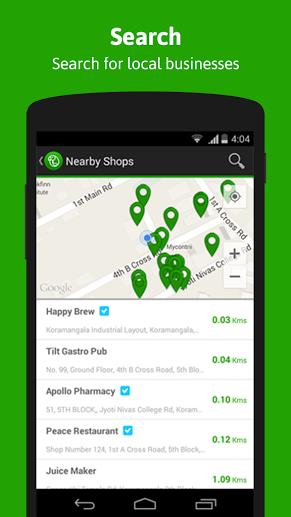
At 26, he gave away the source code of his offline network, which was profitable from day one, and started up all over again. Ravindran’s two-month-old Lookup – a Craiglist cum WhatsApp for local businesses – just raised a second dose of US$100,000 in seed funding. He had earlier got US$166,000 from tech billionaire Kris Gopalakrishnan, co-founder of Indian IT bellwether Infosys.
Before we tell you all about Lookup and what makes it tick, let’s go back to where it all began for its founder.
An eye for unique local problems
Ravindran grew up in Thrissur, Kerala, a typical old town in the south of India, where you buy everything you need from small local shops, be it groceries, electronics, medicine, or clothes. But here’s the twist: Indian towns are small only in the geographical sense. In terms of population, they could be on par with Western cities. Thrissur, for instance, has as many people as St. Louis in the US.
Apart from population density, the striking feature of these Indian towns are their shops round the corner. Little wonder that India has the highest shop density in the world with over 11 retail outlets for every 1,000 people.
If you grow up in a place like that and you have an entrepreneurial bent of mind, then you start noticing some uniquely local problems to solve that would be very difficult for any outsider to spot.
One problem is that most of these retail outlets are very small, and may not have the thing you want. You have to be quite lucky to find it in the first shop you go to. It can take doing a round of half a dozen local pharmacies to get you a strip of pills a specialist doctor prescribed; the sleek new mobile phone you wanted to touch and feel before buying might be available in every other color but the one you wanted. This is a problem not just in small towns, but even a tech-savvy city like Bangalore, where people may have got used to shopping in malls or ecommerce sites but still run to the local drugstore for stomach flu pills or the BP medication that just ran out.
What if a message sent before you set out for a shop told you if the pharmacy has that pill in stock or not? Or what if you can take a picture of the doctor’s prescription with your phone and send it to a nearby shop? And communicate with them without sharing any confidential data like your phone number?





Stay updated on the go with our mobile app.
Get latest insights with smoother, more personalized experience through TIA mobile app.