Jonathan Chew · · 5 min read
How Singaporean SMEs can scale amid today’s uncertain global economy

Today’s SMEs are being pulled in different directions like never before.
On one hand, major changes in the macroeconomic environment are posing huge challenges. Inflation and supply chain constraints, for instance, have caused operating costs to surge for some companies.
On the other hand, there are still many growth opportunities for SMEs, especially for those in Singapore, says Gene Wong, managing director for SME banking at DBS.
“We are emerging from Covid-19 and opening up everywhere. Travel is coming back and businesses are growing,” he points out. “So there are pockets of opportunity, especially within Singapore and Southeast Asia.”
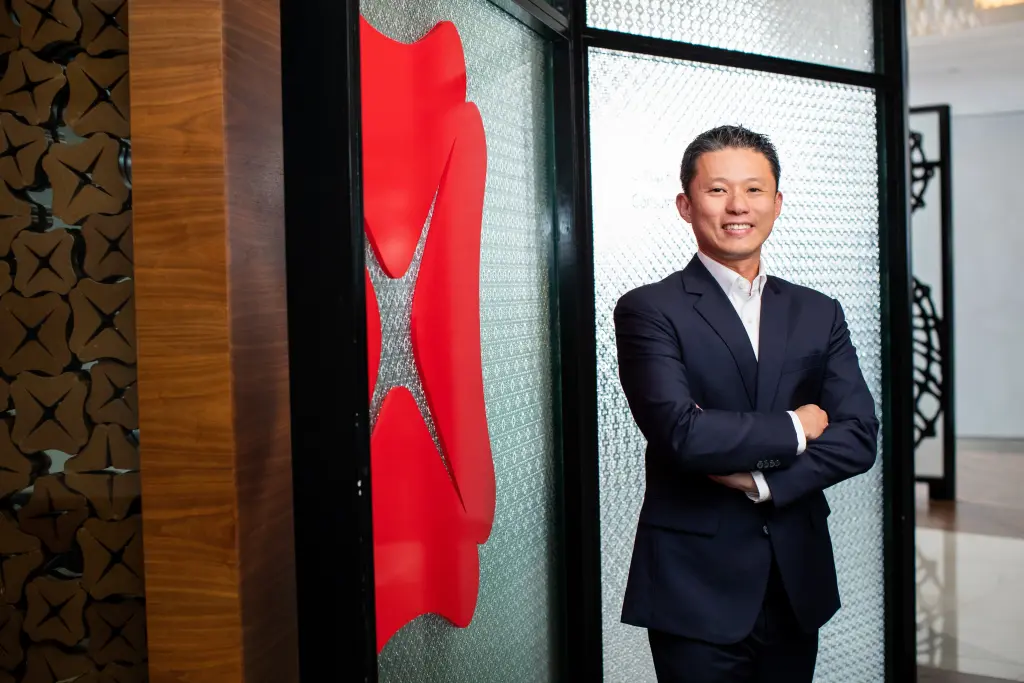
Gene Wong, managing director for SME banking at DBS / Photo credit: DBS
As such, a notable number of companies are looking to capitalize on these opportunities to take things to the next level. According to a survey by DBS, less than 5% of Singaporean SMEs were pessimistic about growth prospects for 2022.
How can these companies navigate today’s challenges while scaling up their business? Wong shares some insights.
Making prudent decisions
Increased costs are one thing, but there’s another major challenge that makes it hard for SMEs to scale amid current market conditions.
“Uncertainty is actually the worst enemy,” Wong emphasizes, with this concern further exacerbated by recent interest rate hikes.
If firms are certain of a downturn, they will get more conservative with their expenditures. But with the market recovering in some areas – such as global supply chains – SMEs may instead be “torn” about how to improve their growth, working capital, and relationships while still accounting for macroeconomic conditions, he says.
In turn, this makes it difficult for SMEs to plan ahead and make decisions, leading to slower growth. For instance, companies may choose to make decisions in the interest of cash flow. This means that given limited resources, business owners may prefer to work with partners or clients that can provide better working capital in the short term. Subsequently, they may end up passing on otherwise attractive opportunities to expand overseas or work with new partners.
“It becomes a less efficient use of their resources because the margins could be wider somewhere else,” Wong adds. “One big contract that they turn down because they don’t have the ability to service it could lead to a less optimal usage of staff resources [for growth].”
Mitigating uncertainty through careful experimentation
While SMEs may not be able to solve the causes of uncertainty directly, Wong has a suggestion for how they can continue to drive growth and expansion.
Instead of setting up new offices or flying in a whole team, what SMEs can do is take a pilot or minimum viable product approach. This makes additional considerations that can be difficult to tackle from a small company’s perspective – such as trade regulations – more manageable.
“In an uncertain world, I would suggest taking steps where an error is not going to cost you your entire rice bowl,” Wong says.
Ecommerce platforms are good starting points for SMEs to carefully explore new markets. This has been a popular “test and learn” strategy for many businesses, with ecommerce website builder Shopify recording a 47% increase in merchant sales from 2020 to 2021.
In an uncertain world, I would suggest taking steps where an error is not going to cost you your entire rice bowl.
Should sales take off, that’s when SMEs can start thinking about establishing new offices or hiring more people on the ground, advises Wong.
As for firms that are more established and further along in their growth plans, Wong believes that now is a good time to commit more strongly to their expansion strategies.
Because it’s a “scary time for the market,” other companies may be disincentivized to invest more, he says. But if local SMEs are able to follow through on their growth commitments, they can capture new waves of consumers as well as evolving trends and tastes, giving them the opportunity to grab more market share.
Securing the right partner
Of course, expansion requires resources, and obtaining the capital needed to fund it can be a challenge for smaller companies.
Fortunately, support from financial institutions has increased due to the pandemic, says Wong. When Covid-19 struck, the Singapore government implemented several measures that involved collaborating with banks to extend more working capital financing and bridging loans to SMEs.
Because of these efforts, banks “now have much richer data and deeper relationships with many more companies that we didn’t previously,” says Wong. “The more we know about you, the more we are able to support you.”

Photo credit: szjphoto / Getty Images
This development also helps companies that have no prior loan or credit history. DBS, for instance, uses the information and experience gathered from existing customers in the same vertical and applies data analytics to determine if it can extend loans to new clients.
Additionally, this increased support means that SMEs can look into harnessing other banking solutions. In particular, these solutions help startups navigate today’s challenging landscape by improving their liquidity and cash flow, which can then be invested into expansion efforts.
DBS’ Business Multi-Currency Account, for instance, allows local companies to transact in Singapore dollars and 12 other currencies from the same account. This makes it more convenient for users to pay overseas vendors and sell to foreign consumers. The bank offers a version of this solution for firms less than three years old that does not require an initial deposit or minimum balance, with unlimited free General Interbank Recurring Orders and Fast and Secure Transfers provided as well.
The future landscape for SMEs
As the global economy develops, Wong says that there are several new factors that SMEs will have to consider while scaling up.
For one, the relationship between SMEs and their banking partners will improve as more data is gathered and managed. To that end, he says that banks will have to be cognizant that data is not the end all be all. Rather, it’s meant to amplify the overall banking experience when SMEs engage with them.
“The new relationship manager will be a combination of a machine and a human. Humans cannot be everywhere at the same time to serve all our customers, and robots cannot engage and understand the way humans can,” Wong shares.
Additionally, sustainability will be a major consideration for SMEs as they scale up their operations. Going forward, suppliers, partners, customers, and consumers might not want to deal with companies that cannot provide evidence of their sustainability efforts, Wong notes.
“We’re at the cusp – at a minimum, you’ll have to build your awareness,” he adds. “It will affect SMEs at some point, and it’s likely going to be pretty soon.”
DBS is a leading financial services group in Asia that offers a wide range of banking services for consumers, SMEs, and corporates. Through digital technologies, it hopes to provide simple, fast, and contextual solutions and experiences to become a purpose-driven bank.
Start your relationship with DBS and embark on your growth journey together by applying for the DBS Business Multi-Currency Account.
This content was produced by Tech in Asia Studios, which connects brands with Asia’s tech community. Learn more about partnering with Tech in Asia Studios.
Stay updated on the go with our mobile app.
Get latest insights with smoother, more personalized experience through TIA mobile app.
Recommended reads
 How financial infrastructure powers global startups
 Asia is setting a new benchmark for growth via intangible assets
 A startup aiming to make ESG reporting as easy as a bank transfer
 From build to scale: Tonik Bank eyes unit profitability in 2023
 4 misconceptions about growth that could hold your startup back
 How Indonesia’s small businesses can export globally
 Good Meat’s new protein alternative greenlit in SG
 Makeup war unfolds in SEA as China takes on South Korea’s throne
 Amartha banks on grassroots strategy to drive financial inclusion
 Tiger Global-backed Ula lays off 134 employees





Editing by Winston Zhang and Lorenzo Kyle Subido
(And yes, we’re serious about ethics and transparency. More information here.)