Nadine Freischlad · · 4 min read
Drones over the rice paddy: Ci-Agriculture brings smart tech to the field
 Agriculture provides employment to about 41 percent of Indonesia’s workforce, according to data from the nation’s Central Agency for Statistics (BPS). But the majority of farmers operate on a subsistence level, and farming practices remain low-tech. This inevitably causes Indonesian farmers to fall behind their Southeast Asian peers in terms of productivity and yield. As a result, Indonesia still needs to import rice from countries like Thailand and Vietnam to meet the appetite of its large population.
Now, one local startup is setting out to bring digital innovation to the rice paddy. Ci-Agriculture takes up a concept known in the agricultural industry as “precision farming” and adapts it to an Indonesian context. Precision farming means using high-end tech such as sensors, aerial imagery, and big data analytics to help farmers make smarter decisions about when, what, and how to farm.
Applying big data to farms
Ci-Agriculture is actually a spin-off from an existing big data venture in Indonesia called Mediatrac. The parent company focuses on big data analytics for corporate clients and has big brands like the World Bank, Nestlé, Telkom Indonesia, and Bank Mandiri, to name a few.
Noticing that Indonesia’s productivity was lagging behind, Mediatrac saw potential in applying its methods to the local agricultural sector.
Regina Rivani Andani, who is now the agricultural scientist in charge of developing the Ci-Agriculture program, says the idea first took shape after chatting with a farmer who had three decades of experience farming Indonesian soil.
“He told us how long he had been a farmer, what his experiences were, and all the troubles he has faced until now,” says Andani. “This touched our hearts. Can we, big data entrepreneurs, internet and data analytics experts, who are so far removed from fields and pastures do anything to help them?”
Ci-Agriculture began its first trial last year on a rice paddy outside of Jakarta on the foot of Mount Gede.
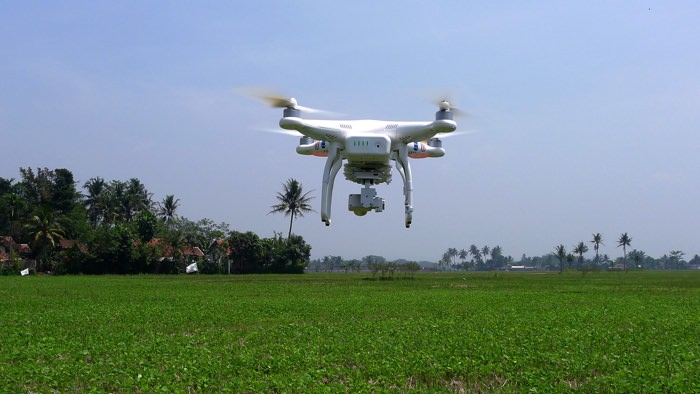
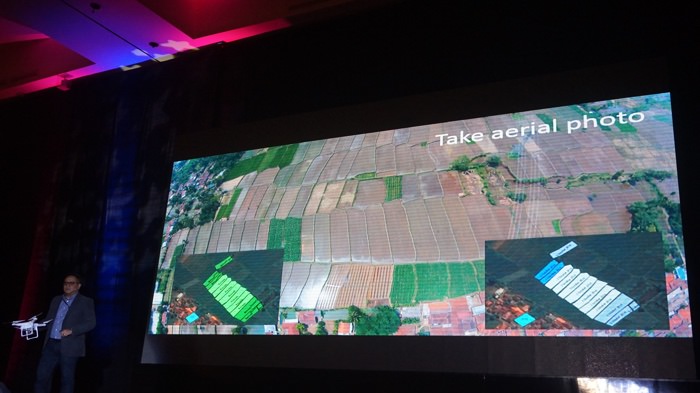
“For about four months, we planted rice from the beginning to the harvest season,” says Andani. “We experimented with drones and weather sensors. During the planting season, we monitored the soil condition, created aerial photographs, and collected data. We also learned about local farming practices, the supply chain, the social dynamics of the people there. From there on the idea grew.”
Digital farming products
Based on the trial phase, Ci-Agriculture defined three products it wants to take forward. The first is Crop Accurate. By analyzing the condition of soil, weather, and growth progress, Crop Accurate gives farmers advice on when to plant, fertilize, or use pest control.
Ci-Agriculture’s second product focuses on the supply chain. “This tool is designed to build a bridge between farmers, distributors, the market, and the end customer,” says Andani. “It’s an information system for the farming community, in which each part of the supply chain will input real data via an app. We also integrate information such as commodity prices, which allows us to create predictions about prices and demand.”





Stay updated on the go with our mobile app.
Get latest insights with smoother, more personalized experience through TIA mobile app.