Yes, another Singaporean Web 2.0 start-up has made it into TechCrunch and Killer Start-ups. SharedCopy.com, in James Seng‘s words, is “a web application that allows you to annotate & markup any website, made a permanent copy of that page and then share it with your friends.” We have managed to catch Choon Keat, the innovator behind SharedCopy.com, and also RssFwd (his earlier invention) and tell us more the story behind SharedCopy.com, and the life of a geek.
SGE: Hi, Choon Keat. Welcome to SG Entrepreneurs, and congratulations on getting onto TechCrunch.com and KillStartUps. Let’s tell us about yourself, what are you currently doing?
Choon Keat: I’m Chew Choon Keat. I’m a programmer in Affle, doing Ruby on Rails full-time. Being able to bring ideas to life is something that drives me greatly. As a programmer, I get to do that very often.
SGE: In a short paragraph, tell us exactly what SharedCopy.com is about. How does it help to make our lives better?
Choon Keat: SharedCopy takes “screenshots” of webpages: Click on your bookmark to copy any webpage, write comments on the page and share the URL with your friends.
I hope it makes collaborating on a websites easier and comments can be delivered more effectively. But we’re exploring feature sets that will make it appeal to other audiences as well. For example, the way comments and quotes are conveniently collected off webpages, SharedCopy can evolve to be a very handy tool to support commentary style blogging.
I’m not going to think I can predict how people will be using it, so we’ve put out API (with examples) that can allow for very deep integration with other stuff. We’ll see what comes out from there.
SGE: What motivated you to start the SharedCopy.com project? Is it based on necessity or just a crazy idea that come about one day when you are brushing your teeth?
Choon Keat: It is actually something that has pestered me for years. I used to work in online marketing agencies before and a lot of client communication revolves around talking about a website, its form or function. Such communication is usually done over the phone, or by taking a screen capture, pasting into MS Powerpoint, use the drawing tools to pin point the problem areas, and emailing the file around. Or worse, clients will come sit next to the designer and point directly at the monitor. I guess it finally snapped one evening when my wife mentioned about doing that MS Powerpoint thing, and I had an idea of how simple it should actually be.
SGE: There are many programming languages in the realm of computer science. In the approach to develop web 2.0 applications, which computer languages do you think are now essential for anyone who is involved in this sphere?
Choon Keat: An updated understanding of basic web technologies will definitely help: CSS, Javascript and HTML. Some folks might still have negative stigma regarding Javascript and the Browsers capabilities. That could limit ideas from germinating.
As for the server side languages, I’ll not push for Ruby 😉 but just advise to pick something you’re comfortable with, that can keep you most nimble and afford failures with. The rule of thumb is: whatever you think your application is supposed to do in the beginning, it’s probably wrong. So just ship something fast and iterate faster.
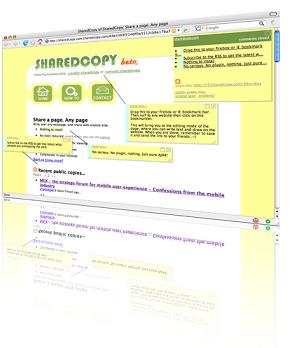 SGE: At the moment, SharedCopy offers the service to annotate and share feedback about websites among users. Are you planning to extend it to photos, videos or other forms of content on the web?
Choon Keat: I wouldn’t rule that out. All we need is a more specific itch.
SGE: Other than SharedCopy.com, there is a similar service called Fleck (http://www.fleck.com), which lets you make annotations on websites in a graphical format. How does your service differentiate from fleck?
Choon Keat:One basic difference is that SharedCopy lets you keep a copy of the webpage as you saw it. This ensures that people looking your comments (on the copy) are in the correct context, regardless of whether the original page has changed or not.





Stay updated on the go with our mobile app.
Get latest insights with smoother, more personalized experience through TIA mobile app.