Welcome to Tech in Asia’s daily newsletter, your essential dose of Asia’s tech and startup buzz. Not yet a subscriber? Register here. Got a story tip? Send it to editors@techinasia.com.
In focus
- Cerebras has the chips, SEA has the demand – the US has other ideas
- Why SEA should care about Anthropic’s access ban
- As Patsnap eyes an IPO, we look back on its bold LLM bet
Hello reader,
When you think of AI chips, you probably think of Nvidia first. As well as owning mindshare in the space, the US company has an estimated 80% to 95% of the graphics processing unit (GPU) market share.
That level of dominance is what made some of the details in today’s top story, written by my colleague Scott, so surprising to me.
In his article, he details how Silicon Valley-based semiconductor firm Cerebras makes chips that it says can perform key AI workloads up to 15x faster than competitors and transmit data orders of magnitude more quickly than Nvidia chips.
So why isn’t Cerebras dominating Nvidia and consigning Jensen Huang’s leather jacket to the dustbin of history? That’s partly because the best tech doesn’t always win. Nvidia has spent decades building CUDA, a software ecosystem so deeply embedded in AI development that many customers find it easier to stick with Nvidia than switch to faster alternatives.
But there’s also a harder constraint: US export controls mean Cerebras can’t actually ship its chips to most of the markets it’s targeting, including Southeast Asia. While it can provide access to its most advanced chips via the cloud and APIs, that’s a long way from the sovereign AI infrastructure the region is racing to build.
It’s another reminder that Southeast Asia is increasingly being caught in the crossfire of the US-China tech war, even when the tech it wants comes from US-based companies.
Speaking of export controls, they’re not just a hardware problem. For today’s Spotlight, we also look at what a US government ban on foreigners accessing Anthropic’s latest model means for Southeast Asia.
Peter Cowan, engagement editor
Top Story
Cerebras builds gigantic AI chips. Can SEA get its hands on them?
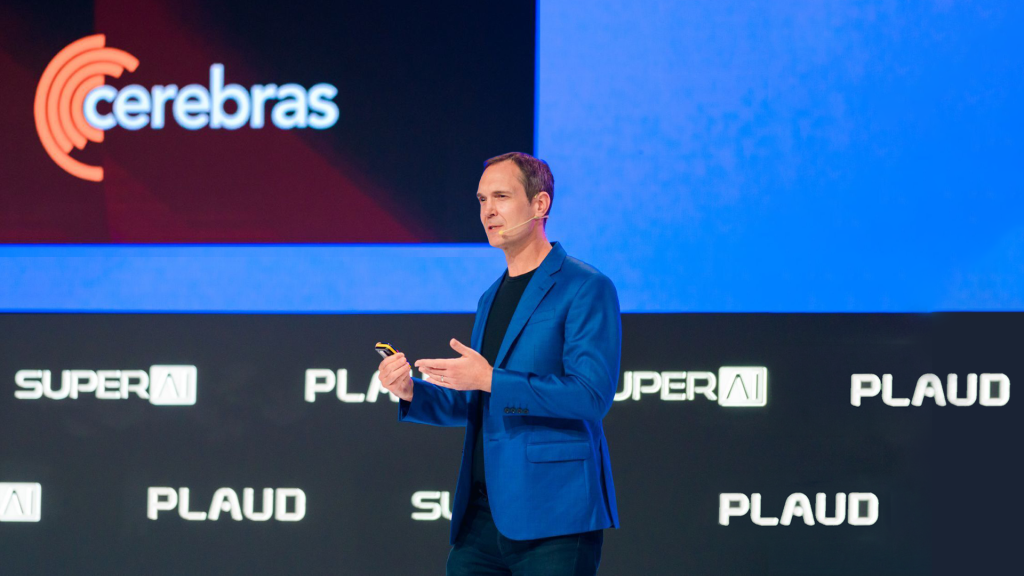
Cerebras chief strategy officer Andy Hock on stage at the SuperAI conference in Singapore / Photo Credit: SuperAI
Andy Hock, the firm’s chief strategy officer, knows that Southeast Asia is “one of the hottest markets on the planet” for GPUs. Demand isn’t the issue, but providing the supply the region wants is a thorny one.
Spotlight
From our archives
Trending news
Position your brand at the center of AI growth





Stay updated on the go with our mobile app.
Get latest insights with smoother, more personalized experience through TIA mobile app.