 J.T. Quigley · · 12 min read
Advertising pays the bills, but this entrepreneur would rather make music and teach kids to code
“Making money is art and working is art and good business is the best art.” -Andy Warhol
At a recent startup pitch contest in Tokyo, a dozen entrepreneurs gathered at the front of a long event hall as the results of their five-minute presentations were beamed onto a pair of large projection screens. In dramatic fashion, the CEO of Btrax, the market entry firm hosting the event, revealed a blank graph with the name of each of the competing startups at the bottom. As he clicked the remote, multi-colored bars rose skyward according to five judging criteria.
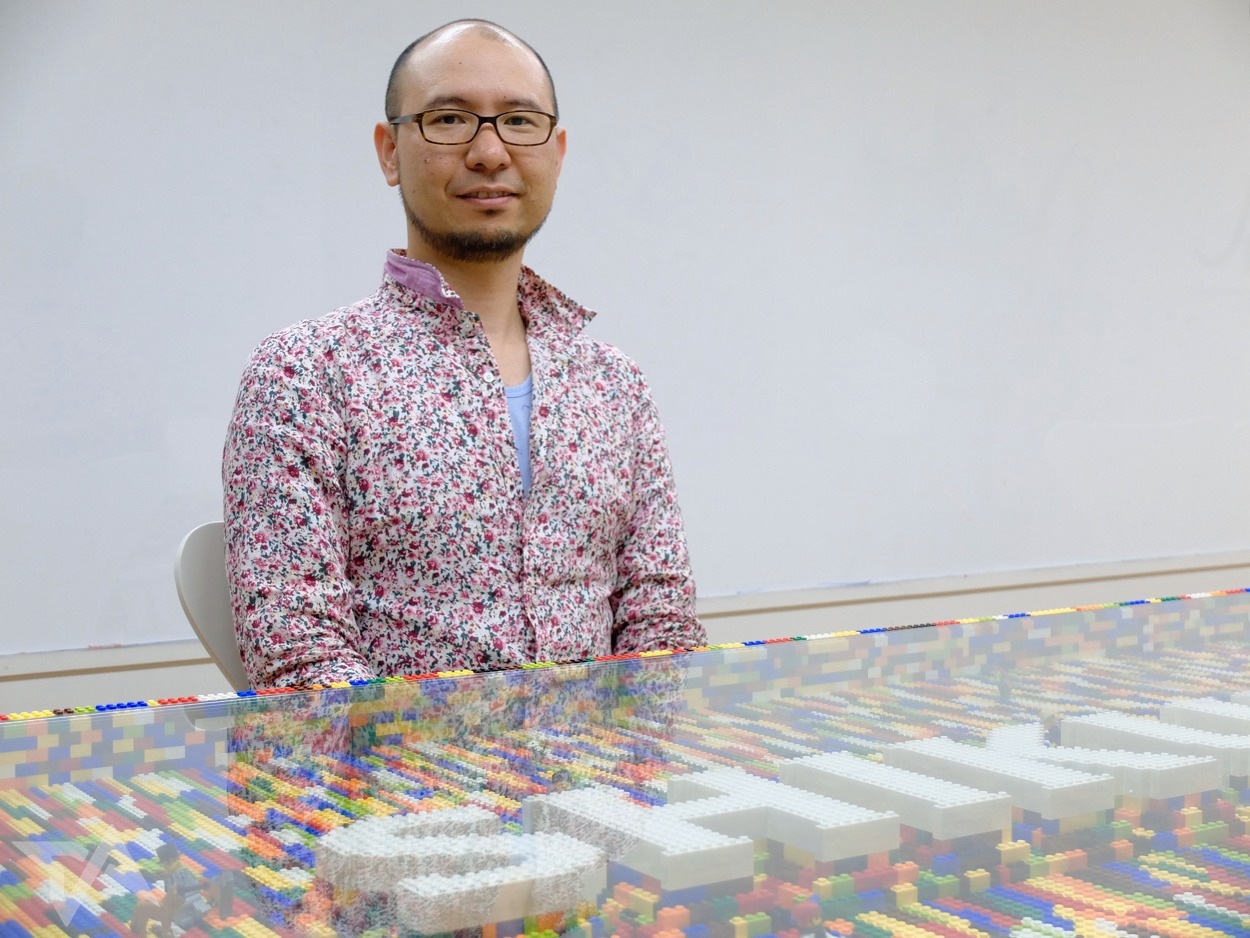
Seated in the front row, wearing one of his trademark floral-print shirts, was 40-year-old Shunsuke Nakamura, the founder of Shikumi Design. Shunsuke traveled all the way from Fukuoka to pitch his latest product: Kagura, a digital musical instrument that uses a camera to track a user’s movements and generate sounds based on them.
It might be a stretch to call Shikumi Design a startup. It was founded a decade ago and has never raised venture capital – so being profitable has been a necessity from the beginning. The company makes almost all of its money from designing interactive digital advertisements for corporate clients – and was one of the first in Japan to even offer such technology. But Shunsuke treats Shikumi Design’s side projects as internal startups. He attends tech and startup conferences across Japan and the US and is a frequent contender at pitch contests.
Shunsuke peered at the screen with an anxious smile as the first bar above Kagura – blue, for technology – rose higher than any of the other startups. He was off to a great start. At the next click, a green bar for business model began to appear – and abruptly stopped. The judges were not convinced that Shunsuke’s funky new way to make music would be able to make money. Kagura received high marks for the other criteria – value to users, pitch skill, and global growth potential – but the weak result for business model knocked Shunsuke out of the top five.
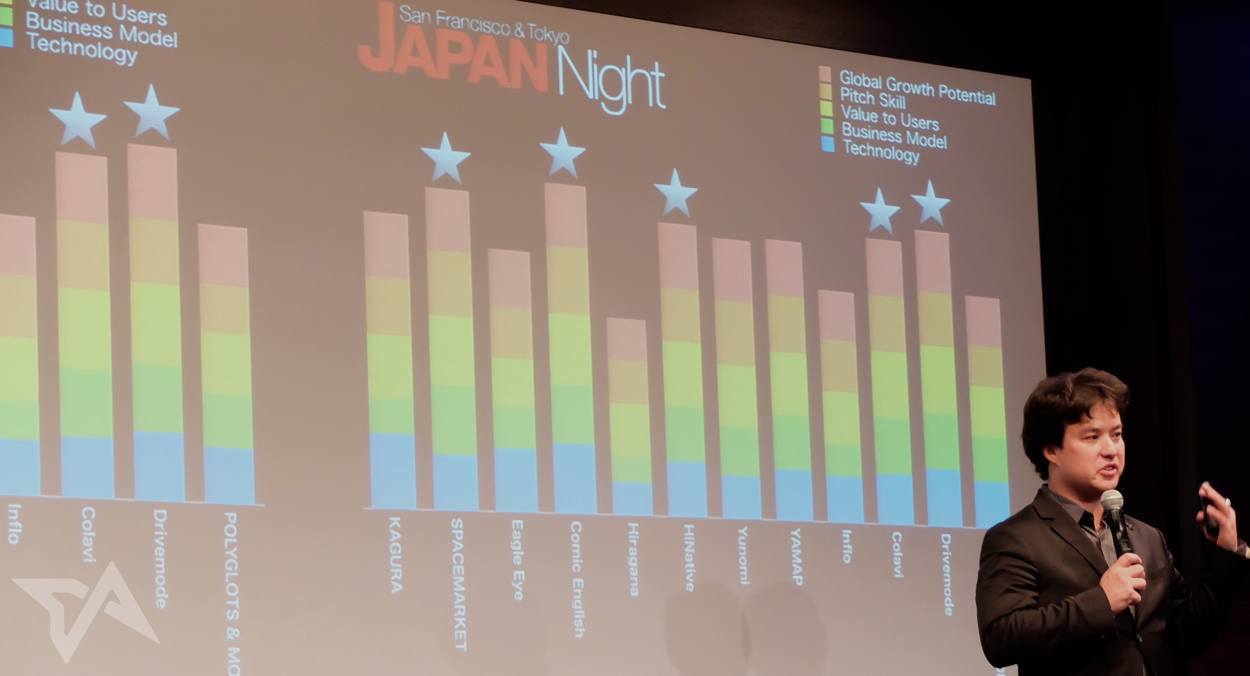
It felt like deja vu for the founder – a year ago, when he had pitched an app for kids called Paintone, monetization (or lack thereof) was also what kept him from joining the top five startups on a trip to San Francisco to pitch in front of American investors and tech journalists. Still, the very fact that he was invited to pitch a second time by the same organizers was a testament to the founder’s tenacity.
Shusuke’s disappointment was visible, but he shrugged it off and joined the afterparty. The founder’s energy is magnetic, and he was immediately surrounded by members of the audience hoping to exchange name cards.
“It’s more important to make a new culture than to simply make money,” he’d told me during an interview in his Fukuoka office a few weeks prior.
His idealism is rare, even refreshing, in the do-or-die world of startups. While it seems that most founders are on a never-ending pursuit of venture capital funding, Shunsuke has his thriving ad business as a safety net. But it became clear in my time with him that Kagura and Paintone are where his true passion lies, even if they don’t make any money. Everything else is a side project, and that could spell trouble for Shikumi Design’s future.
Making ads interactive
Kagura was technically born in 2002, even before Shunsuke founded Shikumi Design. At the time, he was working on his PhD in Art and Technology at the Kyushu Institute of Design. Shunsuke wrote a program that captured the silhouette of a person dancing in front of a camera, then transformed their movements into music and multi-colored animations on a connected TV screen. It wasn’t particularly sophisticated, but it worked as an interactive art installation – and, perhaps most importantly, it looked pretty damn cool.
Passion project
Future creators





Stay updated on the go with our mobile app.
Get latest insights with smoother, more personalized experience through TIA mobile app.











📅 Upcoming Events
22 October 2026
Payoneer x CSPN Summit 2026