The iMotion is bringing gesture control to PC and tablets. Its makers promise that it’s more sensitive than the new Kinect.
In Silicon Valley, startups that combine hardware and software are proclaimed the next big thing. Investor interest is a driver — while tons of startups have been working on derivative ‘Instagram-for-X’ type ideas, the hardware landscape has a higher barrier to entry, making it virgin territory for disruption.
Already, a slew of innovations in this area could potentially break out into the mainstream. Square‘s mobile payments system could usher in a truly cashless society, 3D printers are becoming cheaper and more accessible, Oculus Rift is making immersive virtual reality possible, and gesture control devices like Leap Motion and Myo promise to make human-computer interaction even more natural.
Wearable computers is another exciting area, with Google Glass and a whole range of smart watches making their debuts this year.
Right now, I am wearing the Jawbone Up, an intelligent wristband that syncs with an iPhone app to track how I sleep, what I eat, and how I exercise, all in the name of better health.
While much hardware innovation has arrived from the West, we’re starting to see Asia’s startup ecosystem become fertile ground for hardware+software innovation.
A visible sign is the initial success of Singapore-based startup Pirate3D, which raised USD 1.43M on Kickstarter for the Buccaneer 3D printer, 14 times its initial goal. By offering unprecedented bang-for-the-buck wrapped up in a pretty package and a unique business model, the Buccaneer has set the 3D printing community alight with enthusiasm.
Even the hardware engineering folks in Asia are intrigued, and I’ve seen many of them visit Pirate3D’s digs in Singapore just to play around with the prototypes, and even improve on them.
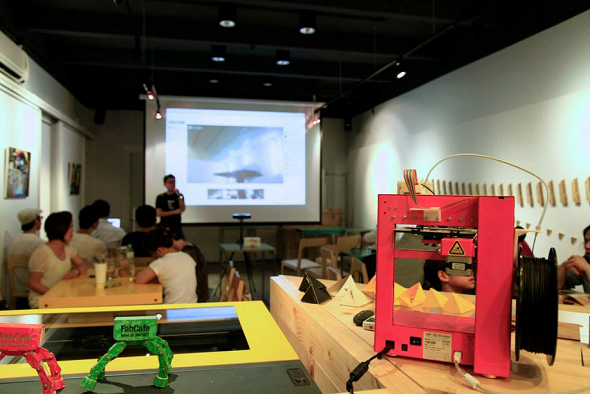
While Pirate3D has been busy soaking up the media attention lately, it’s by no means the only game in town. Portabee, a company that also makes 3D printers, is something of a hot commodity with its USD 500 product that is based on the RepRap Wallace, an open source design. While software is not the main component of Portabee, it exists within an ecosystem of web apps like Thingiverse and Google Sketchup.
A startup that has just emerged is Intellect Motion, a Singapore startup funded by iJAM incubator Ruvento Ventures. It is currently collecting feedback for iMotion, a gesture control glove that the company claims is six times faster and 10 times more precise than the new Kinect for the upcoming Xbox One.
With its Kickstarter campaign set to launch in August, the iMotion benefits from relying on a computer’s existing web cam. All that’s needed are apps that are built on the SDK and the hardware itself, which will retail at USD 49 per piece.
There are tons of startups that are getting into the hardware+software space, so I shall not mention them all here. Instead, I want to make a point about the support that’s now available for hardware-focused startups in the region: Resources are becoming more readily available to increase their rate of success.
First , there is an increasing number of physical and digital links connecting Eastern and Western markets, which is important for cutting-edge hardware startups that want to tackle large developed economies.
Besides crowdfunding websites, which are effective if judiciously employed, AngelList is another avenue for Asian startups to take a crack at American investors. Meanwhile, Asian-based investors like Philippines’ Kickstart Ventures and Singapore’s Golden Gates Ventures are giving startups easier entry into the West with their knowledge and network.





Stay updated on the go with our mobile app.
Get latest insights with smoother, more personalized experience through TIA mobile app.