Shiwen Yap · · 6 min read
Bitponics’ automated gardening assistant could make urban farming viable in Asia
The author is a part-time freelance writer, aspiring entrepreneur and overall generalist interested in exploring, researching and writing. Find him on LinkedIn.
Michael Zick Doherty is a software developer and social activist interested in intersections between community, the environment, and technology. He founded Bitponics, a US-based hydroponics automation company along with the team consisting of Amit Kumar, Chris Piuggi, and Jack Bishop.
Bitponics is an ambitious attempt to meld automation technologies with hydroponics – growing crops without soil – and eventually, aquaponics – which combines the raising of aquatic animals with hydroponics. Seeing opportunities in global concerns over food security and food safety, the Bitponics team saw technology as the answer.
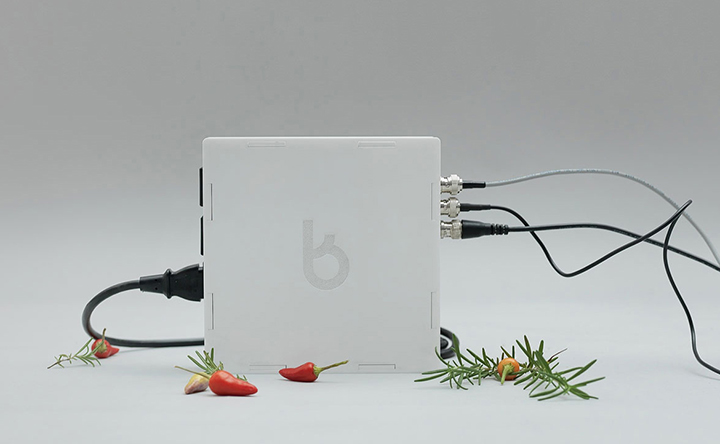
Bitponics’ primary product is a sensing device that monitors chemical levels in an hydroponics system and can be controlled over the web, allowing for multiple hydroponic platforms to be managed remotely if necessary, and for alterations to be made as needed. The online element tracks the data from the sensors and gives recommendations on growing the plants.
Currently based in Singapore for the duration of 2013 as an Artist-in-Residence at Tembusu College in the National University of Singapore (NUS), Michael discussed with Tech in Asia his startup venture, his experiences in developing Bitponics and how he sees hydroponics, aquaponics and urban agriculture developing in the future.
What persuaded you to pursue a Fellowship at NUS?
I was living in New York City for five years, so I was ready for a change of pace and place. The fellowship at NUS provided a chance for me to develop Bitponics in conjunction with practical applications and to explore market opportunities in Asia and the region.
It brings me into an academic atmosphere that links me with students on a project basis and allows me to interact with people from a wide variety of backgrounds, whether as an engineer or industrial designer. Being in Singapore also allows me to be close to Shenzhen and explore which manufacturers I can engage with to further develop the business.
How’s your experience in NUS been so far?
It’s been really positive. My residency is supported through a research sponsorship by ETH Future Cities Lab and financially sponsored by Marina Bay Sands, with the residential component sponsored by Tembusu College of NUS. I run workshops and act as a guest critic in “Singapore As a Model City” module, taking part in workshops and as a participant in certain modules.
Essentially, I’m sharing my experiences working in New York and how they apply to Singapore, as well as providing critical feedback. I’m also aiding students in developing experience projects related to their interest and subject themes at Tembusu.
What were the major challenges encountered in developing Bitponics as a technology?
Oh boy. I’m not from a traditional industrial design, product design or engineering background. I had to spend a lot of time learning the necessary skills and knowledge by myself, and also from the maker community in New York City, which has grown enormously in the past two years. I also taught classes in electronics and computing at 3rd Ward, which is a makerspace combined with a vocational learning institution.





Stay updated on the go with our mobile app.
Get latest insights with smoother, more personalized experience through TIA mobile app.