- Insights This article was written by a TIA community member. Insights pieces undergo the same rigorous editorial process that newsroom-produced articles have.
 Chirag Prajapati · · 3 min read
Opinion: India’s AR/VR market is emerging, but is not without issues
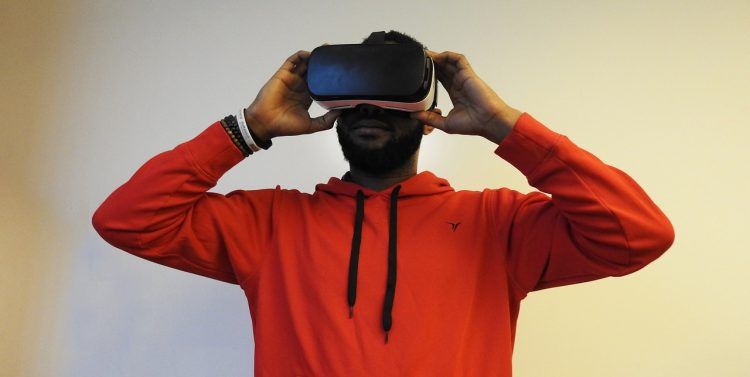
Photo credit: Wren Handman
India has seen 170 AR/VR startups rise in the past few years. The AR/VR market there is expected to grow at a compound annual growth rate (CAGR) of 76 percent over the next five years, The Hindu Business Line reports. AR/VR has impacted various industries in the country, such as consumer goods, retail, real estate, and automotives.
But despite its potential, there are still some major issues that need to be addressed. Let’s take a deeper look.
Positive trends
The key drivers of AR/VR adoption in India are the advent of 4G technology and high-speed communication combined with the increasing number of smartphone users. Local mobile network operator Reliance Jio has made 4G accessible to the rural population, while the number of smartphone users in India (160 million currently) is expected to surpass that of the US in two years.
Currently, India is swamped with VR gadgets (e.g. Oculus, Samsung Gear VR, Sony PlayStation VR, etc.) with decreasing prices. A developing interest for VR gear among mobile users, the availability of entry-level VR headsets in the market, and push from mobile device makers have become instrumental in boosting the VR market in India.
There are also several far-reaching applications of the technology such as:
- Healthcare: Projected to become a US$280 billion industry in 2020, the healthcare industry in India is seeing more applications of AR and VR, especially in cities like Bengaluru, Delhi, and Mumbai. Hospitals and medical centers are using VR to help treat cancer and post-traumatic stress disorder (PTSD) in soliders.
- Aerospace: AR makes crew training more efficient and effectively assists engineers in aircraft inspection and troubleshooting. Other applications that are currently being explored are security and safety simulations, maintenance training, knowledge sharing, and development of assessment and monitoring frameworks, among others.
- Education: Some Indian institutions are using VR in lab exercises, data visualization, and simulation.
- Others: Loopfit, a Hyderabad-based startup, is providing indoor fitness solutions using VR. AR is also used in emergency response with 3D mapping, virtual compass, target location, and other navigation capabilities.
With 4G now present in India, AR/VR applications in internet of things, smart infrastructure, e-services, and public safety, among others, are also being explored.
Various concerns
Despite the stars aligning for the Indian VR market, there are still various concerns. India still lags behind its more developed counterparts like China, the US, and Japan.
In China, the government backs VR development with the president recognizing the technology’s contribution toward an “innovative world economy.” The US is expected to be the top spender in AR/VR in the coming years.
While the AR/VR industry in India is seeing adoption, infrastructure is still lacking, and consumer/investor perception needs to change.
As mentioned earlier, 4G services have only recently taken off in the country, and account for only 12 percent of total mobile subscriptions in 2017 (though it is expected to rise to 60 percent by 2023).
Aside from the technical problems, consumers are generally unaware of VR’s potential—they still consider the technology as a luxury. Investors, meanwhile, perceive the industry as new and untested to the rigors of the market. They want to see strong demand before investing in it.
Other concerns include the absence of disruptive, deep-pocketed startups and low-cost domestic VR manufacturers, and consequent importation costs.
Setting sail





Stay updated on the go with our mobile app.
Get latest insights with smoother, more personalized experience through TIA mobile app.