 Yingzhi Yang · · 3 min read
China’s Meituan Dianping narrows losses, pushes forward grocery retail initiatives
Chinese food delivery services giant Meituan Dianping plans to continue its foray into China’s grocery retail sector, despite closing a number of its Ella supermarkets in the first quarter of this year, as it ratchets up competition with Alibaba Group Holding.
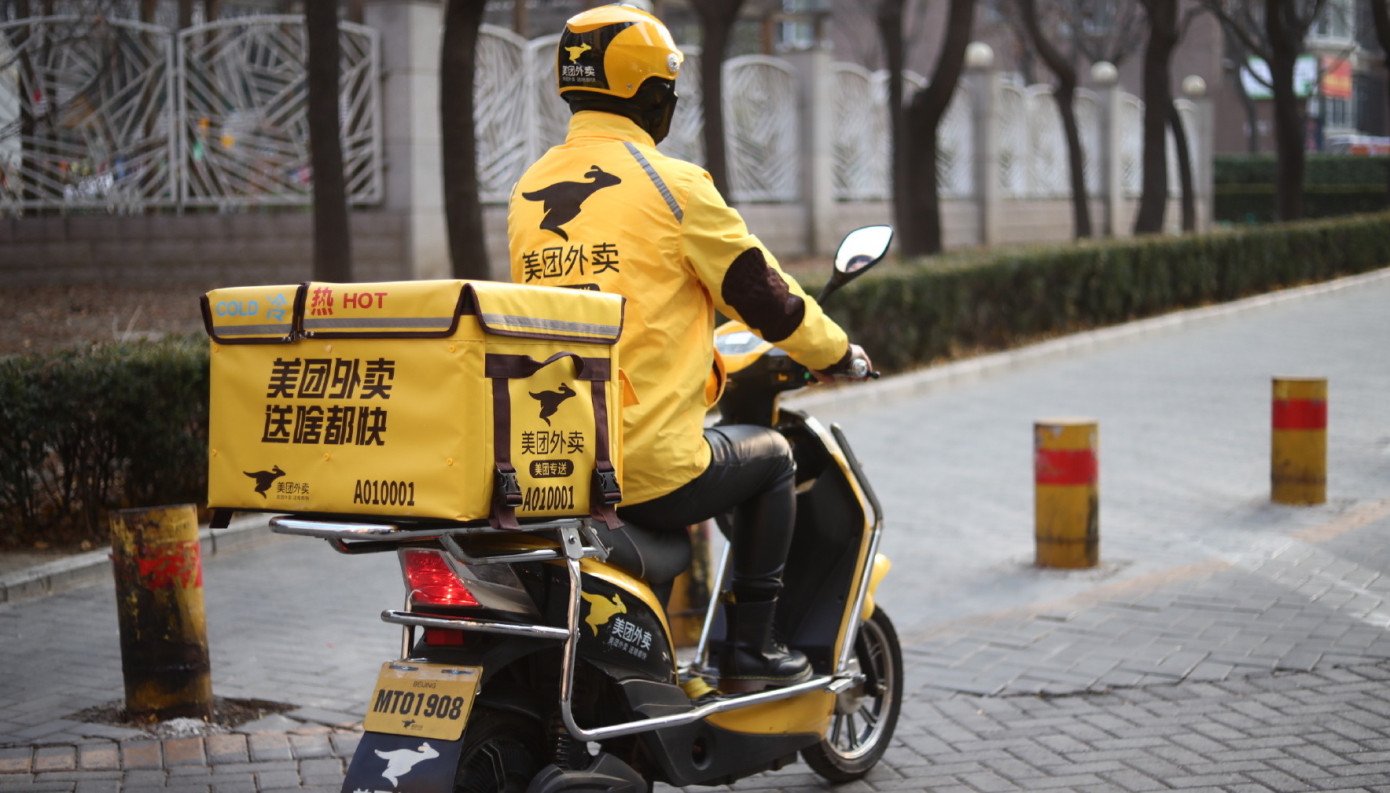
Photo credit: Meituan-Dianping
Beijing-based Meituan said it was “disciplined on capital allocation for our new initiatives,” according to a regulatory filing in Hong Kong on Thursday when it posted better-than-expected earnings for the first quarter of 2019.
“With our clear scale and structural advantages in user base, merchant base, and delivery network through long-term investments, we have the capability and flexibility to both strengthen our market position and improve our financial performance,” said company cofounder, chairman, and chief executive Wang Xing in a statement released after the close of trading.
Meituan narrowed its net loss in the first quarter to 1.4 billion yuan (US$203 million), compared with a 21 billion yuan (US$3 billion) loss in the same period a year ago, on the back of strong revenue growth across all its major business segments. That was ahead of the 2.7 billion yuan loss projected by analysts surveyed by Bloomberg.
Total revenue in the first quarter grew 70.1% to 19.2 billion yuan (US$2.8 billion), up from 11.3 billion yuan (US$1.6 billion) a year earlier, to beat analysts’ 18.3 billion yuan (US$2.6 billion) estimate, as Meituan saw a rise in both the number of users and merchants on its platform.
Meituan’s shares, however, were down 5.75% to close at HK$58.15 (US$7.41) on Thursday.
“For our food delivery business, our market share continued to increase while operating results continued to improve in the first quarter,” Wang said.
Revenue from Meituan’s core food delivery business was up 51.7% year-on-year to 10.7 billion yuan (US$1.5 billion) in the first quarter, which is typically a low season for food deliveries across China. The company said its gross transaction volume rose 38.6% to 75.6 billion yuan (US$10.9 billion) during the period, when China topped expectations with a 6.4% growth in GDP.
Meituan said its selling and marketing expenses, as a percentage of total revenue, decreased to 19.% from 25.2% a year ago because of economies of scale, healthy operating leverage, and stronger brands.
In the food delivery segment, Meituan, backed by Chinese internet giant Tencent Holdings, has been engaged in a costly battle for market share with Alibaba-backed Ele.me. New York-listed Alibaba is the parent company of the South China Morning Post.
“We believe Meituan has gained market share in the first quarter in both gross merchandise volume and merchants,” analysts at Bernstein said in a report last week. “Merchant share gain is more important because it’s the main competitive advantage for Meituan against Ele.me.”
Meituan, which also runs in-store, hotel, and travel businesses, reported total active merchants of 5.8 million on its platform in the 12 months ended March.
Meituan’s efforts in the grocery retail sector, however, pale in comparison with Alibaba’s own initiatives.





Stay updated on the go with our mobile app.
Get latest insights with smoother, more personalized experience through TIA mobile app.








📅 Upcoming Events
22 October 2026
Payoneer x CSPN Summit 2026