This article is co-written by Meng Jing.
iFlytek executive Hu Yu may have spoken too soon when he made a positive comparison of his company to Huawei Technologies during a new product launch in Shanghai earlier this week.
The president of the Chinese voice recognition leader boasted on stage that it had a lot in common with Huawei, the global telecoms leader that is considered a national security threat by the US.
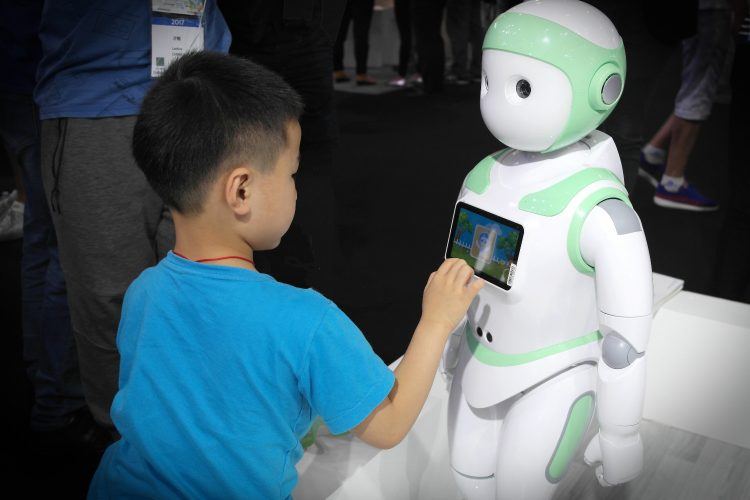
Photo credit: Steven Millward / Tech in Asia
“Huawei and iFlytek are very similar in DNA. Both are the kind of companies persistent enough to take 10 years to sharpen one sword,” said Hu, who takes the title of rotating president of iFlytek in another apparent nod to Huawei, which has long used “rotating” CEOs and chairmen.
The next day the Hefei-based company was caught in the crosshairs of the US government after reports said Washington was considering placing it and four other Chinese companies on the same export control blacklist as Huawei.
In an official statement on Thursday, iFlytek said it has not received any official notification regarding the ban and is hoping to get fair treatment from the US government.
Overseas markets only account for a small share of its business and iFlytek already had a plan in place to cope with an “extreme situation” that threatened its supply of foreign components used in certain consumer products, the statement said. “We think there will be no major impact on iFlytek’s daily operation even if the extreme situation happens,” said the statement.
The US is deliberating whether to add Hangzhou Hikvision Digital Technology, Zhejiang Dahua Technology, Megvii, and two other surveillance companies to a blacklist that would bar them from purchasing US components or software without US government approval, Bloomberg reported, citing people familiar with the matter. The two others under consideration are Meiya Pico and iFlytek, according to one of the people.
In the case of the surveillance companies, the US is concerned that their products can be used to aid espionage, according to media reports. Hikvision has sold products to more than 150 countries and territories globally. The US government banned the procurement of Hikvision and Dahua products by federal agencies last year, citing national security risk.
Reports of iFlytek’s possible addition to the blacklist sent shares of the Shenzhen-traded company down more than 7% on Thursday.
In November 2017, iFlytek was handpicked by Beijing as a member of China’s national AI “team.”
Megvii, which develops facial recognition systems under the name of Face++, issued a statement to the Post saying it was not aware of being put on any US government black list. “Unfortunately, the current geopolitical climate leads to inaccurate and unhelpful speculation about individual companies,” Megvii said.
“Megvii believes in the power of AI to solve problems and make a positive social impact, and wants to collaborate with global peers to promote best practices in AI applications,” it said.





Stay updated on the go with our mobile app.
Get latest insights with smoother, more personalized experience through TIA mobile app.







📅 Upcoming Events
22 October 2026
Payoneer x CSPN Summit 2026