- Premium Content It takes our newsroom weeks - if not months - to investigate and produce stories for our premium content. You can’t find them anywhere else.
 Jill Shen · · 7 min read
China’s Hello blends Tesla’s speed with Waymo’s caution
As Tesla’s robotaxis hit the streets of Austin, Texas, and Waymo made 10 million paid driverless trips in several US cities, a new contender is emerging in China’s fast-evolving mobility scene: Hello.
While the US rivals press ahead with contrasting strategies – Tesla relies on cameras and large AI models for quick deployment while Waymo prioritizes safety with a more complicated system of sensors – Hello is betting it can take the best of both approaches.
The company, which originally offered bike-sharing services, has raised about US$3.5 billion in funding to date, according to Chinese corporate database Tianyancha. Some of Hello’s notable backers include tech titan Alibaba and CATL, the world’s top battery maker.
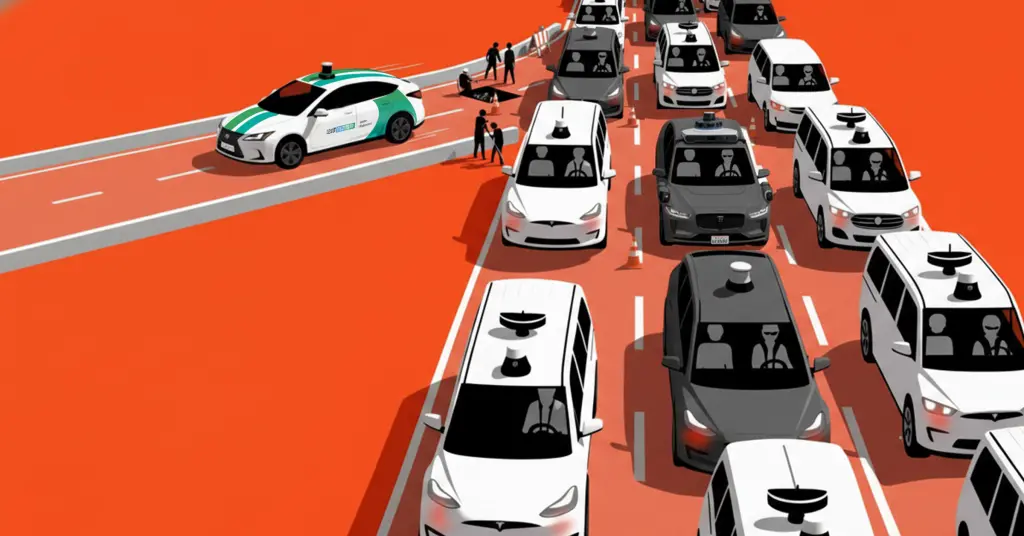
Made by Arsal Ysfin/Tech in Asia with the help of AI
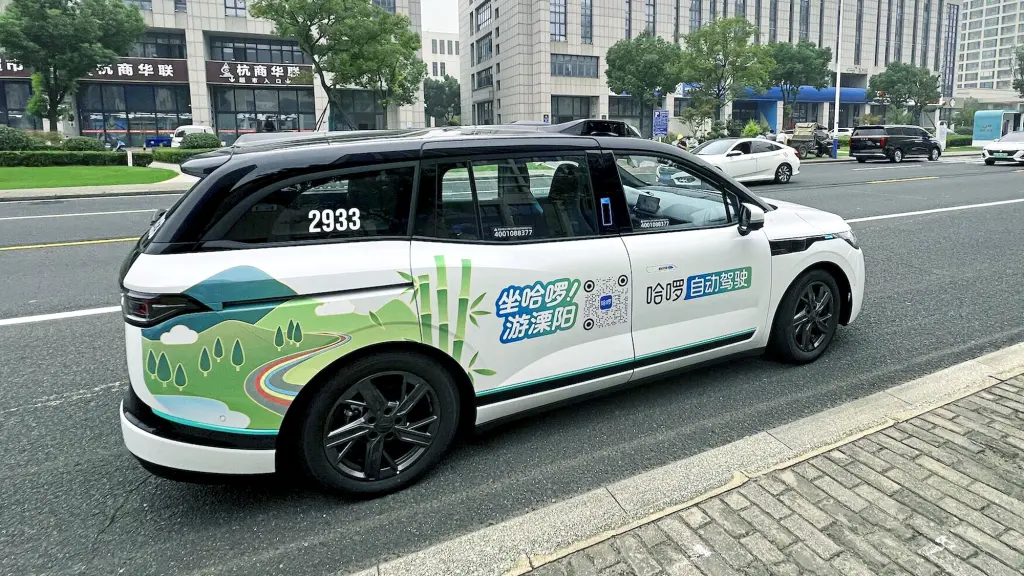
At a September conference in Shanghai, Hello unveiled its first self-driving prototype. The vehicle is equipped with numerous cameras and sensors, echoing Waymo’s “sensor fusion” to understand traffic conditions. Hello also claims that its system has been trained on large amounts of data – an approach pioneered by Tesla.
For the past few months, Hello has been testing its autonomous vehicles in two small cities: one in central Hunan, the other in eastern Jiangsu.
Speaking to Tech in Asia from his Shanghai office, Yu Qiankun, co-founder of Hello’s self-driving unit, said the company plans to expand overseas by 2027. It aims to deploy 50,000 robotaxis on roads worldwide, including the Middle East and Southeast Asia.
Riding the LLM boom
These are bold goals for Hello’s self-driving venture, which was launched only in June. For comparison, it took Waymo and Beijing-headquartered Baidu more than a decade to scale their robotaxi fleets from zero to over 1,000 vehicles.
“We think it is a blue ocean outside China, especially in developed countries, where we can pursue more business opportunities at higher per-ride prices,” Yu says.
Hello says it operates China’s largest bike-sharing platform. It also runs an overseas bike-sharing unit called HelloRide. However, its autonomous vehicle ambitions will likely face steeper challenges including stricter regulatory oversight, deeper technical requirements, and significantly bigger capital needs.
See also: Robotaxis and Grab’s billion-dollar dilemma
Citing consulting firm iResearch, Hello said in its 2021 IPO prospectus that it overtook competitors Mobike and Ofo to dominate the vertical by 2020 – only four years after its launch in 2016.
Hello later expanded into ride-hailing and now operates in more than 200 domestic cities. However, it remains a distant follower to market leader Didi, which has a 72% share of China’s ride-hailing market, according to consultant Frost & Sullivan.
A path back to IPO?
Regulatory headwinds or tailwinds?
Stay ahead in Asia’s tech landscape
This is premium content. Subscribe to read the full story.
The Chinese bike-sharing giant is betting on LLM-inspired AI to leapfrog US-based titans in the global robotaxi race.
We know this is not ideal. ⌛ Sign up in 20 seconds. Cancel anytime.
Our subscriber community includes professionals from these companies:





Stay updated on the go with our mobile app.
Get latest insights with smoother, more personalized experience through TIA mobile app.