- Premium Content It takes our newsroom weeks - if not months - to investigate and produce stories for our premium content. You can’t find them anywhere else.
 Nicole Jao · · 9 min read
Can China’s ‘one for all, all for one’ approach to health insurance work in SEA?
Would you pay a few dollars a month for health insurance that covers over a hundred critical illnesses? The offer may sound a little too good to be true, but it’s irresistible. The way it works is simple: Program participants can receive coverage, as long as they agree to pitch in with other participants’ medical expenses. They bear the risks and costs together as a group – the larger the pool, the cheaper the premiums will be.
This “one for all, all for one” approach to health insurance seems to make sense for the hundreds of millions living in China.

Photo by Maksim Shutov on Unsplash
In Southeast Asia, an emerging hotspot for health and insurance innovation, some companies have been exploring the potential of mutual aid products. Although the penetration rate of health insurance in the region falls on the low end, the idea of paying for coverage is becoming more popular. This allows mutual aid programs to serve as a gateway to formal health insurance products.
A brief history
Online mutual aid started popping up in China nearly a decade ago. First marketed as a cheap way to get medical coverage, it quickly flourished in areas where a huge part of the population was underserved by the public health system.
According to fintech giant Ant Group, China’s online mutual aid industry is expected to reach 450 million users by 2025 or nearly 32% of the country’s population.
When Ant Group launched Xiang Hu Bao in October 2018 within its mobile wallet app Alipay, the mutual aid platform changed the game. The new model proved to be an effective way to attract potential insurance buyers.
In just one year, Xiang Hu Bao attracted more than 100 million Alipay users to the program. It has become especially popular among the young and people from rural areas as well as low- and middle-income households.
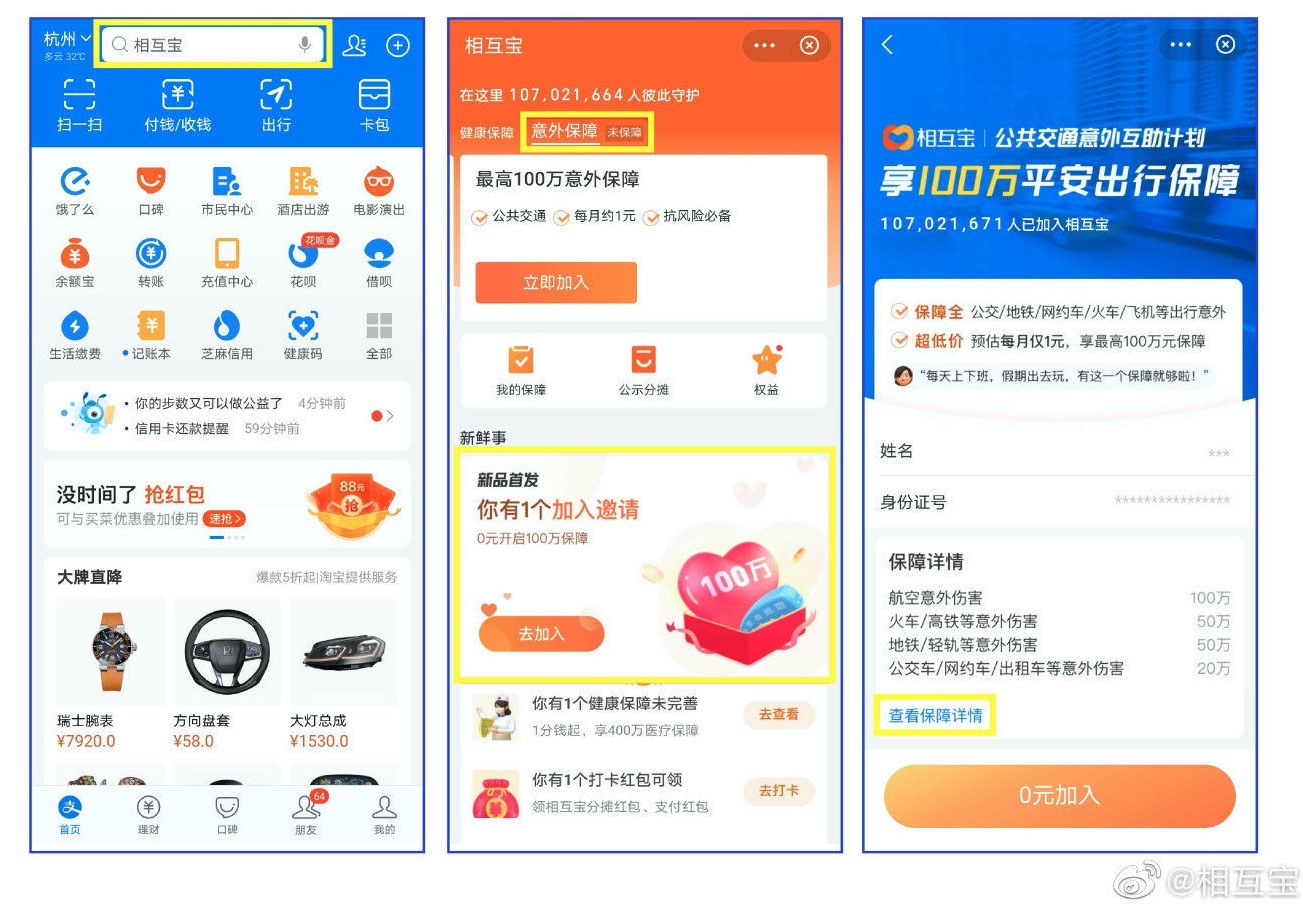
Screenshot of Xiang Hu Bao’s latest accident mutual aid plan for travelers / Photo credit: Alipay
Another player is Waterdrop, which is funded by Tencent and Meituan-Dianping. The startup recently wrapped up a new investment round, raising US$230 million. Waterdrop is said to be preparing for an initial public offering as soon as this year, seeking a valuation of about US$4 billion.
Getting health coverage in China is like squeezing that last bit of toothpaste out of a tube.
A slew of Chinese internet giants has jumped on the mutual aid bandwagon. Among them are WeChat operator Tencent, smartphone maker Xiaomi, food delivery platform Meituan-Dianping, and ride-hailing app Didi Chuxing.
Although mutual aid programs like Xiang Hu Bao provide coverage for critical illnesses including cancer, it is not a full-fledged insurance product. Rather, it is more like an addendum to existing health insurance policies in the market.
Next stop: Southeast Asia?
Early movers
Stay ahead in Asia’s tech landscape
This is premium content. Subscribe to read the full story.
Millions in China have enrolled in a mutual aid plan to get low-cost health coverage. But could this model take root in Southeast Asia?
We know this is not ideal. ⌛ Sign up in 20 seconds. Cancel anytime.
Our subscriber community includes professionals from these companies:





Stay updated on the go with our mobile app.
Get latest insights with smoother, more personalized experience through TIA mobile app.