In the age of Gwyneth Paltrow’s Goop and ill-advised internet health trends, one trend coming out of China is betting on cutting-edge technology: quantum computing. At least that’s what they claim.
Chinese ecommerce stores are currently awash with all kinds of goods claiming to bestow the benefits of quantum tech in products that have little to do with tech. You can buy quantum-infused socks, underwear that emits quantum goodness to your nether region, or some quantum alcoholic beverages.
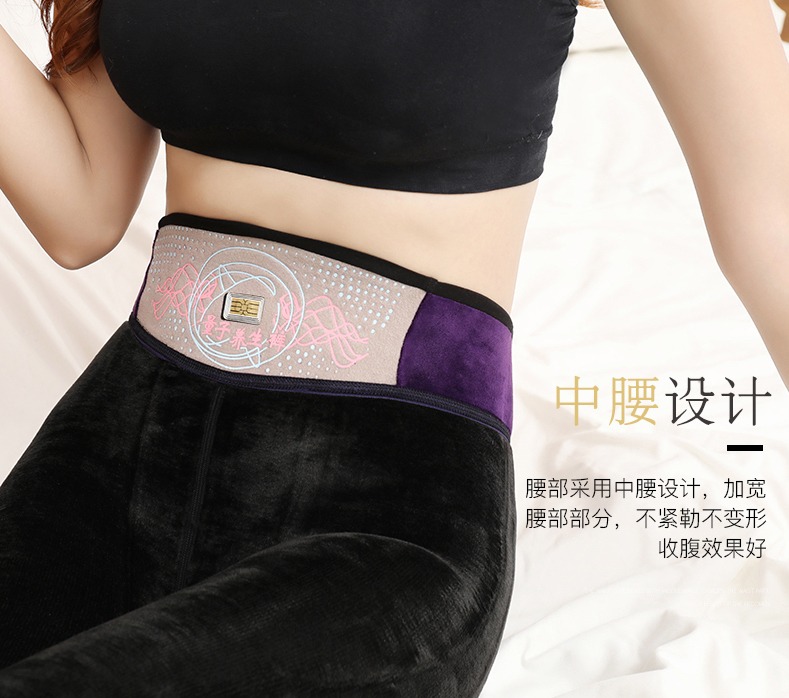
An ad for a pair of quantum-powered leggings on Taobao / Photo credit: Taobao
As you might imagine, experts say it’s mostly hogwash.
These various products online appear to be peddling fake quantum technology, or experimental tech based on the principles of quantum mechanics like quantum computing. And the keyword here is experimental. Despite Google’s claim last year of reaching quantum supremacy – the point at which a quantum computer can solve problems a traditional computer can’t – scientists are still struggling to create quantum computers that can be used in real-life applications.
“How can something that hasn’t been achieved in the laboratory become widely popular on the market?” Jin Xianmin, a physics professor at Shanghai’s Jiaotong University, said to Xinhua in a report covering the new marketing phenomenon. For him, the reasoning was simple: if the quantum socks don’t rely on quantum superposition – the fundamental principle of quantum mechanics – they’re not a quantum product.
But this hasn’t stopped sellers from jumping on the tech buzzword bandwagon. The trend came to light in October last year when an education training center in Beijing was found to be offering “quantum speed-reading” classes. It claimed to teach kids how to read 100,000 Chinese characters in five minutes.
Online stores in China now advertise quantum leggings that fix flabby waistlines, elongate stubby legs, and keep you warm. There are bras and underwear supposedly equipped with quantum chips and quantum energy stickers you can slap on smartphones that sellers say fight radiation from your device. Some of these products have quietly slipped onto international ecommerce platforms, including Amazon.
Other companies claim to be researching “quantum wine,” boasting vague health benefits. There are also quantum fuel cards that will supposedly reduce fuel consumption for your car. One scientific paper researching quantum entanglement and acupuncture even made it into the online database of the US National Library of Medicine, only to later get withdrawn.
How is quantum technology supposed to help with any of this stuff? You’ll have to use your imagination, because the item descriptions aren’t much help.
The reason so many companies are now pushing “quantum” everything could be because quantum computing has become an important topic for China’s science community.
This wouldn’t be the first time tech buzzwords slipped into murky territory, though. The most notable example is the blockchain technology fever that spawned dubious financial products and eventually led to a ban on trading cryptocurrency. But while the urge to put the word blockchain on everything has died down a little, the country is still pushing blockchain tech.
The country, however, has also seen real progress in quantum science, much of it related to encryption. While sellers on ecommerce sites peddle quantum water bottles that claim to have benefits similar to the US$80 crystal-infused water bottles sold by Goop, China also has real quantum drones.
Chinese scientists said they developed the world’s first fleet of drones equipped with quantum communication technology, which is said to be unhackable. The country also sent the world’s only quantum satellite into orbit and set up the longest land-based quantum communication network between Beijing and Shanghai.





Stay updated on the go with our mobile app.
Get latest insights with smoother, more personalized experience through TIA mobile app.