 Paul Bischoff · · 2 min read
Seoul’s urban logistics startup Naldo tripled its client base, grew revenue by 1,000% last year
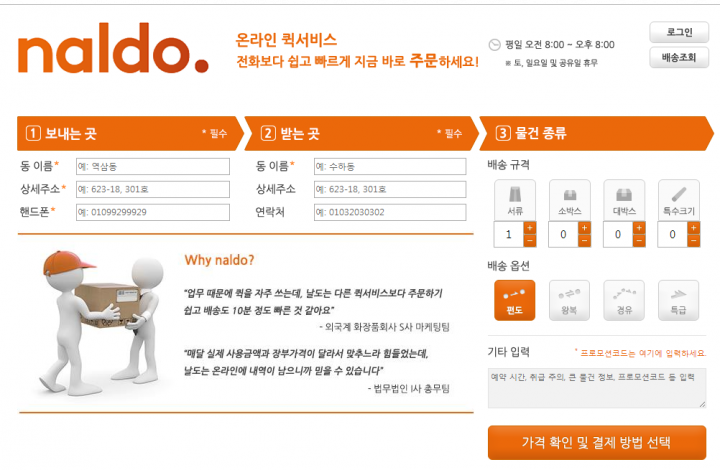
Seoul-based urban logistics startup Naldo is gaining some serious momentum in its home country. The company, which works sort of like an Uber for last-mile deliveries, now boasts over 500 corporate customers, tripling its client base in the last year.
"We all buy more stuff online, but we are not aware that more online purchasing requires more offline delivery. That’s why this is an overseen goldrush for us," Ebner-Chung says.
Among its clients are steel giant Posco, social commerce site Coupang, and investment bank Kyobo Securities. Naldo founder and CEO Ludolf Ebner-Chung says the company saw revenues grow 1,000 percent in 2014, with consistent double-digit growth every month since launching two years ago.
"There is still lots of room to improve the customer experience and increase service reliability," he says. "As scale goes up, so will the quality of the service, because the more orders you have, the more drivers you can retain. And the more drivers you have, the faster you can react and provide service."
Naldo received an undisclosed series A round of funding from Softbank Ventures Korea and Qualcomm Ventures in July last year.
Naldo works similar to other logistics-on-demand startups, like Gogovan and Easyvan in Hong Kong. With its mostly two-wheeled fleet, it promises delivery within 90 minutes in Seoul. The site connects clients directly to available nearby drivers with no middlemen involved.
Next, Ebner-Chung says the startup will soon launch a native app and an open API, which has already been tested by popular ecommerce sites like Ticketmonster, WeMakePrice, and Ridibooks. He says this will be of significant value to online SMEs as it gives them delivery options to gain an edge on their competition. It also reduces dependency on the old call center-based logistics companies.
"These mom-and-pop shops are happy with the current status, as they are profitable on a very small scale," Ebner-Chung says of his antiquated competition. "However, we look at the bigger picture: there is massive potential to integrate the demand and supply. It cannot be that you have an industry based on thousands of providers with pricing intransparency and unhappy customers."
Chung says South Korea’s B2B real-time delivery market is worth US$5 billion.
See: Hong Kong logistics startup Lalamove nabs $10M from Chinese investors
Editing by J.T. Quigley
(And yes, we’re serious about ethics and transparency. More information here.)





Stay updated on the go with our mobile app.
Get latest insights with smoother, more personalized experience through TIA mobile app.












📅 Upcoming Events
22 October 2026
Payoneer x CSPN Summit 2026