- Premium Content It takes our newsroom weeks - if not months - to investigate and produce stories for our premium content. You can’t find them anywhere else.
 Glenn Kaonang · · 7 min read
Indonesia seeks to surpass Thailand as electric ‘Detroit of SEA’
Putra Muskita also contributed to this report.
For years, Thailand had the edge over Indonesia in terms of car manufacturing and export value. But when it comes to electric vehicles, the latter has nature on its side: Indonesia has vast reserves of nickel, a vital component in EV batteries.
However, that doesn’t mean the tide is turning easily for Indonesia.
Neither country has a homegrown brand of four-wheeled (4W) EVs, so both are actively seeking investments from foreign manufacturers.
Image credit: Timmy Loen
With the US imposing high tariffs on Chinese EVs, Southeast Asia could fill the gap due to the region’s abundant natural resources and growing market demand for EVs. Thailand and Indonesia are among the top contenders in this race.
But experts say that if Indonesia wants to be a regional EV hub, it must demonstrate that it can surpass Thailand’s established export infrastructure.
Beyond costs
To make EVs more affordable, both countries have pursued aggressive tax strategies.
In February, Indonesia began offering a subsidy covering 10% of the 11% value-added tax (VAT) on electric cars. As a result, consumers are paying only 1% VAT on the selling price. Conversely, Thailand offers a direct subsidy of up to 100,000 baht (US$2,719) for electric 4W purchases.
Indonesian consumers have also been exempted from paying the annual road tax and ownership transfer fee for EVs since April 2023. These tax breaks have boosted the cost-saving appeal of these vehicles, going beyond lower fuel expenses.
For manufacturers, Indonesia has removed the luxury tax and import tax for four-wheeled EVs until 2025. In Thailand, the excise tax is down from 8% to 2% this year, while import duties have been slashed by up to 40% – a rate that will be in effect until 2025.
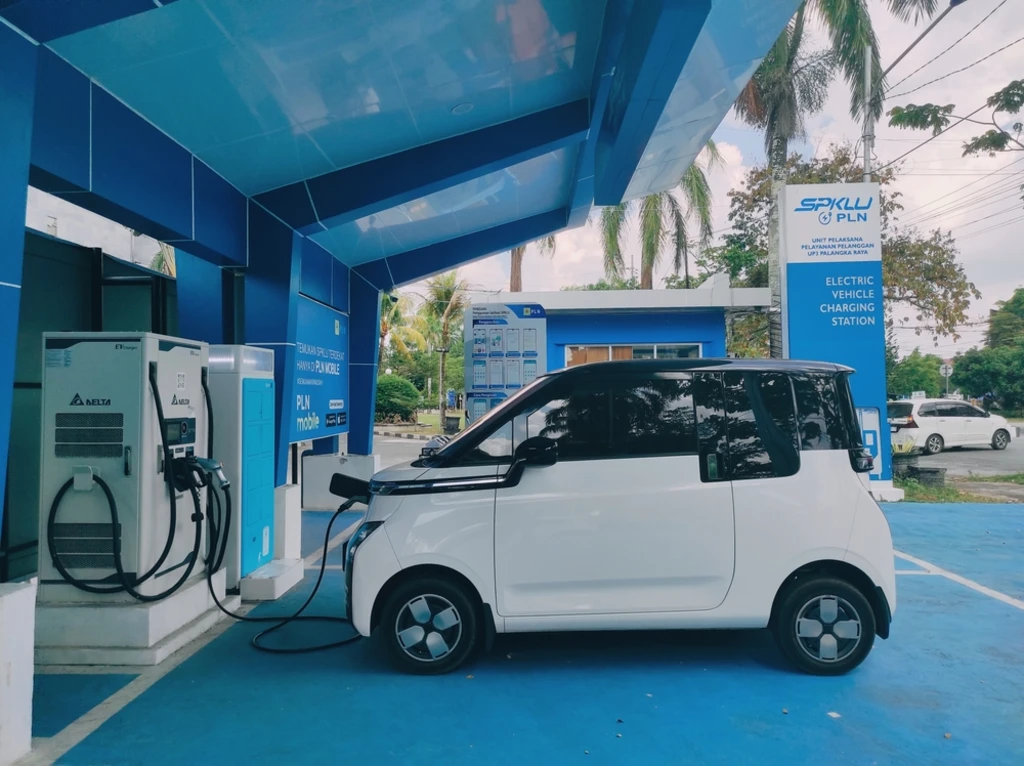
An electric car parked at an electric refueling station in Central Kalimantan, Indonesia./ Photo credit: Shutterstock
But given how recently these measures were implemented, their impact will only be apparent in the next year or two, notes Faris Adnan, an EV researcher at think tank Institute for Essential Services Reform (IESR).
Natural resources vs. geopolitics
Still no native brand
Stay ahead in Asia’s tech landscape
This is premium content. Subscribe to read the full story.
Nickel riches or automotive know-how? Indonesia and Thailand compete to attract foreign manufacturers of electric vehicles.
We know this is not ideal. ⌛ Sign up in 20 seconds. Cancel anytime.
Our subscriber community includes professionals from these companies:





Stay updated on the go with our mobile app.
Get latest insights with smoother, more personalized experience through TIA mobile app.











📅 Upcoming Events
22 October 2026
Payoneer x CSPN Summit 2026