 C. Custer · · 3 min read
Kai-fu Lee: China’s next step toward its ‘AI future’
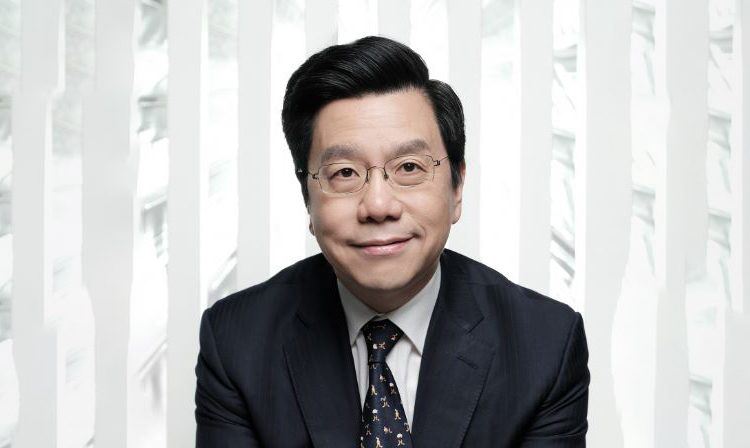
Photo Credit: SheilaShang/Wikimedia Commons
The following is an adapted translation of this article published on Sina Tech by Kai-fu Lee, which is an adapted version of a section from his upcoming Chinese-language book, AI Future (AI·未来).
As I’ve said before, building an AI superpower in the 21st century requires four conditions: lots of data, dedicated entrepreneurs, skilled AI scientists, and a friendly policy environment. China’s highly competitive startup environment is forging the world’s most shrewd and persistent entrepreneurs, and China’s weird “intranet” has created the world’s most data-rich internet environment, so when you add on the other two factors – the emergence of more AI scientists and the Chinese government’s policy support – Silicon Valley’s advantage will melt away.
As AI permeates more sectors of the economy, the demand for skilled AI engineers is going to exceed far beyond the need for top-tier AI scientists. In the age of AI implementation, you won’t just need a few cutting-edge AI research scientists to achieve economic superiority, you’ll need engineers who can join forces with entrepreneurs to turn scientific research into commercially viable products. China is currently training an army of those sorts of entrepreneurs.
Over the past twenty years, China’s AI companies have come close to closing the gap between themselves and their American counterparts. Although America still has a clear lead in cutting-edge AI science, but those hungry-for-knowledge students I met in Hefei years ago have grown up, and as its internet industry exploded, Chinese companies found in that generation skilled engineers capable of realizing practical AI applications. And the Chinese students studying AI are not poring over dusty textbooks, they’re getting real-time, straight-from-the-source knowledge, analyzing the latest scientific papers published to the web, chatting on WeChat with top experts in AI, and using their smartphones to watch lectures in their downtime.
The sharing of the world’s AI knowledge through the web is allowing the Chinese engineering community to access the latest findings, improving their levels and training. And then those engineers are setting out and putting their knowledge to practical use for companies developing things like autonomous drone AI, face-recognition payment systems, smart home gadgets, and other AI products, eating up a growing slice of the AI giants’ pie.
There are seven giants in the AI age: Google, Facebook, Amazon, Microsoft, Baidu, Alibaba, and Tencent. All of them are either Chinese or American companies, and they’ve all spent billions establishing astonishing data reserves, hiring top-tier AI talent, and fighting to establish infrastructure for the AI age, as well as establishing private and public cloud offerings in an effort to spread machine learning throughout the entire economic system. The phenomenon of these giants building private AI infrastructure reflects not only the human worries about the boom of the AI age, but also the specter of China’s emergence as an AI superpower.
But in our massive economic system, resting AI hopes purely on the power of private industry will not be enough. A clear government attitude towards AI and a favorable AI policy environment are also requirements. After [Chinese Go champion] Ke Jie lost to [Google AI] AlphaGo, the Chinese government issued a blueprint for development of the AI industry. Amidst a wave of new investment, this plan guides entrepreneurs and innovation in a new direction. Quite a few Chinese cities are fighting to become ‘AI exemplar’ cities, doing everything from planning for unmanned transit solutions to installing facial recognition systems and giving their transit authorities access to “city brain” AI systems for traffic optimization, all driven by city government officials’ ambition to be the best. In part through these test programs, I believe China will develop faster delivery capabilities, produce more data, and continue the growth of the AI “seed.” This creates a virtuous cycle, where the growing mountains of data, enterprising entrepreneurs, knowledgeable engineers, and favorable government policies propel the development of AI forward in perpetuity.





Stay updated on the go with our mobile app.
Get latest insights with smoother, more personalized experience through TIA mobile app.









📅 Upcoming Events
22 October 2026
Payoneer x CSPN Summit 2026