Terence Lee · · 5 min read
PhewTick, a Japanese startup with USD10M in the bank, wants to make serendipity a big business
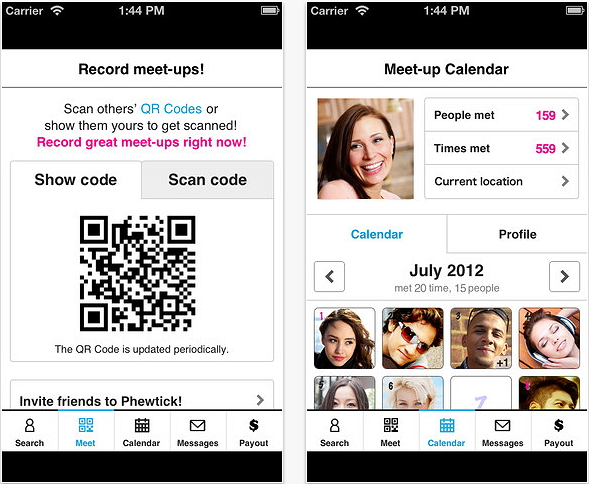
PhewTick, the memorably-named mobile app that pays you to meet strangers, has become all the rage in Asia. Since launching in June 2012, it has already amassed a remarkable 500,000 users from 50 countries.
Skeptics say that the app sounds too good to be true. Users earn cash by scanning each other’s QR codes using the PhewTick app on iPhone or Android. They then play a cute mini-game which involves controlling a cat as it tries to capture fish containing a different amounts of points. Every 1,000 points earns the user about SGD1.53, which they can cash out via PayPal after they hit a SGD30 (USD23.50) threshold.
The app is designed to encourage serendipitous encounters between strangers and also people that already know one another. It’s possible for someone to ‘phewtick’ with friends again and again — all that’s stopping him from doing it every second is a 12-hour time lapse that is required between scans of the same person.
While a lot of skepticism has grown around the app, it is unlikely to be a scam. PhewTick is created by a Japanese startup and they have received coverage from tech blogs like VentureBeat and TechinAsia. The app itself was released at beLAUNCH, a technology startup conference in South Korea.
Besides receiving a node from tech publications, it is also well-financed. Kaz Naya, CEO and co-founder of PhewTick, told me that it has raised a massive USD10M in seed funding from Japanese investors since 2007, although he wouldn’t disclose who they are, except that they’re “celebrities”.
The idea actually isn’t as harebrained as it sounds. Kaz tells me that PhewTick is fundamentally a mobile marketing platform for businesses in addition to a matchmaker between strangers. The cash payout is an effective but expensive gimmick to get people on board. In fact, PhewTick is just an unexpected twist on existing startups like ChurpChurp and GushCloud, both of which pays users to spread the word on social media about a brand. Both companies are still up and running.
So, assuming that PhewTick does what it says and becomes an engaging way to meet new people and earn at the same time, it could have a future.
The trick is to figure out how. Trust and transparency is an important issue, so PhewTick must be seen as reliable in giving payouts. They must state their policies clearly, such that those who resort to exploits cannot blame the startup if they’re not paid.
Subsequently, they must create enough interesting content and features to get users to stay on the app. They’ll need to create new mini-games and novel ways of fostering user interaction. It’s not just about meeting new people, but how new acquaintances can continue staying in touch if they wish. PhewTick will also have to figure out the merchant side of things. They must convince retailers that their platform can generate enough ROI and sales to justify the costs of using it.
It is a novel idea that might just work. The markets that PhewTick are entering — developed Asia, Europe, and the United States — appears to be ripe and ready. In parts of Asia, merchants are already warming up to mobile, location-based marketing with a wide range of such apps (Perx, Squiyl, ChopChop and others) vying for their attention. It remains for PhewTick to establish credibility with merchants, and that will come with a proven ability to engage consumers.
The app has a lot going for it: It managed to capture a sizable audience that marketers crave and want to capitalize on. It is also rather sticky: 40% of the app’s total user base are active daily, while another 40% use it at least once a week. Singapore and Malaysia are its top two markets, with 180k and 200k users respectively (apparently we can’t resist easy cash).
PhewTick is certainly interesting and differentiated enough for merchants to give it at least one try. In fact, I can’t wait to see how PhewTick can be used to draw flash mobs to, say, a bubble tea shop, concert, or a fashion boutique. Given the virality of social media, there’s a chance that such marketing campaigns can really swell up and generate a lot of buzz (although it can sometimes get out of control).





Stay updated on the go with our mobile app.
Get latest insights with smoother, more personalized experience through TIA mobile app.