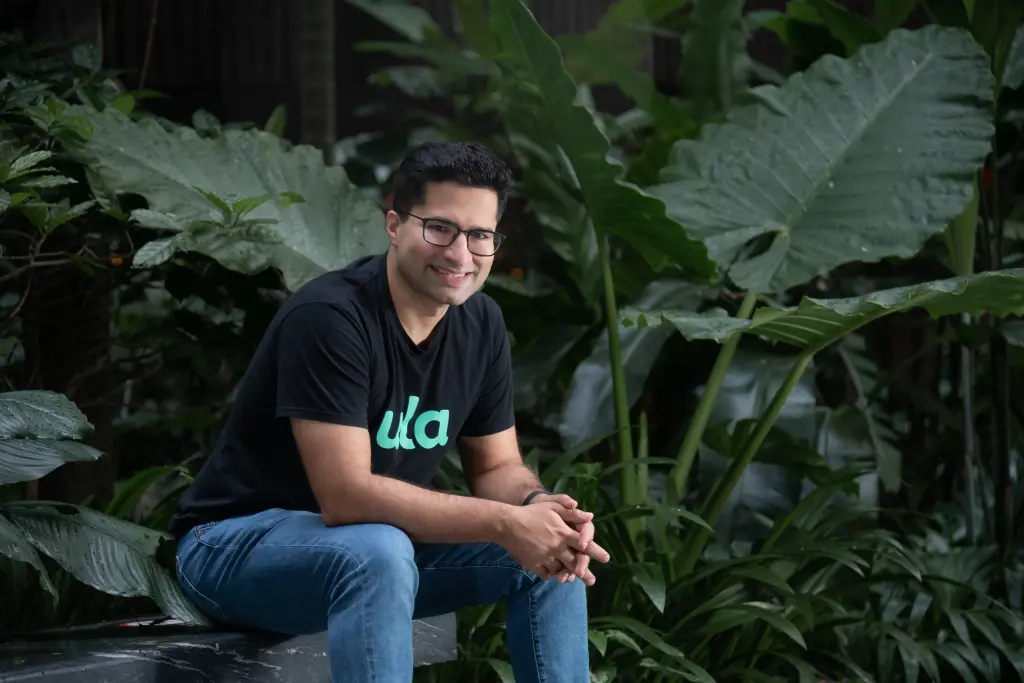
Ula co-founder Nipun Mehra / Photo credit: Ula
Ula, once one of Indonesia’s most closely watched B2B ecommerce startups, discontinued operations in late 2023. The company had raised more than US$140 million from global investors such as Sequoia, Lightspeed, Tencent, and Jeff Bezos’ family office.
Nipun Mehra, Ula’s co-founder and former CEO, spoke with Tech in Asia in a recent podcast and shared how the company’s story ended.
Mehra, a Flipkart and Amazon alumnus, established Ula in 2020 with three other co-founders.
During the pandemic, its platform gave mom and pop kiosks, or warungs, access to goods at a time when major wholesale markets were closed. According to Mehra, sales took off because Ula provided reliable deliveries.
But by mid-2022, the tide turned. Global interest rates rose sharply, and major tech companies began mass layoffs.
Ula responded with job cuts, warehouse closures, and a pullback from aggressive expansion. Mehra described the first set of layoffs as “very tough,” acknowledging that one co-founder was moved to tears.
“It’s the single hardest thing to do as an individual,” he said of the experience, “to be emotionally attached to something and yet take a dispassionate view to say that some things just need to be done.”
Ula experimented with new business lines such as a paylater service and data-driven marketing products. These showed promise, but they could not offset the company’s losses.
It also explored mergers and acquisitions, but these didn’t push through because “the whole thing gets somewhat complicated,” said Mehra.
Despite still holding more than US$50 million in the bank at the time, Ula cut large parts of the business, becoming a smaller ship to control its burn.
By late 2023, it ceased operations entirely and began its wind-down process.
“We were talking close to a paper wealth of US$100 million,” Mehra said of his stake in the company, which was last valued at over US$600 million. “And then you go and say, ‘I’m going to pull that plug.’ No one takes it nicely.”
The co-founder stressed that shutting down responsibly mattered. Employees received severance packages, and investors were kept informed as the company returned remaining capital.





Stay updated on the go with our mobile app.
Get latest insights with smoother, more personalized experience through TIA mobile app.