Nathaniel Fetalvero · · 4 min read
Singapore’s role as a springboard for regional innovation

Singapore is widely known as one of Southeast Asia’s innovation hubs, and it’s one of the most advanced startup ecosystems in the region. Startup Genomes’ 2019 Global Startup Ecosystem Report ranks the city-state as the 14th best in the world as well as the second-best country to conduct business in.
According to the study, Singapore’s startup ecosystem is valued at US$25 billion – that’s higher than the global average of US$5 billion.
Its success as a startup hub can be attributed to its bustling local infocomm media (ICM) industry. At SG:D Industry Day, an event organized by Singapore’s Infocomm Media Development Authority (IMDA) to bring together the country’s leading ICM companies, Minister of Communications and Information S. Iswaran spoke about the sector’s importance. ICM “catalyzes the digital transformation of other industries, spurring the adoption of technologies such as cloud computing and AI and allowing new ventures to thrive,” he said in his opening address.
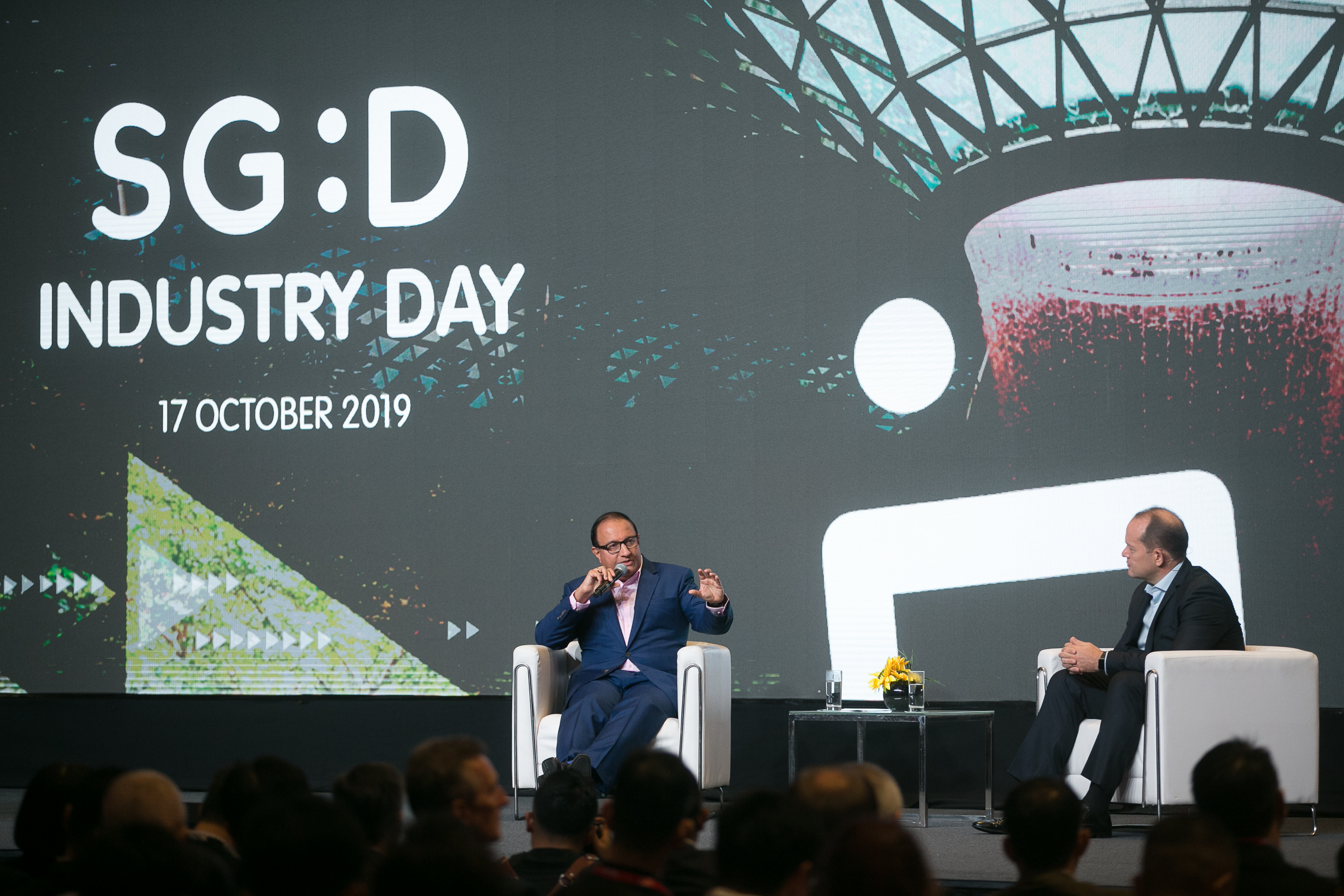
Minister of Communications and Information S. Iswaran (left) at the SG:D Industry Day in Singapore / Photo credit: IMDA
Iswaran continued, “ICM companies may have been the first movers in leveraging digital technologies in order to overcome resource limitations, access new markets, and build new types of businesses.”
Leveraging 5G to bolster innovation
The minister also noted that deepening the partnership between Singapore’s government, the ICM industry, and the labor force is important for the country to succeed in the next phase of its digital revolution.
The government is working on three key areas:
- Securing Singapore’s competitive advantage in a 5G future
- Enhancing Singapore’s overseas relationships with international partners
- Developing an agile workforce for competitive enterprises
Of these points, Iswaran stressed how the 5G ecosystem will serve as the backbone of the city-state’s digital economy.
“We would strengthen Singapore’s value proposition as a place to do business by supporting innovative 5G applications and services – undergirded by a secure and resilient 5G infrastructure – which promises lower latencies and higher peak data rates, and supports greater device density,” he noted.
Iswaran added that Singapore is on track to commence the rollout of 5G networks by 2020 and expects to have two full-fledged 5G standalone networks operational by the end of 2022. He also shared details about ongoing 5G trials for developing consumer applications, building smart estates, and enabling urban mobility.
Additionally, IMDA, in collaboration with the National Research Foundation, launched a $40 million grant in June 2019 to support the innovation and research efforts in 5G development for strategic clusters.
Cross-border collaboration
These plans serve to expand Singapore’s reach in regional innovation.
To that end, IMDA has teamed up with leading players in the tech industry. One example is a collaboration with Chinese startup incubator TusStar, which has an innovation network of over 10,000 companies. Called the IMDA-TusStar Xchange, it aims to create launchpads to help companies expand to either Singapore or China. The partnership will focus on tech companies in areas such as internet of things, robotics, and media tech.
“The key point is how to leverage the advantage of each other and keep the spirit of collaboration,” says Wang Yong Rui, TusStar’s executive deputy general manager. “We believe that our efforts will surely bring forth good fruit to drive innovation. It can become a poster child for global innovation in the future.”
On top of these efforts in Asia, Singapore is in talks to sign a digital economy agreement with Australia. The agreement covers a broad range of areas for bilateral cooperation, including digital trade facilitation, e-invoicing, e-payments, fintech, digital identity, and AI.
“It will provide support to the global trading system at a time of regional economic uncertainty,” said Australian Trade Minister Simon Birmingham in a press release. “By developing digital trade rules and standards that build trust and confidence, and by deepening cooperation, Australia and Singapore can set ambitious benchmarks for others in the region.”
Providing access to the region
During a fireside chat at the SG:D Industry Day, Iswaran noted the potential of Singapore as a springboard for companies looking to access Southeast Asia.
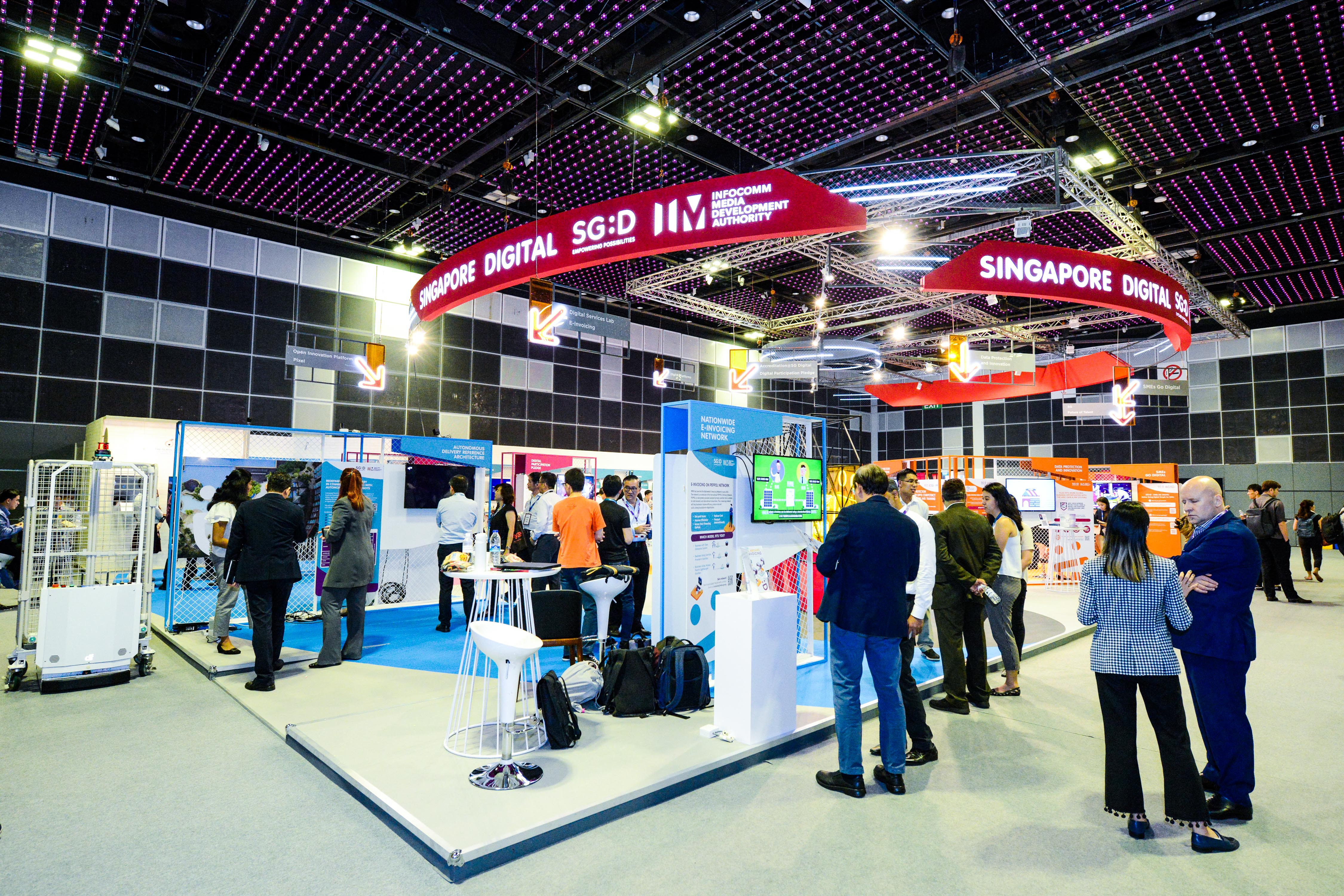
Photo credit: IMDA
“[Enterprises] see Singapore as the best point from which to launch into the [Southeast Asian] region,” he said. “Our corporate culture is compatible with what they’re familiar with. They see many of the capabilities that we have will support their regional, if not international, ambitions.”
Iswaran added that international firms look to Singapore as a place to find tech talent, as the country’s talent policy “allows for judicious complement from outside Singapore.”
“We have worked on this systematically, so that even as we develop our local talent, we’re able to bring in people from overseas who complement our domestic capabilities,” he explained.
Local small and medium-sized businesses especially stand to gain. The minister shared that government agencies like IMDA, Enterprise Singapore, and the Economic Development Board have been working on ways to help local companies venture into regional markets.
“One of the major thrusts in our economic effort, apart from the innovation and digitalization piece, is the internationalization of Singapore’s economy,” he said. “[Singapore] has solutions that people are very interested in. We also have developments in Singapore that they seek to learn from and emulate. So that means our companies have a good calling card with which to go into the regional market.”
For more information on Singapore’s digitalization strategy and business opportunities, visit the SG:Digital website.
Stay updated on the go with our mobile app.
Get latest insights with smoother, more personalized experience through TIA mobile app.
Recommended reads
 Asia is setting a new benchmark for growth via intangible assets
 SG minister highlights AI adoption pitfalls in SEA
 NTU, Algorand to roll out center for blockchain research
 India pilots blockchain-based web portal for police complaints
 Kakao’s Klaytn sets aside $20M to blockchain research in collaboration with SG, KR universities
 Binance gets nod to set up shop in New Zealand
 Binance launches cybercrime training program for law enforcers globally
 SG wealthtech investment grows 7x, outpaces region: report
 Singapore dazzles as regional crypto hub with Token2049
 Japan to expand NFT, metaverse investments





Editing by Jaclyn Teng and Eileen C. Ang
(And yes, we’re serious about ethics and transparency. More information here.)