Pearl Lee · · 5 min read
Autonomous pods won’t drive sports cars to extinction. Here are more smart mobility possibilities

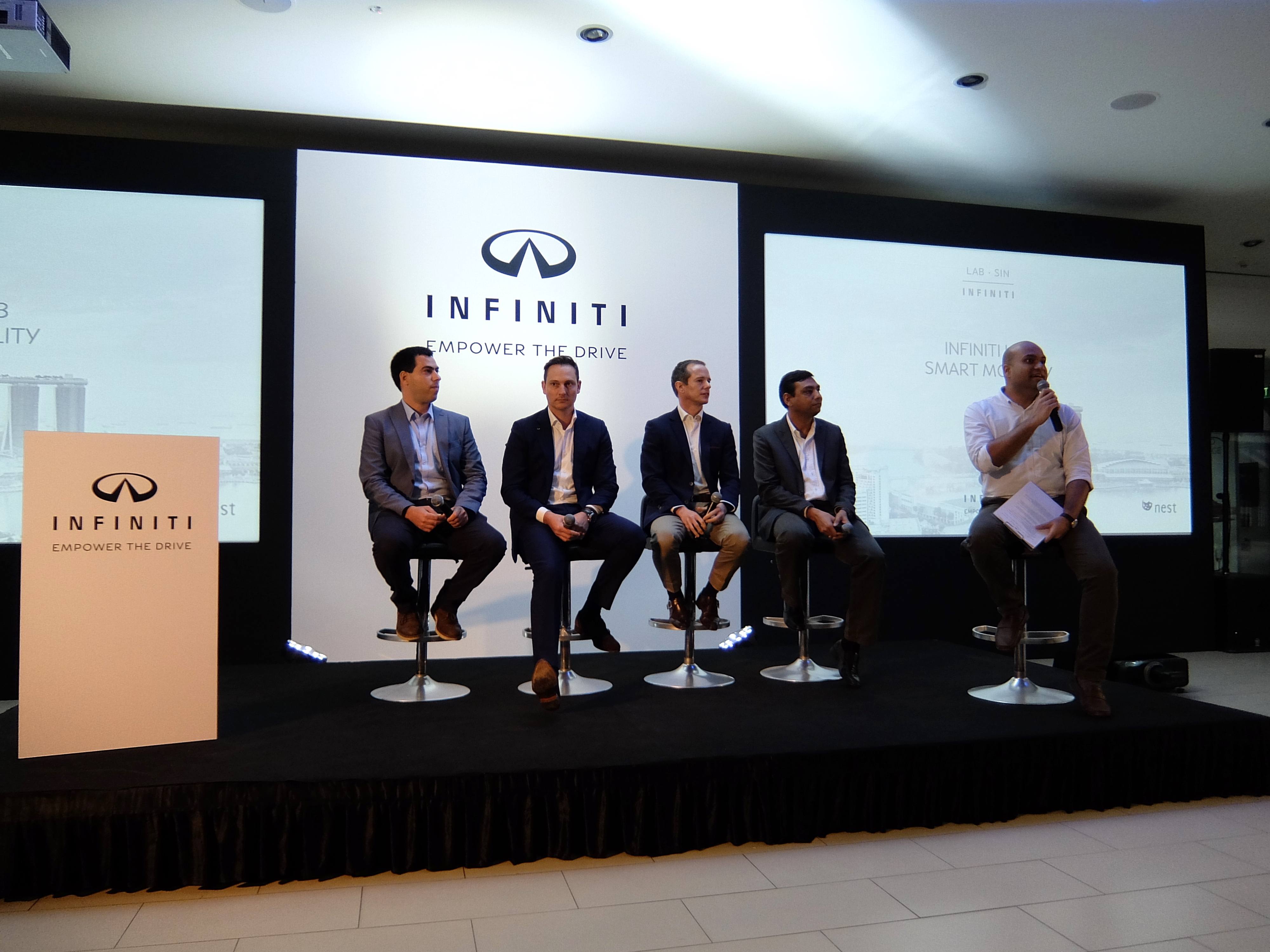
From left: Amir Nivy, founder of Hapticus, Dane Fisher, general manager of global transformation & brand at INFINITI, Lawrence Morgan, CEO of Nest, Pankaj Lunia, cognitive transportation systems solutions leader at IBM, and Imran Khan, the panel moderator from Tech in Asia.
A wheelchair user needs to go out. In the past, he would have called a caretaker to wheel him to a hired van. Now, he can use a smartphone app, such as the Ecommuter MI by Hapticus, to view transport options. He can go to the pick-up point when the driver is arriving or send his assigned driver messages.
Hapticus is an alumnus of the program in Hong Kong in 2016. This year, the program, called “INFINITI LAB, Smart Mobility,” came to Singapore. Seven startups will be trained and mentored by industry players in the smart mobility and connected-car space to validate their ideas commercially over eight weeks. This is also the company’s third program in partnership with venture capital firm Nest.
At the launch, Tech in Asia also heard from a panel of experts. They included: Amir Nivy, founder of Hapticus, Dane Fisher, general manager of global business transformation and brand at INFINITI, Lawrence Morgan, CEO of Nest, and Pankaj Lunia, cognitive transportation systems solutions leader at IBM.
Singapore is ready to become a smart city
Smart mobility can offer significant cost savings and lower environmental damage for major cities such as New York. For example, ridesharing alone can save US metropolitan areas US$30.3 billion annually. Benefits include reducing congestion and traffic accidents.
Singapore envisions similar results. In the Smart Mobility 2030 report published by the Land Transport Authority, LTA plans to use intelligent management systems, vehicle-to-vehicle communications, big data, and alternative energy to improve mobility.
Startups drive new possibilities
Hapticus has been around for six years, which is a long time in startup years. “We want to improve daily commutes and decided to go into a sector where there’s a big gap – people with mobility issues,” says Amir at the panel discussion (watch here). “We wanted to go out of our comfort zone and think of how we can become a bigger player in the mobility field.”
“Empowering the drive means enabling people to achieve in life. INFINITI LAB is an example. We see entrepreneurs as an example of visionaries who allow us to see into the future with the work they’re doing,” says Dane Fisher, general manager of global transformation & brand at INFINITI. “We run these programs to help open the doors for early-stage startups to get mentorship and meet amazing people from research and production.”
This time round, he says, INFINITI picked advanced startups ranging from late seed to Series B because they wanted to work with startups with strong businesses under their belt and explore premium mobility solutions. “We’re here to learn from them, tell them about our brand, and come up with ideas for solutions which we can pilot, test, and scale in Singapore.”
Some Asian startups they will be working with include car-sharing app Ryde, traffic-mapping algorithm Blue Signal, and car tracking and fleet management platform Katsana.
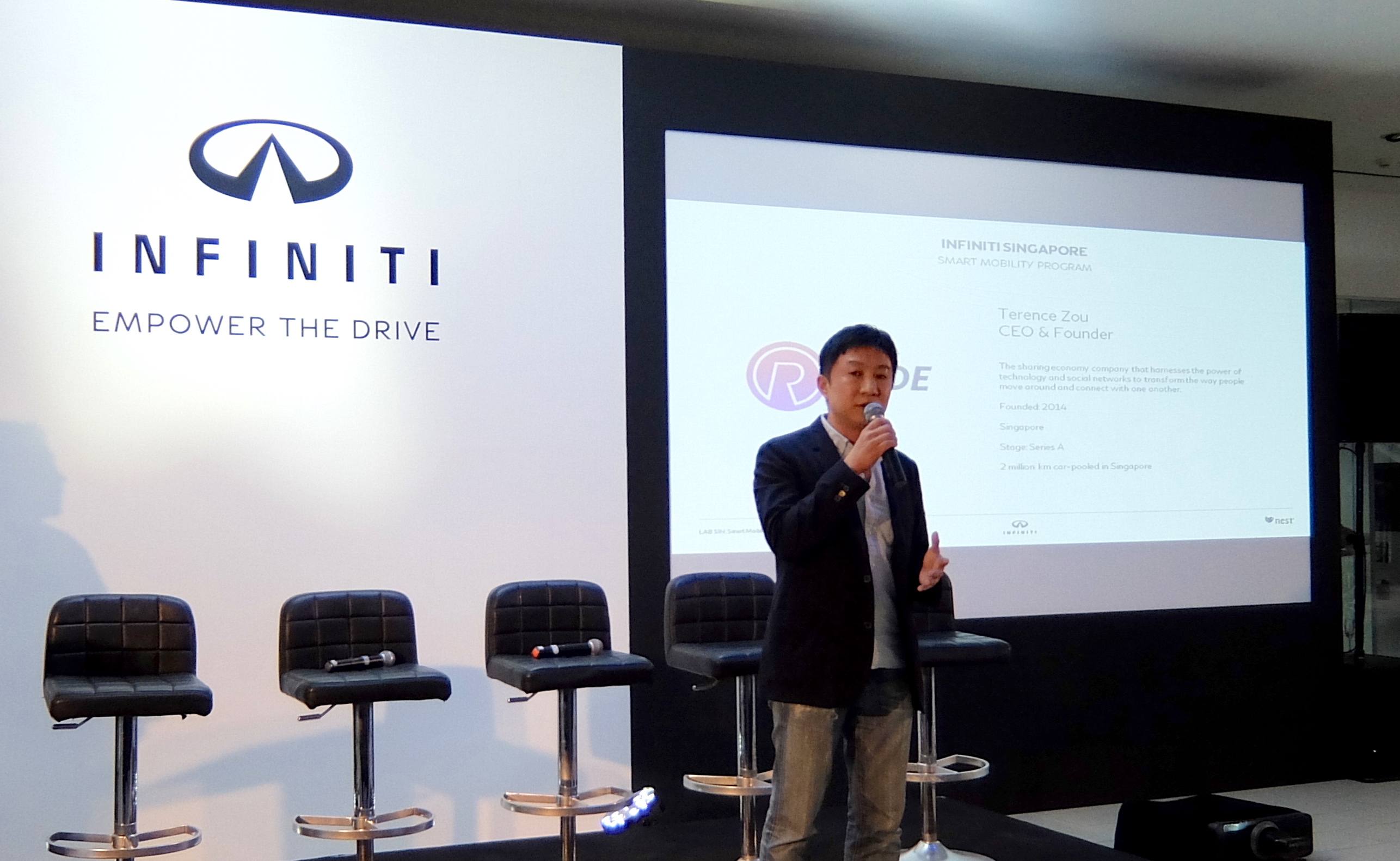
Terence Zou, CEO and founder of Ryde, making his 30-second pitch.
Smart mobility for an aging population
The panel discussed problems that smart mobility could solve in the future. In countries and dense cities like Singapore, an aging population could mean increased demand for health and mobility-based solutions. With better health care, people will live longer – but there’s a dearth of children to support them. As the technology behind new initiatives like autonomous vehicles matures, we’ll see increased usage for people with mobility needs, believes Pankaj Lunia, cognitive transportation systems solutions leader at IBM.
Urban cities and new challenges
The world will also start to experience increasing global population – especially in urban areas. Two-thirds of the world’s population is expected to live in urban areas by 2050. With 2.5 billion more people in urban areas by that time, close to 90 percent of the increase will be contributed by Asia and Africa, according to the World Urbanization Prospects in 2014.
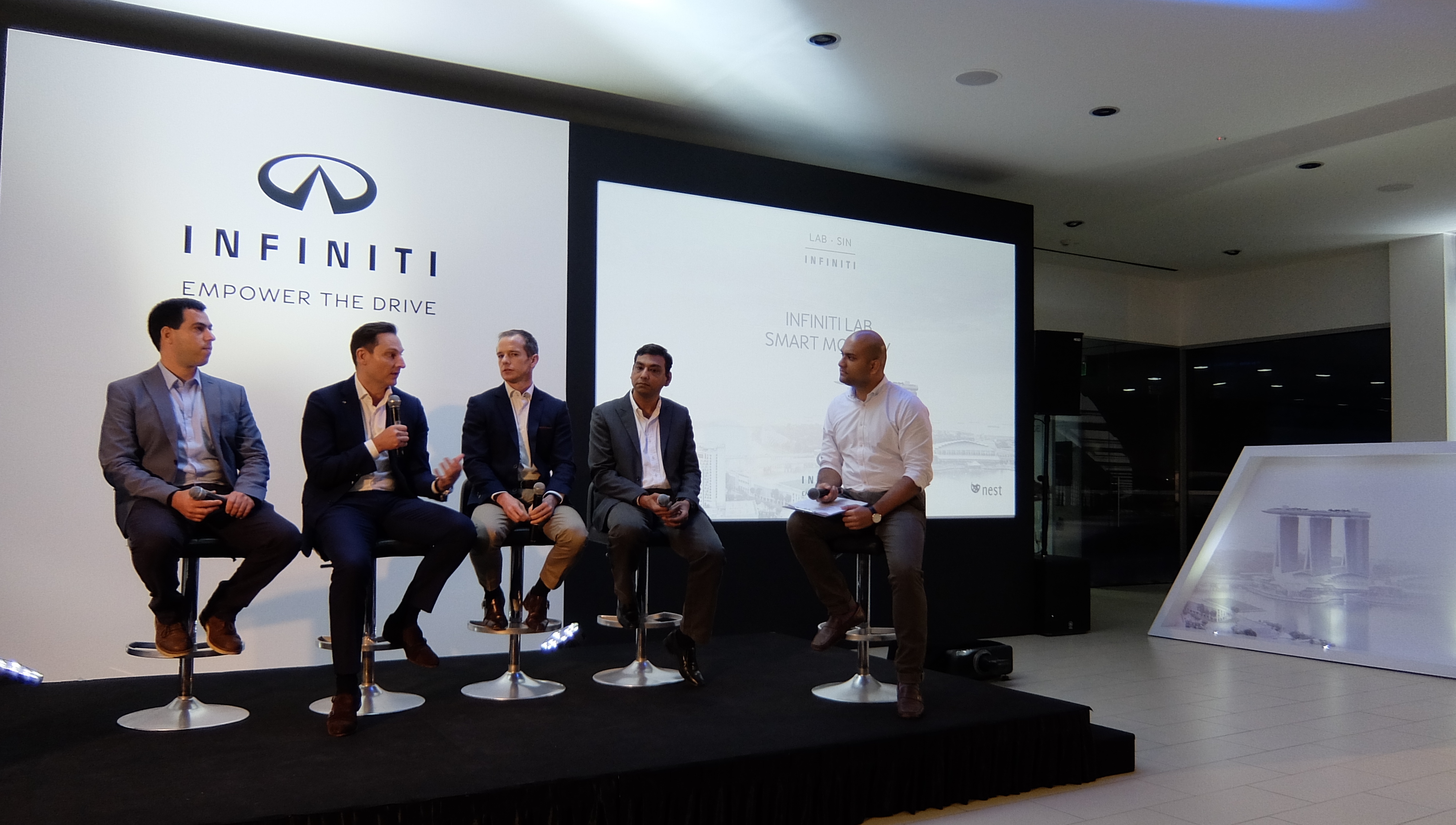
Dane Fisher at the panel.
Thus, a point A to point B mass-market solution for an urban population may not look like a car. There may be a dichotomy between cars driven for passion – like sports cars – and mobility solutions like autonomous pods. This gives rise to two separate opportunities in autonomous driving tech, and the in-car experience.
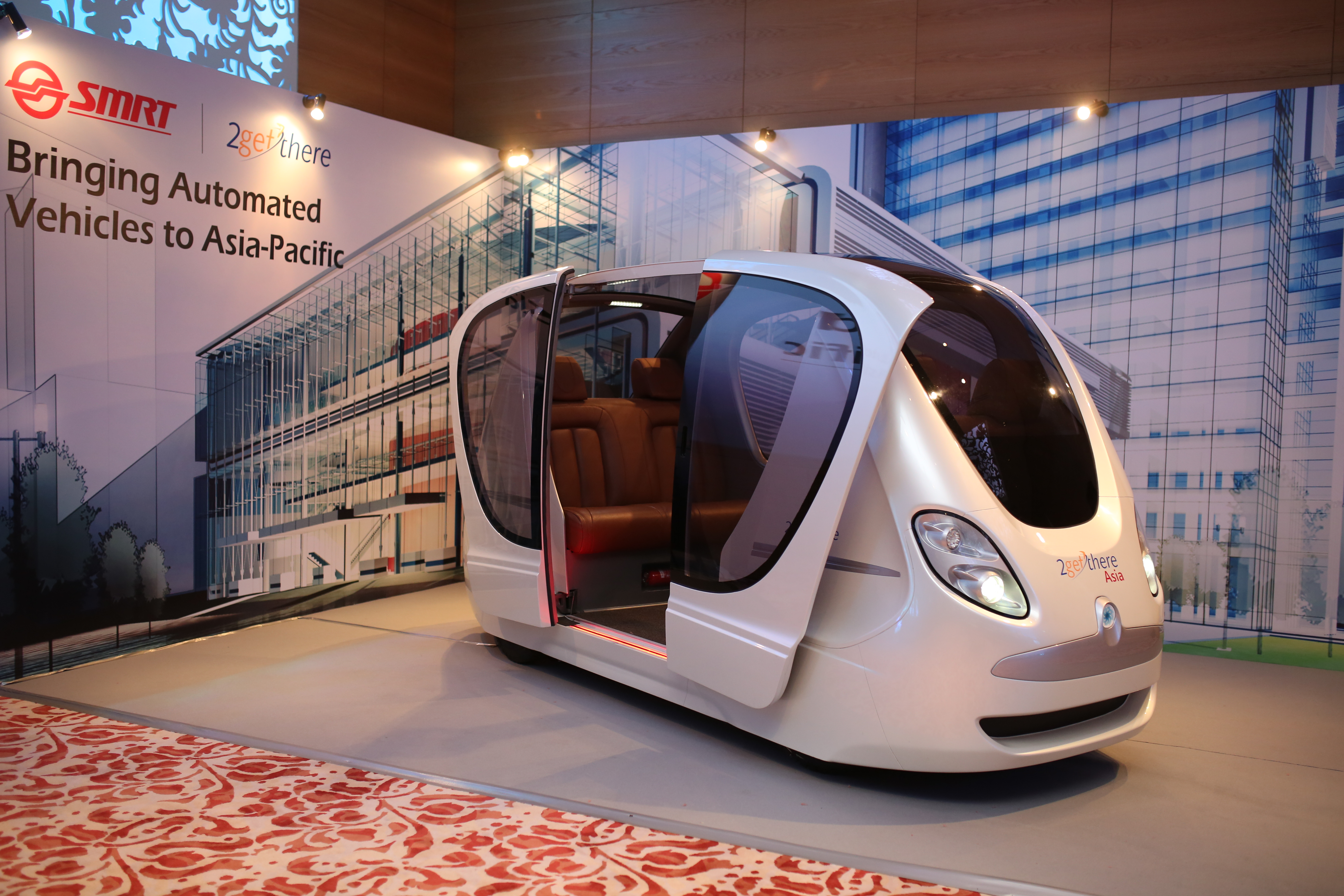
An example of an autonomous pod launched in Singapore. Photo credit: SMRT.
“A car isn’t just a mobility service provider, but also an excitement factor. They can give exhilarating service. People still ride horses even though it’s no longer a transport solution. Like horses, would cars as we know them now be used only in rural environments in the future?” Lawrence Morgan, CEO of Nest, suggests.
Space-efficient and environmentally friendly solutions would also be in demand as cities become more compact. Lawrence believes that energy storage will be one of the main challenges over the next 20 years.
“We’re rapidly solving the clean energy challenge. We will be able to store large volumes of energy both weight efficiently and in small spaces. This will yield mobility solutions which we can’t even imagine right now. They’ll be compact and allow travel to happen in a different manner – perhaps even highways in the air,” adds Lawrence.
In urban markets like Singapore, Dane thinks that premium customers aren’t considered enough by startups. Cars can go green while maintaining a premium driving experience. “There’s a lot of high-net-worth people in Singapore. A premium and efficient solution where people can feel like they are giving back to the environment but still have a top-end experience is a massive opportunity,” he suggests.
In eight weeks’ time, we’ll get to see what INFINITI LAB’s startups have in store for the future of smart mobility and improve our lives, both in the car and on the road.
Stay updated on the go with our mobile app.
Get latest insights with smoother, more personalized experience through TIA mobile app.
Recommended reads
 Digitizing airport operations for faster flights
 Nvidia co-invests $200m in Indonesian AI center amid SEA push
 Indian SaaS startup bags $20m to help businesses manage genAI models
 How Singapore hopes to become a world robotics leader
 Wavemaker-backed WasteX raises $450k to expand biochar solution across Indonesia
 Oracle offers free AI training to 10,000 Singapore students, professionals
 Singaporean celebs test out new startup’s AI avatars
 India to become ‘front office’ of AI revolution: Nvidia CEO
 Tepbac, Vietnam’s answer to eFishery, seeks to raise $20m
 SG-based AI workplace solution raises $1m from Dave McClure, others





Editing by Neha Margosa and Sumit Chakraberty
(And yes, we’re serious about ethics and transparency. More information here.)