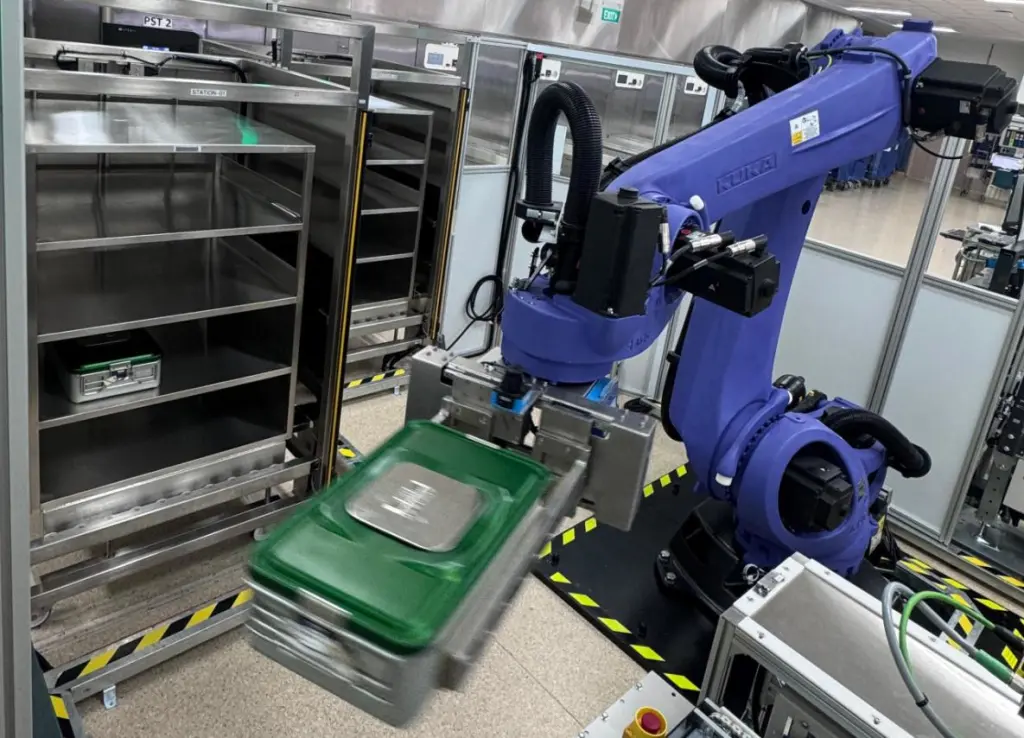
A three-arm robotic system, coupled with four Vertical Carousel Systems, automates the storage and retrieval of instrument sets. / Photo credit: Sengkang General Hospital
Public healthcare facility Sengkang General Hospital is a winner of the inaugural Design AI and Tech Awards, which spotlights innovations by startups, enterprises, and corporations in Singapore.
The demand for healthcare services in Singapore is expected to rise dramatically in the coming years as its population ages rapidly.
By 2030, one in four Singaporeans will be 65 years old or above, according to the Ministry of Health. This places unprecedented pressure on hospitals to deliver faster, safer, and more efficient care.
To meet these challenges head-on, medical institutions in the city-state must embrace innovative solutions that optimize operations and enhance patient and staff well-being.
Sengkang General Hospital (SKH), in particular, has taken a bold leap into the future of healthcare logistics by implementing an Automated Storage and Retrieval System (ASRS) in its Central Sterile Supplies Unit (CSSU).
This system, the first in Singapore’s healthcare sector, is designed to streamline the often labor-intensive process of managing surgical instruments. It also integrates advanced robotic tech with sophisticated software, marking a significant shift from traditional manual methods.
Traditionally, staff were required to perform certain tasks manually, including locating, retrieving, and tracking thousands of surgical instrument sets. This not only risked introducing errors but also strained the workforce.
Such errors could also cause surgery delays and make it difficult to ensure tools remain sterile. The ASRS project aimed to directly tackle these issues.
Robotic system
At the heart of the ASRS lies the integration of several key components. A three-arm robotic machine, coupled with four vertical carousel systems, automates the storage and retrieval of instrument sets.
This setup is powered by a warehouse management system and is seamlessly integrated with the hospital’s existing theater inventory management process as well as its surgical listing database.
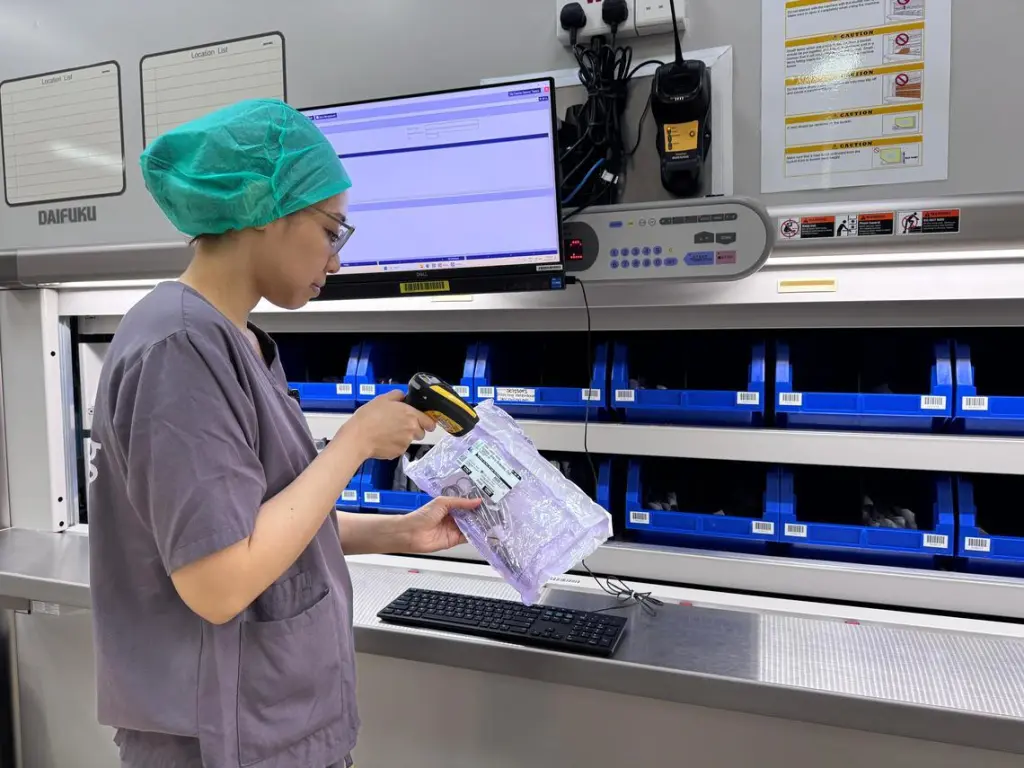
The design thinking process employed in the development of the ASRS was comprehensive and user-centric. / Photo credit: Sengkang General Hospital
As soon as a surgery is scheduled, the ASRS references the listed table codes and surgeon preferences and directs the warehouse management system to pick the most suitable set of instruments. Factors such as expiry dates, stock availability, and the condition of the instrument are considered.
Human-centered approach





Stay updated on the go with our mobile app.
Get latest insights with smoother, more personalized experience through TIA mobile app.