- Insights This article was written by a TIA community member. Insights pieces undergo the same rigorous editorial process that newsroom-produced articles have.
 Tridip Thrizu · · 10 min read
Designing Grab’s food delivery app for motorbike drivers
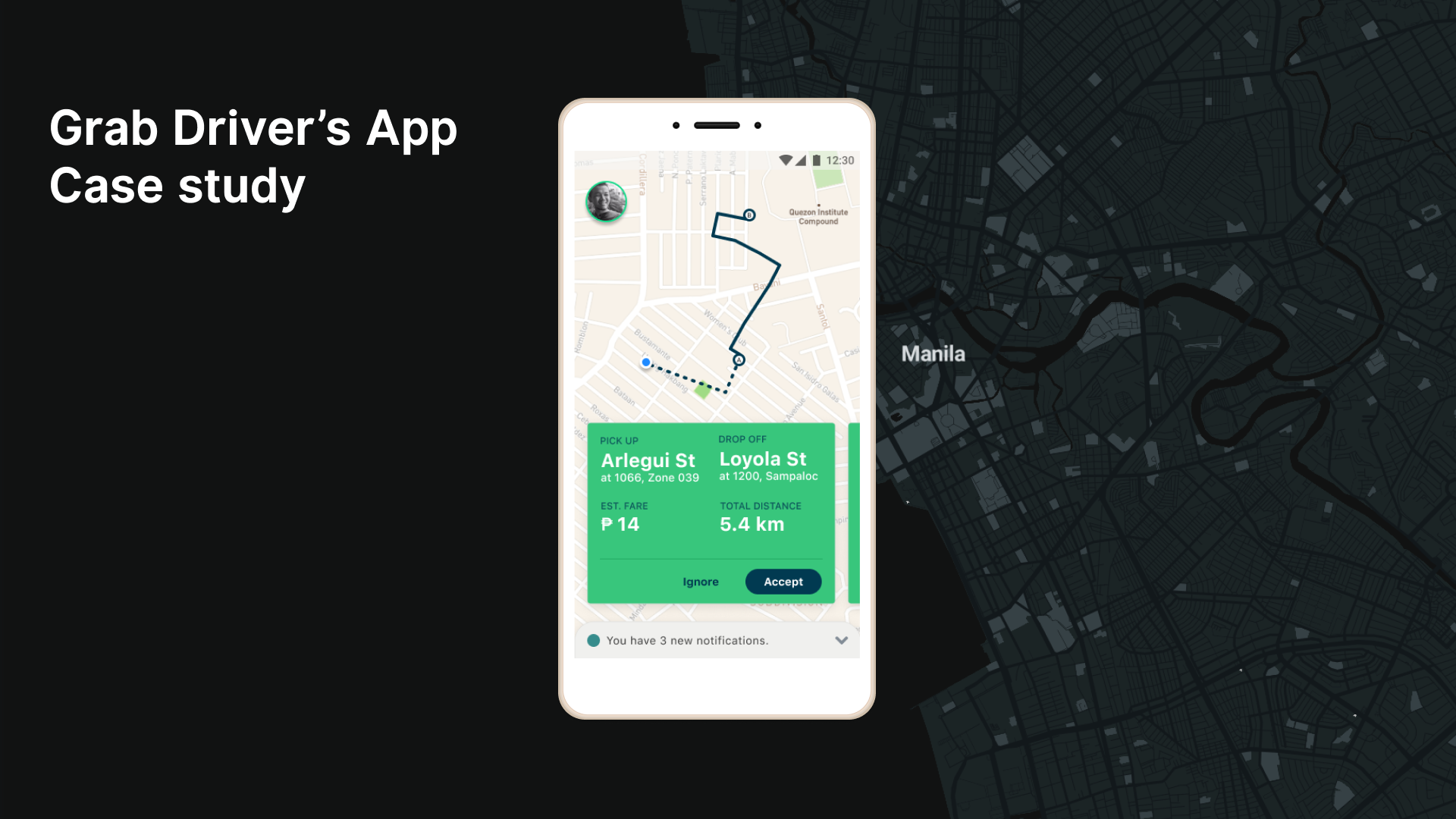
The following case study is part of a design challenge. I am not in any way affiliated with Grab or any other companies/individuals mentioned in this article.
Grab recently introduced its food delivery service in the Philippines. But imagine that you have been tasked to design the app for the company’s motorbike drivers.
Here’s a rough outline of the process:
- A customer orders food delivery through the Grab app.
- The driver receives a job card and has to decide if he/she wants to take it up. Note that the job card has to be flexible to show not just food delivery jobs, but also courier jobs.
- Once the driver accepts the job, he will have to go to the restaurant to pick up the food.
- After picking up the food, the driver will have to deliver it to the customer.
Key deliverables
- A list of assumptions you have and how you would validate these
- Wireframes of the driver app’s end-to-end flow
- A few key screens to showcase the visual design
Platform: Android phone (720 x 1280)
Understanding the task
In order to understand and relate to drivers’ challenges, we also have to understand the different areas of the ecosystem they interact with. The app primarily deals with three aspects: drivers, business owners, and consumers.
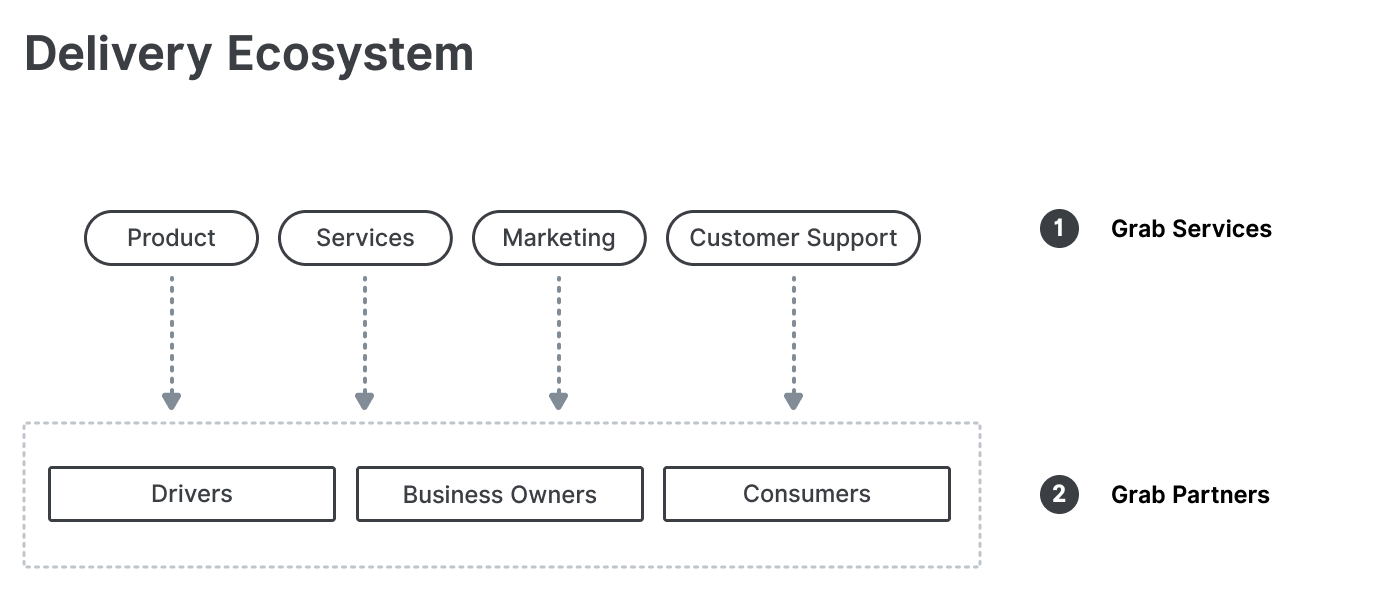
Diagram of Grab delivery ecosystem
For this exercise, I will be focusing on the drivers.
Grab’s food delivery service in the Philippines will most likely start operations in Manila, which has the third-worst traffic in Southeast Asia. So, it makes sense to have two-wheelers to beat the traffic. Designing a driver app specifically for motorbike drivers is an opportunity to improve driver experience and delivery ETA.
Defining the audience
According to the task defined above, we will focus on the driver audience, which can be divided into two groups: first-time enrollees and experienced drivers.
Both have similar motivations but slightly different needs. The former needs more guidance while the latter needs more efficiency.
Understanding user contexts and needs
Storyboard
Problems
User journey and prioritization
Wireframes
Clean, simple, and functional
Conclusion





Stay updated on the go with our mobile app.
Get latest insights with smoother, more personalized experience through TIA mobile app.