
According to Japan Venture Research, privately owned Japanese startups raised a record US$2.5 billion in 2017, compared to US$579 million in 2012. That’s a mere three percent in comparison to the United States, where venture capital funding reached US$84.2 billion in 2017. While venture investment in Japan may be small, it’s certainly on the rise.
Despite its language and cultural barriers, there are several reasons contributing to this growth. Besides being the third largest economy in the world after United States and China, Japan also has the world’s eleventh largest population, making it an attractive country for international players to expand their market.
The Land of the Rising Sun has also been ranked as one of the top countries for entrepreneurship, as the country provides easy access to capital, a skilled labor force, and well-developed infrastructure among others.
Government’s role in fortifying the startup ecosystem in Japan
Japan’s government has been coming up with several initiatives to foster a more vibrant startup scene and to cultivate entrepreneurship in the society. For instance, the J-startup program, launched in June 2018 aims to incubate international startups as well as connect corporates and government agencies to startups.
Furthermore, The Ministry of Economy, Trade and Industry (METI) and the Japan External Trade Organization (JETRO) created a “one-stop shop” at Tokyo for foreign investors, where those seeking to establish a company in Japan are able to process the necessary paperwork. Language assistance is also available for those not well-versed in Japanese.
In addition, to encourage more international entrepreneurs to start their businesses in Japan, the government plans to extend the preparatory period to one year instead of the current six months. This means foreign entrepreneurs have 12 months to live and work in Japan upon submitting a business plan demonstrating their ability to open a business office in the country and secure funding.
An economic survey by the Organisation for Economic Cooperation and Development (OECD) in 2015 found that factors such as high corporate tax and rules restricting the entry of foreign workers deterred international competitors from expanding to Japan. In efforts to revitalize the economy, the effective corporate tax rate was reduced from 34.6 percent in fiscal 2014 to 29.7 percent in fiscal 2018.
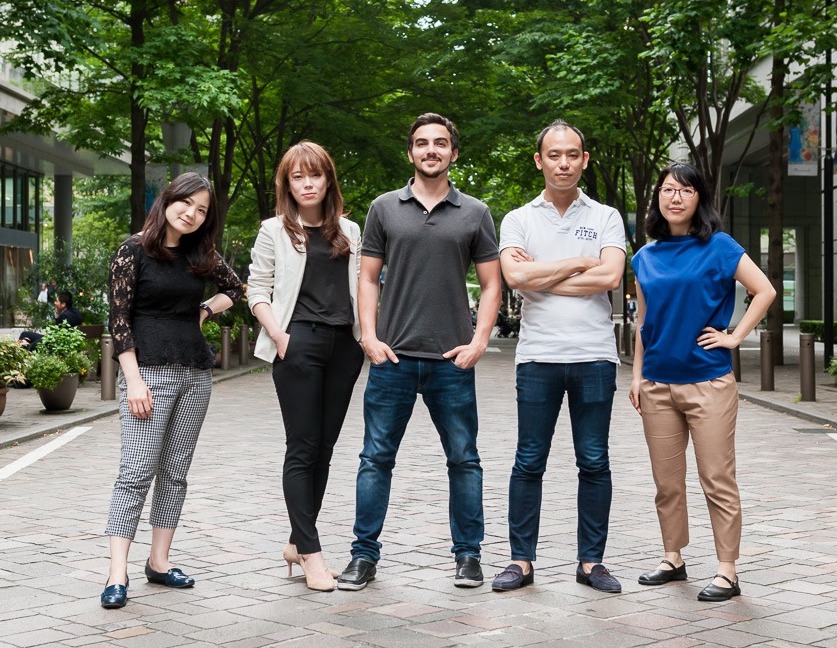
500 Startups’ Japan team. Photo credit: 500 Startups.
Furthermore, in 2017, Japan’s government pumped US$35 million into 500 Startups Japan, marking the first time it has backed a non-Japanese venture capital firm. It also hopes to tap young tech businesses and assist them in growing abroad.
Corporate venture capital in Japan increasing exponentially
The government aren’t the only ones investing their resources in startups. Corporates are also looking to startups whom they have synergies with, with potential opportunities for mergers and acquisitions rather than capital gains.
Investments in verticals such as AI, internet of things (IoT), and robotics have seen tremendous growth worldwide, fueled by spending from vehicle manufacturers. In 2017, venture capital spending by Japanese corporations such as Toyota and Sony reached record levels of US$640 million.
Last year, as part of the initial US$1 billion Toyota committed to fund the Toyota Research Institute, the Japanese corporation spent US$100 million on Toyota AI Ventures, a venture capital subsidiary focusing on startup tech companies. The fund was used for investments towards industries such as AI, robotics, autonomous vehicles and data and cloud technology.
In 2016, Sony started the Sony Innovation Fund, a US$90 million corporate venture which has so far invested in 28 startups in robotics and AI.
That’s not all. Earlier this year, the world’s largest automaker, Renault–Nissan–Mitsubishi, launched Alliance Ventures, a US$1 billion corporate venture capital fund to focus on investments in “new mobility” including autonomous systems, network connectivity and AI.
While Japan may not be the easiest place to be a startup due to factors such as language barriers and different cultures for non-Japanese, its thriving venture investment and opportunities of startup-corporate collaborations certainly makes it a bright spot.
Looking to enter the Japan market?
If you’re a startup looking to get in on the action in Japan, we’ve got just the opportunity for you. Tech in Asia Tokyo 2018 happening on September 20 & 21 will play host to over 2,000 startups, corporates, investors, and tech enthusiasts. Look forward to tons of networking opportunities and insights into the local tech ecosystem over the two days!
Get in on the action with just a conference pass – from now till 2 September, you’ll be able to score 10 percent off (code: tiatokyo10), which means you’ll save up to JPY6,900 (ie. approximately USD62).

Gain more visibility for your startup by exhibiting at #tiatokyo2018
Looking to expand your business into Japan? By exhibiting at Startup Factory, you’ll be able to meet 2,000 tech enthusiasts, investors and potential partners.
It’ll just take five minutes to register for your booth. If you’re looking to score a good deal, simply apply by 26 August to enjoy 10 percent (ie. JPY4,400, approximately USD40) off your booth package.
Each startup exhibition booth package costs JPY44,000 before discount, and comes with a one-day exhibition booth plus two exhibitor passes.
Converted from Japanese Yen. Rate: US$1 = ¥109.87


Stay updated on the go with our mobile app.
Get latest insights with smoother, more personalized experience through TIA mobile app.
Recommended reads
 Japanese 🍺 startup drinks to $615k seed funding
 The Aspiring Founders Program – Fall 2022
 Y Combinator cuts cohort size by 40% amid market downturn
 GoTo, Xendit backer launches second batch of climate crisis program
 Tech in Asia Conference 2022 – the reunion we’ve been waiting for
 Uncover tomorrow’s tech titans at the Saigon Summit Startup Showcase
 Mastering the art of virtual pitching at our TIA Live event
 Tin Men Capital hits first close of second fund, eyes B2B opportunities
 Can Sociolla’s supporting features take center stage?
 Upturn’s acceleration into venture building





Editing by Cheong Hui Min
(And yes, we’re serious about ethics and transparency. More information here.)







📅 Upcoming Events
22 October 2026
Payoneer x CSPN Summit 2026