- Insights This article was written by a TIA community member. Insights pieces undergo the same rigorous editorial process that newsroom-produced articles have.
 Ofir Dor · · 3 min read
Seafood, fresh milk, adult merchandise: Visiting Alibaba’s Hema supermarket chain
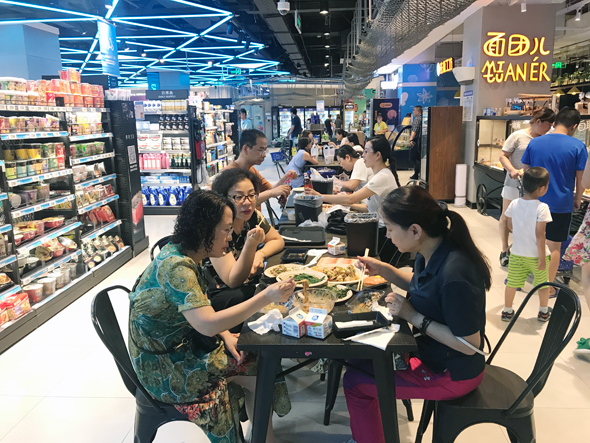
Alibaba’s Hema supermarket
The shopgirl at the sushi counter at the West Beijing Hema Supermarket looked at me with surprise.
“You must download our app to shop here,” she said.
“There is no other means of payment.”
I obeyed, logged in to the store’s complimentary wifi network, and waited for the app to load so I could pay the 68 yuan for my six-piece sushi combination.
The truth is, before you download the Hema app, it is hard to fully comprehend what is so special about this Alibaba-owned and -operated supermarket chain. Prior to downloading the app, I was badgering the sales assistants with questions, such as where the milk is sourced from, not understanding why they looked at me funny.
See, at Hema, there is no need to ask an employee. Each product has a QR code that can be scanned using the app to reveal all the information you could possibly be looking for—from the product origin to reviews, recipes, and other products you could be interested in.
It’s just like Alibaba’s online shopping sites.
New retail
The Hema chain is part of a strategy Alibaba founder and chairman Jack Ma calls “new retail,” the merging of online shopping with the brick-and-mortar shopping experience. China is a global ecommerce leader, but only a small percentage of all commerce in the country takes place online. Most Chinese people still prefer shopping in a physical store.
Hema supermarkets are just one example of the way Alibaba is set to change traditional retail by introducing technology.
In March, Alibaba partnered with Ford to offer the new retail take on car shopping. Guangzhou residents who shop for a Ford vehicle through Alibaba’s online store can pick up their car at an automated carpark, where it is then released without human intervention. Customers can then test-drive the car for three days before deciding whether or not to keep it.
Fashion is the next retail category Alibaba is expected to disrupt. In July, Alibaba launched a pop-up fashion store in Hong Kong, in which technology is used to streamline the shopping process. The store is fitted with “smart mirrors,” which clients can use to log in the items they want to try on. The selected items, in the correct color and size, are automatically sent to the fitting rooms. These smart mirrors also present information about the clothing items and suggest complementing pieces.
What makes the chain special?
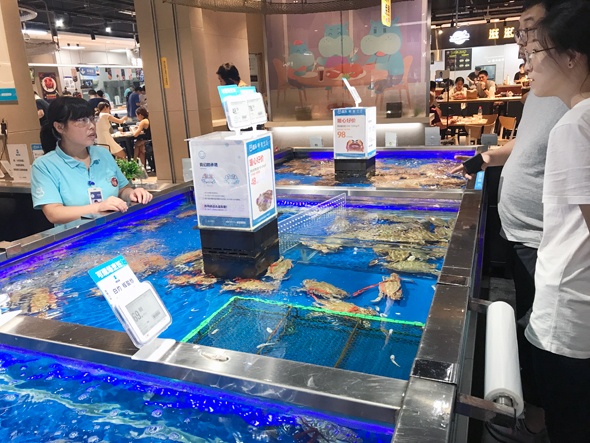
Tanks of fresh seafood





Stay updated on the go with our mobile app.
Get latest insights with smoother, more personalized experience through TIA mobile app.











📅 Upcoming Events
22 October 2026
Payoneer x CSPN Summit 2026