- Premium Content It takes our newsroom weeks - if not months - to investigate and produce stories for our premium content. You can’t find them anywhere else.
 Samreen Ahmad · · 7 min read
Help wanted: Can India’s home services playbook work in SEA?
In much of Asia, on-demand apps are a fact of life: Food delivery and ride-hailing have conquered both India and Southeast Asia.
The same can’t be said for home services. While it has grown into a US$60 billion market in India, it is still lagging behind in Southeast Asia.

Image credit: Ulla
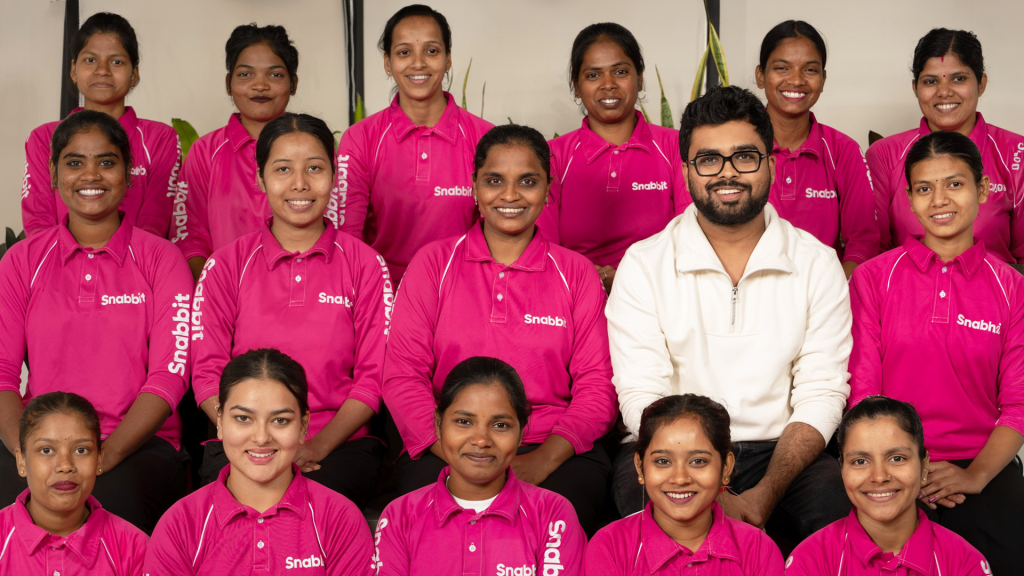
Indian players such as Snabbit and Urban Company are working to make doing household chores as convenient as ordering groceries.
Snabbit raised US$56 million in April and is betting that consumers will increasingly outsource everyday tasks such as cleaning and laundry to service providers accessible through a mobile app.
Meanwhile, Urban Company has evolved from a beauty services marketplace into a publicly listed firm, making its stock market debut in September 2025 with a valuation of around US$1.7 billion.
Southeast Asia has no equivalent players in the space, and the reasons why point to the differences in how the home services sector grew in the two markets. While Indian players are aggressively scaling within the sector, their Southeast Asian counterparts are taking a more targeted approach.
Why didn’t SEA follow?
Such a difference between India and Southeast Asia is notable when food delivery scaled almost identically in both markets.
India has produced giants like Swiggy and Zomato, while Southeast Asia has grown brands like Grab and Foodpanda.
But the home services sector has followed a different trajectory because it is a fundamentally different category, according to investors and founders.
See also: Duopoly decoded: Zomato vs. Swiggy in 8 charts
When a customer orders biryani through an app, the restaurant creates the meal while the delivery platform transports it. The delivery service can only be held accountable if something goes wrong after the order is handed over. Any issues that happen while the food is being prepared is the restaurant’s responsibility, explains Anant Vidur Puri, partner at Bessemer Venture Partners and one of Urban Company’s earliest investors.
Home services are different: The plumber, massage therapist, or cleaner is the product. Service providers must recruit and train workers, standardize service quality, manage customer complaints, and build user trust, Puri adds.
Home (service) economics
The human cost
A vertical approach in SEA?
Stay ahead in Asia’s tech landscape
This is premium content. Subscribe to read the full story.
While on-demand home services startups in India are booming and aiming for speed, players in Southeast Asia are making cautious, targeted bets.
We know this is not ideal. ⌛ Sign up in 20 seconds. Cancel anytime.
Our subscriber community includes professionals from these companies:





Stay updated on the go with our mobile app.
Get latest insights with smoother, more personalized experience through TIA mobile app.










📅 Upcoming Events
22 October 2026
Payoneer x CSPN Summit 2026