Jonathan Chew · · 6 min read
What truly goes into building AI fluency in employees

Put yourself in the shoes of someone who’s been working in a non-tech-related industry for the last two decades.
You’ve worked diligently to establish your own systems and habits, when suddenly, over the course of just a few months, everyone’s talking about how you need to use generative AI tools to stay up to date. There’s a lot of pressure to adopt this new tech, leaving you caught between proven methods and innovations with unfamiliar outcomes.

Photo credit: Shutterstock
You try some tools, but there are so many that it’s difficult to know where to start. Even if you do, a lot of people don’t know how to use the right ones in a way that allows them to learn and apply it to their workflow.
“Most of the time, these tools are just used for one-off tasks and quick inputs,” says Felicia Tan, director of Tribe Academy, which offers training programs for in-demand digital skills. “Additionally, a lot of informational content about generative AI isn’t specific to industries or job roles, so it may not offer the targeted, practical guidance that specialists need.”
This leaves you with a superficial understanding of generative AI’s capabilities. In some cases, people may even think that they don’t need any technical skills when using AI-powered tools, and they may underestimate the need for structured learning.
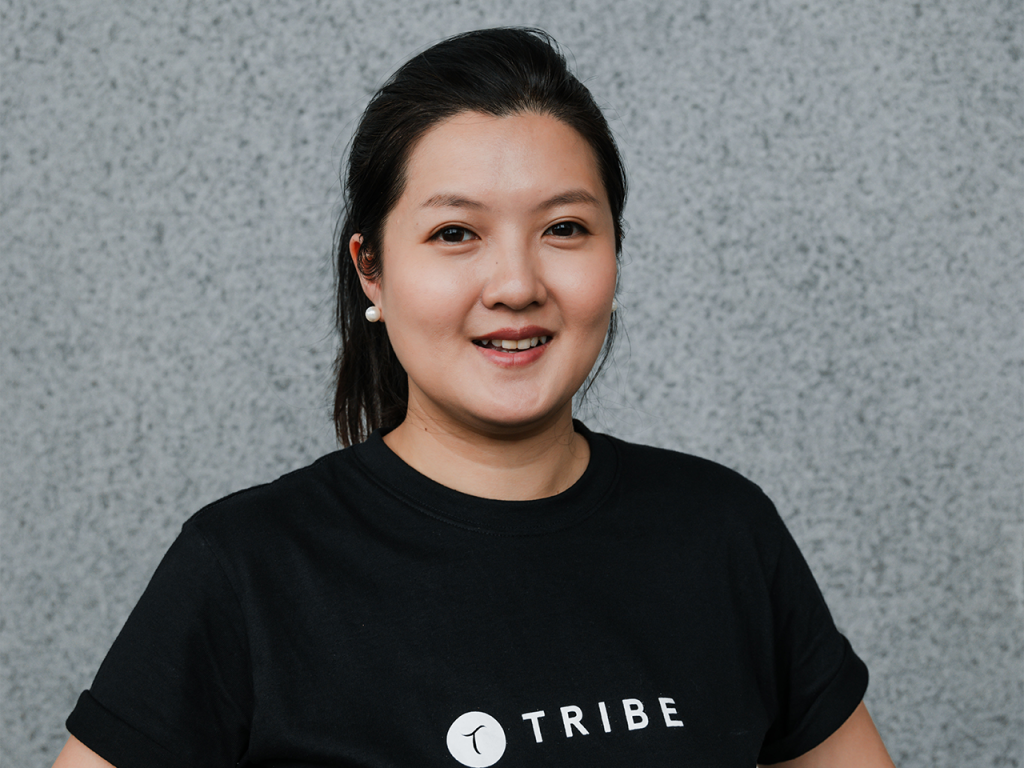
Felicia Tan, director of Tribe Academy / Photo credit: TribeX
“Prompt engineering is a skill. To get the most optimal results, you need to understand how to interact with AI tools,” Tan points out.
Opening opportunities
Companies need to play a critical role in upskilling employees with generative AI. In particular, senior leaders need to ensure that pushing adoption for the tech is done as an entire organization before bringing in learning and development (L&D) teams.
Subsequently, L&D teams need to curate targeted, hands-on training programs and identify industry-relevant courses that align with the company’s goals and employees’ roles. From there, L&D teams can design learning pathways that allow employees to practice and apply their new skills immediately.
For instance, L&D teams can encourage marketers to pick up AI-powered tools such as Napkin to turn text into visuals for sharing on social media. Repeat this for about one to two times a week, and it should be frequent enough for employees to get comfortable with it.

Photo credit: Shutterstock
After that, bring in tools that require a bit more experimentation and skill. For example, marketers can work with models that generate illustrations, such as Midjourney, or tools that can create a style that’s more in line with the company’s brand, such as Adobe Firefly.
“This helps employees build up a strong tempo in learning and improvement in skill level, preparing them to pick up more advanced techniques,” says Tan. “It’s also important to establish a feedback loop so that the organization can improve how it helps employees.”
Having a culture of experimentation encourages employees to explore their own ways to incorporate generative AI into their workflows. “This not only drives individual productivity but also accelerates organizational innovation, as employees collaboratively discover and share best practices,” she adds.
Seeking out a syllabus
Still, offering opportunities for employees to upgrade their skills on their own means that it can often take a while to become proficient, Tan points out.
Given the huge amount of resources available, workers looking to upskill need someone, or some kind of guideline, to help them aggregate these solutions.
Having this aid “reduces the learning curve and saves them time, especially considering that they’re already working full-time jobs,” Tan points out.
One avenue for this is structured training programs. For instance, Tribe Academy offers a 12-week course in using generative AI tools for digital marketing. As part of the program, Tribe Academy curates several solutions that can be applied to areas such as content generation, identification of target personas, and search engine optimization.
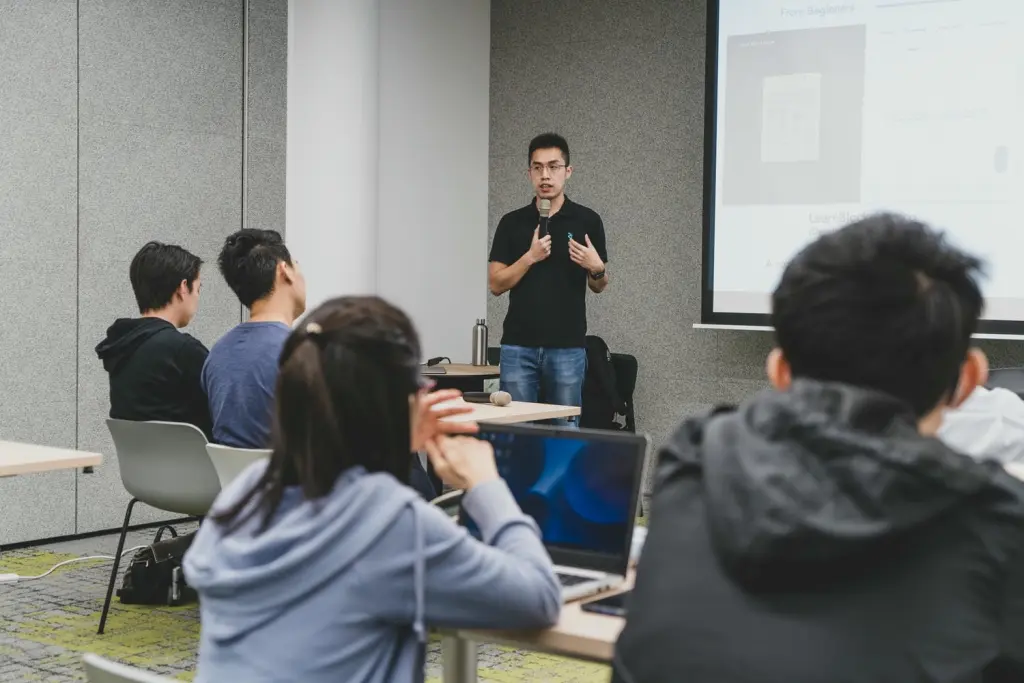
It’s just like going back to school – and don’t forget your homework / Photo credit: TribeX
Beyond aggregating the right tools, another benefit of training programs is having a structured format to practice these newly acquired skills.
“Each week, our course offers mini projects and activities for practical, hands-on learning,” Tan explains. “Having the chance to practice empowers learners to implement strategies in real-world scenarios once they graduate.”
A nationwide approach
Last but not least, government initiatives, alongside the efforts of educational institutions, are also important in helping today’s employees upskill with generative AI.
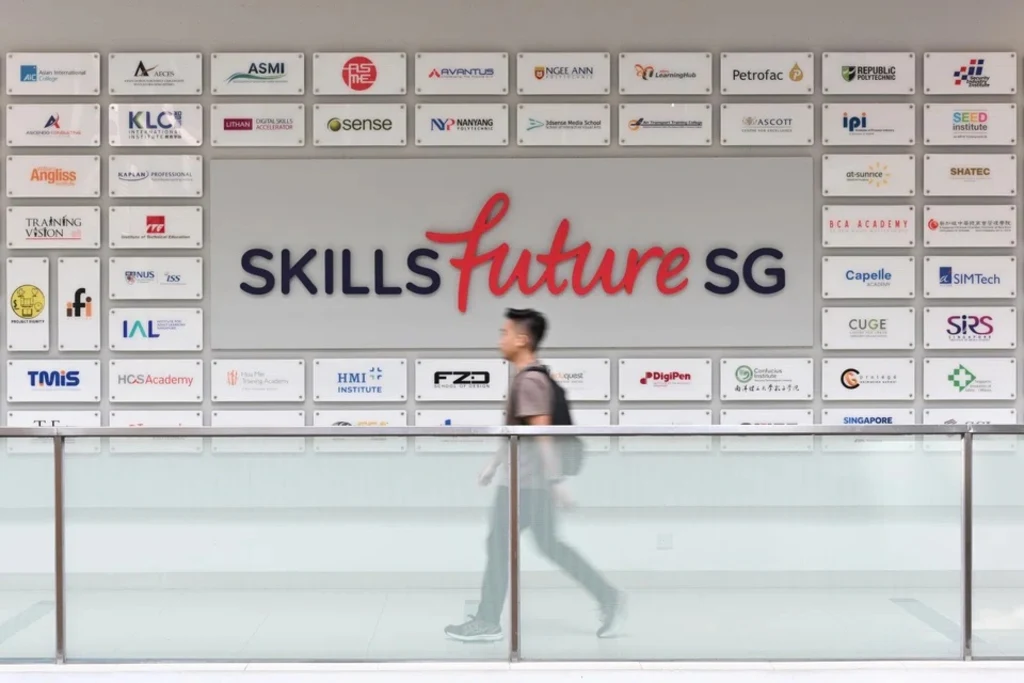
For instance, Singapore’s SkillsFuture Career Transition Programmes (SCTP), which are offered by local academies or institutions, can help mid-career individuals who are looking to acquire industry-relevant skills. . These programs – which includes the course on generative AI and digital marking offered by Tribe Academy – aim to improve attendees’ employability and open opportunities for them to pivot to new sectors or roles.
Some SCTP courses, such as Tribe Academy’s, come with a career coach who gives participants advice. This helps them capitalize on new career opportunities – Tan points out that the ideal end point for the courses is to get attendees a related job placement.

Photo credit: Shutterstock
These courses also alleviate cost concerns, which could be a hurdle for the average full-time worker. Under the SCTP, fees for courses like Tribe Academy’s are subsidized for up to 95%, depending on whether attendees meet certain criteria.
Further, eligible Singaporeans can use the SkillsFuture Level-up Programme – a part of SkillsFuture, Singapore’s upskilling initiative – to obtain a top-up of S$4,000 (US$3,000) to offset the remaining fees for qualified courses. Tribe Academy’s course falls under this as well.
“Learners should know that there’s help out there given by the government to promote the overall digital push in Singapore and help people stay relevant,” says Tan.
The ideal AI-empowered worker
Tan believes that by combining all of these approaches, people in the workforce will eventually hit an “optimal workflow,” helping the companies they work for reduce costs and improve efficiency, eventually leading to a domino effect as other companies try to catch up.
What exactly is this optimal workflow?
“It’s somebody who doesn’t just take what the AI spits out, but based on which tool they’re using, they know how to take the output critically and fact-check it,” she says.
That means someone who’s able to break down complex problems into clear requests, understand each tool’s unique strengths, and then combine them into a successful workflow, much like a craftsperson selecting the right tools for each task.
Ultimately, AI is like “having a very capable intern,” Tan points out.
“The most skilled AI users won’t be the most technical, but they’ll be good communicators, understanding how to adjust and give clear instructions along the way to get what they need,” she says.
Tribe, an ecosystem builder in Singapore, runs Tribe Academy, an organization that offers various educational programs in AI, blockchain, and other emerging technologies. To find out more about its GenAI in Digital Marketing course, click here.
This content was produced by Tech in Asia Studios, which connects brands with Asia’s tech community. Learn more about partnering with Tech in Asia Studios.
Stay updated on the go with our mobile app.
Get latest insights with smoother, more personalized experience through TIA mobile app.
Recommended reads
 Building a human capital operating system for students
 The AI talent war in Asia: who’s winning, who’s losing, and why
 Singapore’s hunt for AI stars risks alienating small players
 The myth of the set and forget AI agent
 Code isn’t king: AI reshapes Singapore tech hiring
 AI startup Acceler8 lands backing from A16z Speedrun
 Nvidia CEO urges rethink of corporate structure
 An AI interviewer being built on interview data, not CVs
 AppLovin CPO on how renting AI can be a waiting game




Editing by Winston Zhang and Lorenzo Kyle Subido
(And yes, we’re serious about ethics and transparency. More information here.)