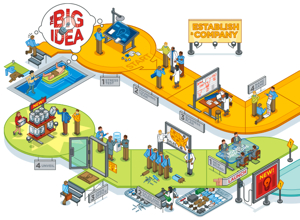
 Thinking of creating your very own high-tech startup? This comprehensive guide (download link here), created by Michael V.Copeland and OM Malik could provide you with the necessarily steps to make you dream come true. The startup process has 4 phases with steps concisely explained.
Although the phases and steps are written in a chronological order, readers shouldn’t take it wholesale. Meaning, the steps can be rearranged to suit your startup’s needs and advancement.
For example, instead of approaching VCs at the early stage, a startup can remain self-funded (beg, steal or borrow) to fund a working product. This is possible for web-based enterprise since starting cost is usually low. If your concept works, you would have more bargaining power when negotiating with investors at a later stage.
Facebook started as a self-funded startup and attracted many investors during its infant stage. It has a working product that proved the concept works. College students love Facebook and web traffic and average time spent were already soaring high back then.
If you’re interested, The Facebook Effect, written by David Kirkpatrick, is another good startup learning resource. The book shares “how the company was created, why it has flourished and where it is going next”. Startup wannabes can certainly pick up several valuable lessons from the Internet giant, which is just 6 years old.





Stay updated on the go with our mobile app.
Get latest insights with smoother, more personalized experience through TIA mobile app.












📅 Upcoming Events
22 October 2026
Payoneer x CSPN Summit 2026