- Premium Content It takes our newsroom weeks - if not months - to investigate and produce stories for our premium content. You can’t find them anywhere else.
 Shihan Fang · · 8 min read
From halal blockchain to dead coin: The tale of an ICO that went south
Lured by the promise of building a global halal blockchain, investors in the cryptocurrency WhatsHalal Token (WHT) are now in a bind: Should they hold on or let go of the dream? Either way, with the token no longer trading on any exchange and the coin wallet no longer accessible, getting their money back is not an option.
The Singapore-based startup began as a halal food delivery business in 2017. But after acquiring a competing service called Halalonclick in 2018, WhatsHalal pivoted into the blockchain space.
With the global halal food market alone estimated to be worth US$1.9 trillion in 2020, the company’s vision of building blockchain infrastructure for the international Muslim community was certainly compelling.

WhatsHalal CEO Azman Bin Mohamad Shariff, also known as Ivan Tan Kim Leng / Photo credit: WhatsHalal
By 2019, WhatsHalal had raised US$2.8 million via an initial coin offering (ICO) and an initial exchange offering (IEO) on Tokenize, a Singapore-based cryptocurrency trading platform. The fledgling company was also one of the 10 startups selected by blockchain-focused Tribe Accelerator, which is backed by the city-state’s government.
The following year, WhatsHalal raised another S$500,000 at a valuation of S$4.5 million via FundedHere, a private equity crowdfunding platform regulated by the Monetary Authority of Singapore; it was also chosen for yet another accelerator – Plug and Play Indonesia.
Then silence.
While WhatsHalal is still registered as a live company in Singapore, both the Facebook page and various Telegram groups operated by the startup have not been updated since June 2020.
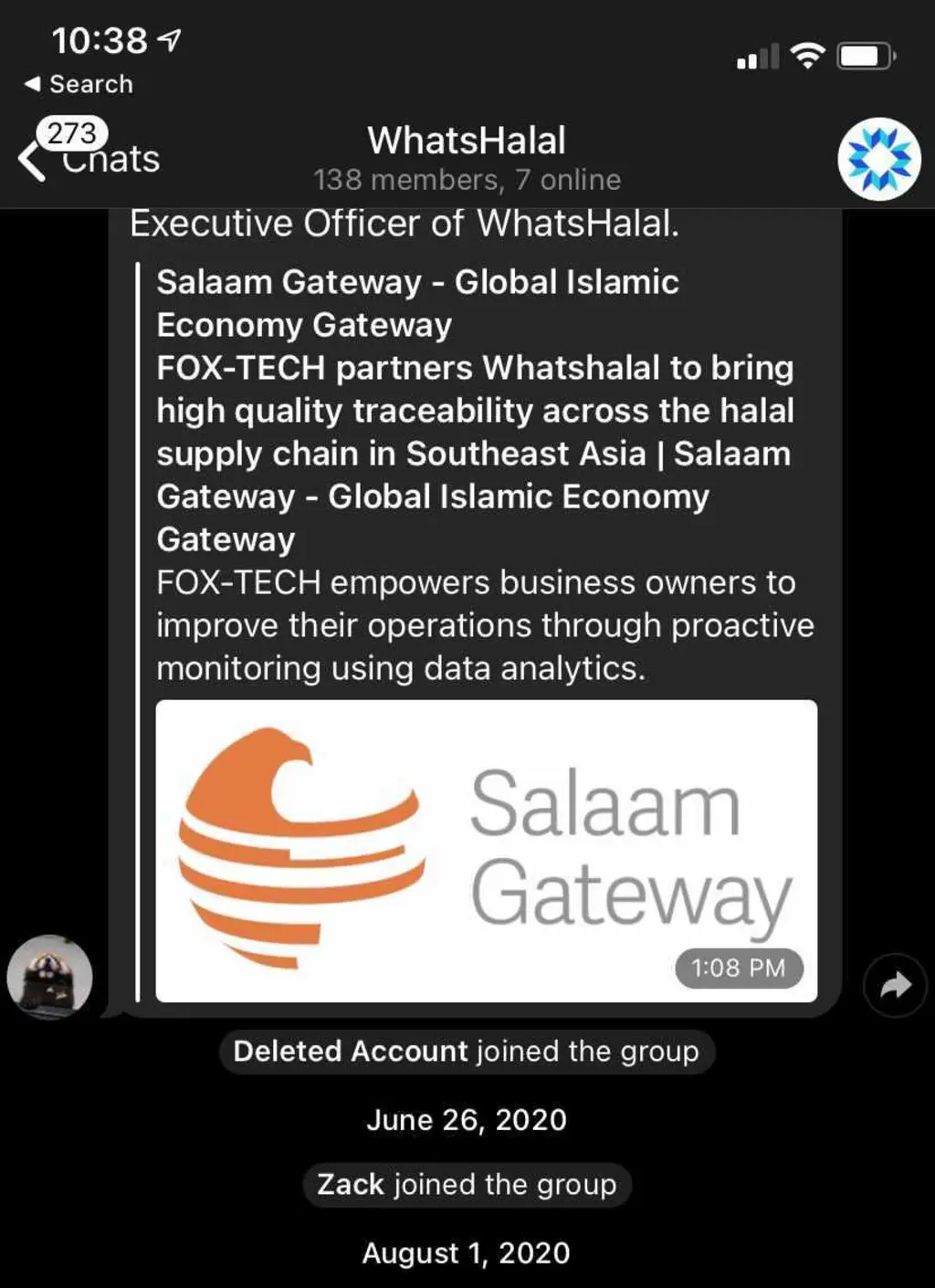
Livid investors and former employees note that online activity appears to have pivoted to an online halal grocery business called OurPasar Essentials – a company that WhatsHalal’s founders set up in July 2020.
Tech in Asia reached out to WhatsHalal for comment, but we have not received any reply.
More than just speculation
The statistics look bleak: In 2018, researchers estimated that scams make up 80% of all ICOs, though these swindles get only 0.3% of the funding. WhatsHalal was certainly not just another pump-and-dump scheme.
According to a white paper written that same year, the startup aimed to participate in the global halal economy by continuing its food delivery services in Singapore and deploying blockchain infrastructure to simplify the halal certification process. It was also looking to create a halal merchant app, enabling Muslim consumers to easily purchase products and services via its digital utility tokens or WHTs.
Owned by a disqualified director
A utility token with no utility
More resources to promote adoption
Stay ahead in Asia’s tech landscape
This is premium content. Subscribe to read the full story.
We take a look at a startup that rode the ICO boom in 2018 but failed to take flight, leaving unpaid employees and squandered opportunities in its wake.
We know this is not ideal. ⌛ Sign up in 20 seconds. Cancel anytime.
Our subscriber community includes professionals from these companies:





Stay updated on the go with our mobile app.
Get latest insights with smoother, more personalized experience through TIA mobile app.