Samantha Cheh · · 6 min read
Tokopedia is playing the long game for Indonesia’s digital future

Indonesia is a country of complex realities and untapped potential. The vast archipelago is home to the fourth-largest population in the world, one that is also young and increasingly middle class. Google’s 2020 e-Conomy SEA report found that Indonesia’s economy could balloon to be worth as much as US$124 billion in the next half decade, driven by an internet-hungry consumer base and a savvy entrepreneurial group.
But inherent issues persist. Many of the 120 million Indonesians who live in rural areas struggle to gain access to basic goods and services. Organizing logistics across the nation’s 17,500 plus islands often requires multiple modes of transportation.
According to Randall Aluwi, the vice president of corporate finance and investments at Indonesian technology company Tokopedia, digitalizing Indonesia will help boost the productivity and overall quality of life of its people. Additionally, it will be an integral part of the effort to support the country’s over 60 million micro, small, and medium-sized enterprises (MSMEs), many of which have been hard hit by the Covid-19 lockdowns.
“Digitalization helps to create new jobs and expand participation in the digital economy to all sections of the population,” Aluwi says. “Democratizing commerce in Indonesia levels the playing field by removing the friction points and improves efficiency and productivity throughout the whole economy for both consumers and businesses.”
Becoming Indonesia’s “everything store”
Tokopedia has been at the forefront of supporting Indonesia’s digitalization efforts since its founding in 2009. In the early years, the company was focused on building its platform into an “everything store” that would help sellers and buyers connect with each other.
“If you want something you can’t find in retail stores, the common question is: ‘Have you checked Tokopedia yet?’” says Aluwi.

Randall Aluwi, vice president of corporate finance and investments at Tokopedia / Photo credit: Tokopedia
But over the past few years, the company has been expanding beyond its customer-to-customer marketplace, offering more digital goods and products that combat unequal access to services and improve consumers’ quality of life. For example, users can pay for their utility bills and taxes and make cell phone top-ups, among other payments, on the platform using just their smartphones. Previously, users would need to line up at ATMs at the end of each month just to make these transactions.
For Aluwi, the transition from offering physical goods to digital ones was a natural extension of the company’s goal to create a “virtuous cycle” for both consumers and businesses. Not only does Tokopedia enable users to shop and get everyday tasks done, it also increases businesses’ access to inventory and customers, allowing them to reach the whole of Indonesia.
“Similarly, on the customer side, now I can get something all the way from Kalimantan that didn’t used to be easily accessible,” Aluwi says.
Bringing mom and pop shops online
More than just individual sellers, Indonesia is home to a large number of mom and pop shops, and Tokopedia is gunning to bring these humble stores into the digital future through its Mitra Tokopedia program.
Through the online-to-offline commerce service, the company has empowered millions of offline merchants in over 500 districts across the archipelago to leverage its platform’s technology and expand their access to inventory.
“Typically, these small storefronts procure their shampoo from one distributor and their soap from another – the costs add up,” Aluwi explains. “We’re able to streamline and centralize the ordering process, cutting costs and helping them become more competitive.”
But the journey comes with its fair share of troubles. According to the Tokopedia executive, the company’s battle can be compared to something he’s struggled with personally: introducing his parents to the incremental benefits of going digital.
Part of the initial challenge of getting users onto Tokopedia’s marketplace was breaking through their inherent distrust of transacting online. “Would a seller actually ship the goods?” – that’s a question that’s come up often.
“If we go back to one of the reasons why Tokopedia was founded, it was because way back when, a lot of online purchases were done through forums and other informal channels,” Aluwi recalls. In order to deal with the issue, Tokopedia introduced the escrow system, where a third party holds and regulates the payment on behalf of a buyer and a seller.
On the merchant side, Tokopedia convinced offline-only merchants that partnering with Mitra Tokopedia was worth the initial growing pains by helping them increase their inventories quickly.
“Historically, a lot of these mom and pop shops have maybe 50 to 100 different products, but [with the service, they] now instantly have 30 extra digital products and services on top of what they already have,” Aluwi notes. “It does take time, but once they get familiar, there’s a compounding effect to using our platform.”
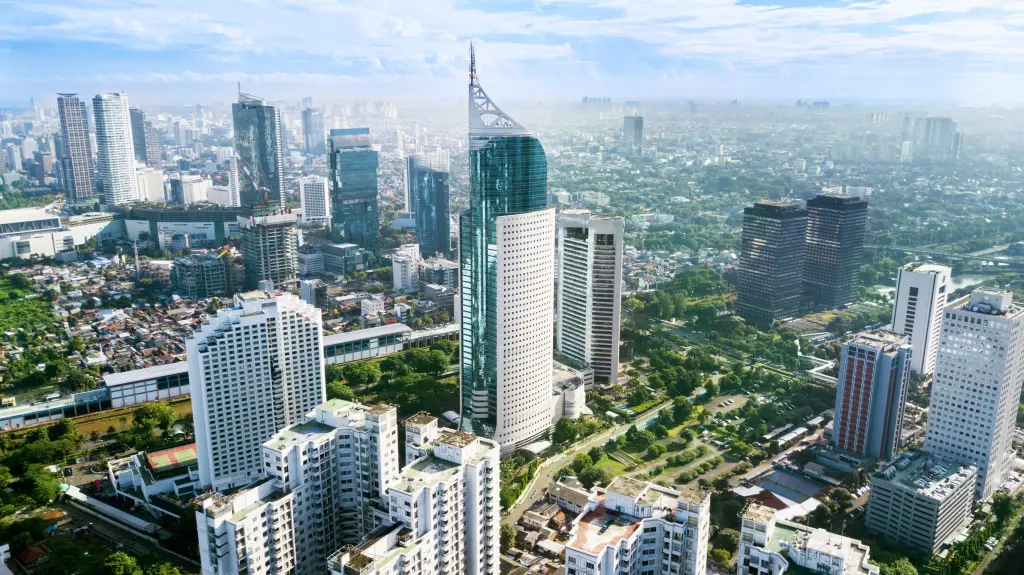
Photo credit: Paulus Rusyanto / 123RF
Amid the Covid-19 lockdowns, Tokopedia’s merchant services were especially important in helping offline businesses deal with the fallout. The pandemic drastically shifted consumption habits, but it also drove significant growth in the company’s merchant base, says Aluwi. From 7 million, the firm’s merchants rose to more than 10 million in less than a year, and 70% of these sellers experienced a median 133% increase in sales volume. This development has no doubt emphasized the need for more robust logistics and payment services.
Tokopedia’s logistics network, for one, includes 13 third-party partners, all of whom help the company provide efficient delivery and fulfilment services to 99% of Indonesia’s geographic districts. What’s more, the company launched its TokoCabang fulfilment service in 2019, which provides warehousing facilities to merchants.
“If you’re a merchant based in Kalimantan but have significant demand in Jakarta, you could store your inventory at one of our partner fulfillment centers in Jakarta,” Aluwi explains.
Tokopedia has also made major investments in its payment services and fintech offerings to enable consumers to pay for goods and services even if they don’t have a bank account. These efforts include enabling digital wallet payments and setting up cash collection points in convenience stores.
Seeding Indonesia’s digital future
Though Indonesia has much potential, a lot of work remains, especially in encouraging financial literacy.
“It’s still in the very early innings in Indonesia, that’s why we curate the products on our platform, taking into account first-time users,” Aluwi says.
Tokopedia, he explains, offers low-risk investment products such as money market mutual funds, which enable consumers to experiment with investing safely and see the results for themselves.
“Only about 20% of the population have bank accounts,” says the exec. “So part of that is how do we build the right level of financial education to leverage these products and to be fiscally responsible?”
As financial services penetration increases, Tokopedia will continue to make sure that users are getting the right level of market education so they won’t mismanage their finances. “We will continue to build, invest, and develop for everyone in the Indonesian market, whether you’re in a Tier 1 city or a Tier 3 city,” Aluwi affirms.
With high smartphone and internet penetration rates, Indonesia is well under way to achieving its true potential. For Tokopedia, China is a good example to follow.
“I think that kind of dynamic is the future – where you can [do just about anything] through your phone. This also drives significant efficiencies across businesses because they recognize that they’re creating opportunities and solutions that streamline the processes for everyone across the board,” he concludes.
Find out more about how Tokopedia’s marketplace and digital product solutions are driving the Indonesian digital economy on its website.
This content was produced by Tech in Asia Studios, which connects brands with Asia’s tech community. Learn more about partnering with Tech in Asia Studios.
Stay updated on the go with our mobile app.
Get latest insights with smoother, more personalized experience through TIA mobile app.
Recommended reads
 Fave names ex-Touch ‘n Go exec as chief product officer
 Banks smiling, startups sweating with Indonesia’s new payment systems underway
 WeLab eyes a ‘pan-Asia franchise’ as digital banking footprint grows
 PayMongo CEO faces misconduct allegations while company struggles
 TikTok Shop has set SEA on fire within months
 Bukalapak, Standard Chartered launch digibank app in Indonesia
 Indonesian agritech firm rakes in $2.5m in seed money to support middlemen
 Indonesia rolls out international QR payments link-up with Thailand
 Can Xendit shrug off growing competition in digital payments?
 Funding Societies swipes right on payments in SEA





Editing by Winston Zhang, Nathaniel Fetalvero, and Jaclyn Tiu
(And yes, we’re serious about ethics and transparency. More information here.)