- Premium Content It takes our newsroom weeks - if not months - to investigate and produce stories for our premium content. You can’t find them anywhere else.
 Gilang Kharisma · · 7 min read
Will cars drive the future of AI? This Chinese company thinks so
This article translates and summarizes an episode of Zhang Xiaojun’s podcast series featuring Yin Qi, the new chairman of StepFun.
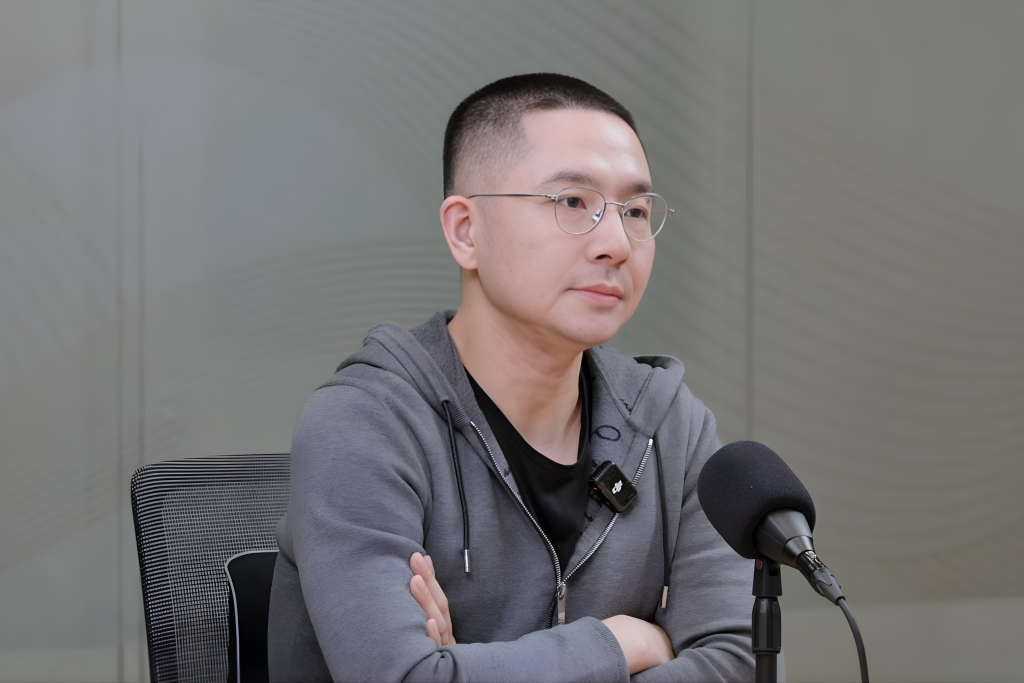
Yin Qi, chairman of StepFun / Photo credit: Xiaojun Podcast
History shows that new tech kills old business plans. Yin Qi, chairman of StepFun, believes the AI boom makes it impossible for software-only startups to win. Companies must then stop focusing only on digital tools and begin putting intelligence into physical machines.
Yin is best known for starting the computer vision company Megvii. He recently became the head of StepFun, a startup that raised over 5 billion yuan (US$723 million) to create AI systems that process text, images, and audio to serve as the brain for smart machines.
The cost of entry
Yin observes that old software business models fail because modern AI is too expensive. This reality changes the landscape in four ways:
- The price is higher: Budgets for launching startups are tiny compared with the billions needed for computing power.
- Software rules do not apply: Business software’s profitable model can’t pay for the high costs of training large models.
- Big companies own the market: Tech giants already have the users and data that new apps need to grow.
- Real value is in the physical world: Success means moving past screens to spaces where software and hardware solve real problems.
Because of these factors, raw technical talent is no longer sufficient. Silicon Valley and Beijing know smart coding isn’t enough to compete at the top. The barrier to entry is now about spending power and one’s ability to lose money for five years.
Yin says, “Doing foundation models means you invest at least 3 billion yuan (US$434 million) a year. … And this investment will be maintained for at least the next three to five years. So basically, it’s a minimum base R&D investment of 10 billion yuan (US$1.44 billion). This is already a very efficient investment.”
This huge financial requirement creates a trap for new companies that merely build simple apps on top of existing models. They face a harsh reality where the cost of finding users is too high.
Since these startups lack their own exclusive data source, they struggle to make their products stand out or implement the improvements needed for survival.
“Applications built on foundation models seem unable to find a data flywheel, nor can they find network effects,” Yin adds. “For startups to build such flywheels… it’s not completely impossible, but it is very, very difficult.”
Using bodies to build real intelligence
This money problem changes how we view intelligence. A mind trapped in a computer server has limits that only a human body can break.
Teaching models with internet text equips them with information, but it does not teach them how the world works. The next big step requires facing the messy reality of the physical world.
Yin explains, “AGI [artificial general intelligence] must be intelligence generated after interacting with the physical world. … I don’t think [AGI] will ultimately be an intelligence architecture purely in the digital world or centered only on language. … This is why we have always believed that combining AI with physical space is the only way to reach final AI/AGI.”
Cars as the entry point for physical AI
New rules for AI products
Moving away from temporary tools
The high cost of distraction
Fixing the plan to find big markets
Stay ahead in Asia’s tech landscape
This is premium content. Subscribe to read the full story.
AI startups must combine software with physical machines to thrive. Yin Qi from StepFun believes that cars – not phones – are the future lab for intelligence.
We know this is not ideal. ⌛ Sign up in 20 seconds. Cancel anytime.
Our subscriber community includes professionals from these companies:





Stay updated on the go with our mobile app.
Get latest insights with smoother, more personalized experience through TIA mobile app.









📅 Upcoming Events
22 October 2026
Payoneer x CSPN Summit 2026