- Premium Content It takes our newsroom weeks - if not months - to investigate and produce stories for our premium content. You can’t find them anywhere else.
 Ardi Wirdana · · 7 min read
Indonesia’s personal finance apps see new tailwinds – and VC funding
When a few Indonesian founders began offering digital ledgers to MSME merchants in 2019, the move turned out to be a masterstroke.
Driven by the country’s rising mobile penetration rate, startups like BukuKas and BukuWarung, who offer bookkeeping apps to businesses, have collectively garnered over 10 million users and raised almost US$150 million in funding – all in the space of just two years.
Now, a new group of founders is hoping to follow that trajectory with a similar product idea. However, they want to target a markedly different segment: the country’s banked and underbanked consumers.
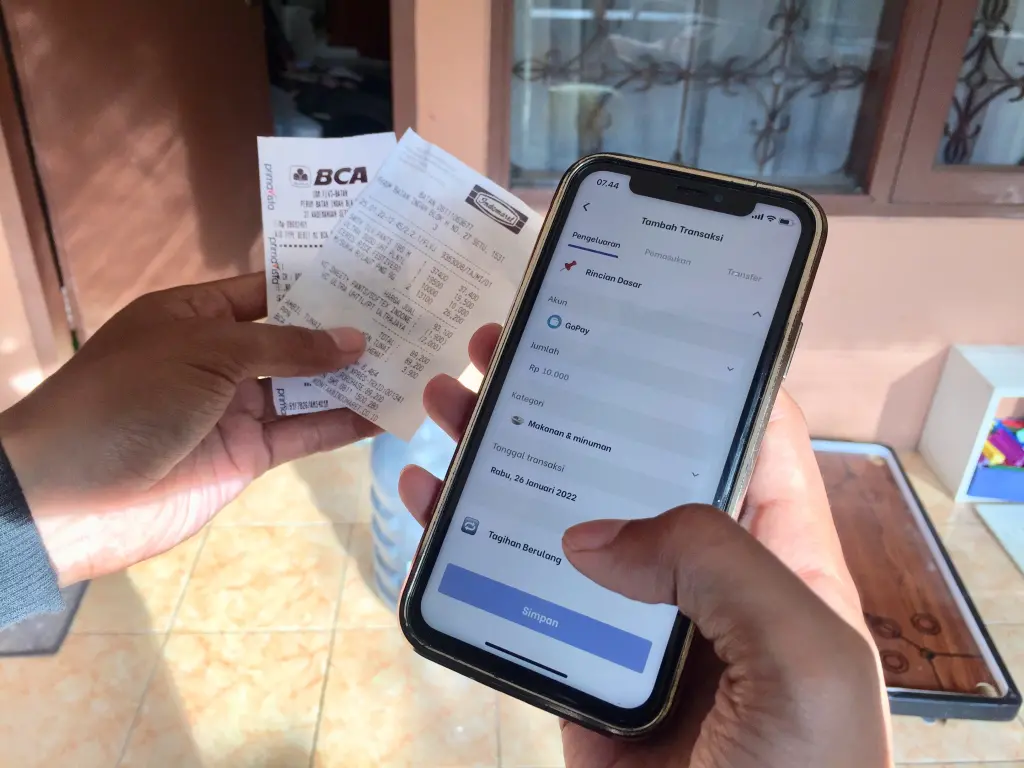
An Indonesian consumer using Finku’s expense tracker feature / Photo credit: Tech in Asia
As is the case with their MSME-focused cousins, these expense tracker apps – or commonly referred to as personal finance management (PFM) platforms – are free to download and use, which could open the door for massive adoption. But whether they can reach the scale of the likes of BukuKas and BukuWarung is open for debate.
One co-founder of an MSME-focused bookkeeping startup in Indonesia, however, believes it could happen.
“They can grow as big, or even bigger, because a lot of consumers are already online due to Covid-19,” says the person, who asked to remain anonymous.
He has so much confidence in the industry that the co-founder has even backed one player in the space.
And he is not the only one who is optimistic: PFM startups have gained the interest of plenty of angel and early-stage investors.
Jakarta-based Sribuu, for example, has received backing from Beenext, as well as from founders of Indonesian startups such as Ayoconnect, Fabelio, Kopi Kenangan, and Kudo. Another startup, Finku, raised funding from Global Founders Capital and 500 Startups last year. Both companies have also been accepted into Y Combinator this year.
Homegrown digital ledger firm Moni, meanwhile, secured funding from VC firm Init 6, and Pina, a personal finance app with an expense tracker feature (also inducted into Y Combinator), has received backing from 1982 Ventures, Prasetia Dwidharma, Oberyn Capital, and iSeed Asia.
Other similar companies on the VC radar include Moneyhub and Midas Financials.
Timely reemergence
PFM apps allow users to record and analyze their spending by tracking the transactions they’ve made at major banks and e-wallets like GoPay and Ovo. This is done either manually or automatically (through system integrations).
Interestingly, the recent crop of PFM startups aren’t the first to enter the field, but their predecessors have not exactly done great.
Crowded corner
Mulling monetization
Stay ahead in Asia’s tech landscape
This is premium content. Subscribe to read the full story.
After the rise of BukuKas and BukuWarung, some startups are hoping to follow the same trajectory by putting a consumer spin on the two firms’ B2B product.
We know this is not ideal. ⌛ Sign up in 20 seconds. Cancel anytime.
Our subscriber community includes professionals from these companies:





Stay updated on the go with our mobile app.
Get latest insights with smoother, more personalized experience through TIA mobile app.