 Tracy Qu · · 3 min read
We tested the 5G network in an ancient Chinese town, and here’s what we found
This article is co-written by Jane Zhang.
A bright new 5G era is dawning – so says a vast array of experts, telecoms carriers, and handset developers. But is reality living up to the early hype?
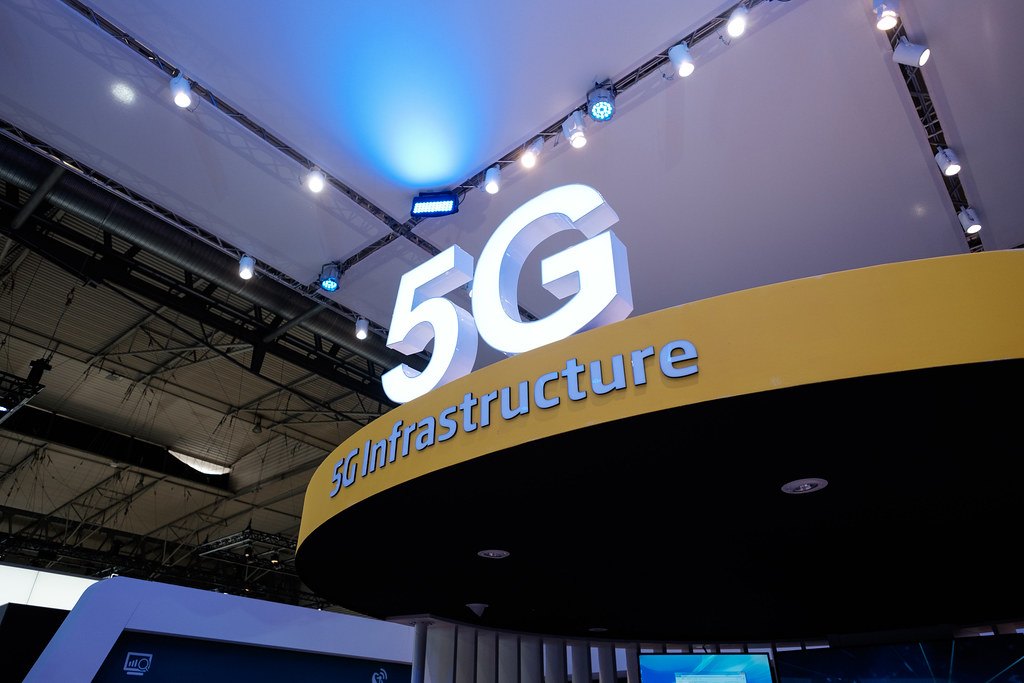
Photo credit: Kārlis Dambrāns
Chinese smartphone makers Huawei, Xiaomi, and Vivo have all rolled out 5G phones in recent months and 5G pre-registrations are close to 10 million in China as the country aims to be a leader in the new network technology.
Before heading to Wuzhen, one of the most famous ancient towns in southeastern China, for the sixth World Internet Conference last week, we learned that the town would be fully covered with a 5G network. We thought this would be an opportune moment to test out the technology, and so we asked Xiaomi if they could ship us a 5G phone for a test.
We borrowed a SIM card from China Unicom’s booth at the exhibition center in Wuzhen, and with our Xiaomi Mi Mix 3 5G handset, using the Speedtest app, we were ready for the test.
By happenstance, Lei Jun, the founder and chief executive of Xiaomi, also decided to test the 5G network in Wuzhen. Using a Xiaomi 9 Pro 5G, the company’s first 5G handset on sale in mainland China and supported by three carriers, Lei did three tests with an average download speed of 431 Mbps – or about 10x faster than the average speed test on our 4G phones in Hong Kong.
“I deliberately tested the 5G coverage [in Wuzhen], what it is like,” Lei said on his public WeChat account last week. “Using 5G is indeed much faster.”
The test of our 5G phone gave an even better result – with average download and upload speeds of 745 Mbps and 53.2 Mbps, respectively. The fastest download speed we reached was a whopping 1,019 Mbps.
China is expected to be a front-runner in the roll-out of commercial 5G services with an estimated 600 million 5G subscribers by 2025, according to trade body GSMA, as Beijing presses ahead with its plans to lead the next-generation wireless technology. Chinese telecoms giant Huawei Technologies is widely considered the market leader in building the network infrastructure, although it has faced setbacks after being placed on a US trade blacklist.
And countries around the world are locked in a race to roll out 5G wireless networks, which offer faster data rates, reduced latency, energy savings, and massive device connectivity. The mobile technology is seen as key to dominance in fields such as factory automation, robotics, and autonomous driving.
But the numbers themselves do not really give a full picture.
Using the 5G network, we downloaded a 45-minute TV show from Chinese video platform Bilibili, and it took less than 10 seconds. Watching shows online was also very smooth – dragging the timeline to the middle of a show worked seamlessly and there was no delay while the data loaded.
We also tried out Bytedance’s popular short-video app Douyin. When we scrolled down the page, new videos popped up and played very smoothly.





Stay updated on the go with our mobile app.
Get latest insights with smoother, more personalized experience through TIA mobile app.











📅 Upcoming Events
22 October 2026
Payoneer x CSPN Summit 2026