- Premium Content It takes our newsroom weeks - if not months - to investigate and produce stories for our premium content. You can’t find them anywhere else.
 Melissa Goh · · 8 min read
BNPL sours in Australia, but will SEA players buck the trend?
Buy now, pay later (BNPL) hit Southeast Asia in full force in early 2021. As the trend grew, it became impossible to ignore.
BNPL firms found their spots alongside Visa and Mastercard at checkout counters as consumers lapped up the service’s easy and near-instant approvals. Venture capital firms poured fuel into the trend.

Photo credit: piter2121 / 123RF
Across the Indian Ocean, the sentiments toward BNPL have grown more somber.
In February 2021, the service hit a fever pitch in Australia, one of the most mature BNPL markets worldwide. The country has more publicly listed BNPL firms than anywhere else in the world.
Ecommerce was thriving as the Covid-19 pandemic accelerated a shift toward online shopping, providing a “one-off big lift” to BNPL firms, Pranav Gundlapalle, an analyst at Sanford C Bernstein covering Pan-Asian banks and fintech firms, tells Tech in Asia.
Generous stimulus packages dished out to households in the US, the largest market of Australia’s leading BNPL firm Afterpay, helped fan the flames.
The exuberance has been short-lived. Less than a year on, confidence in Australian BNPL firms is waning – if share prices are any indication – and prices may have yet hit bottom.
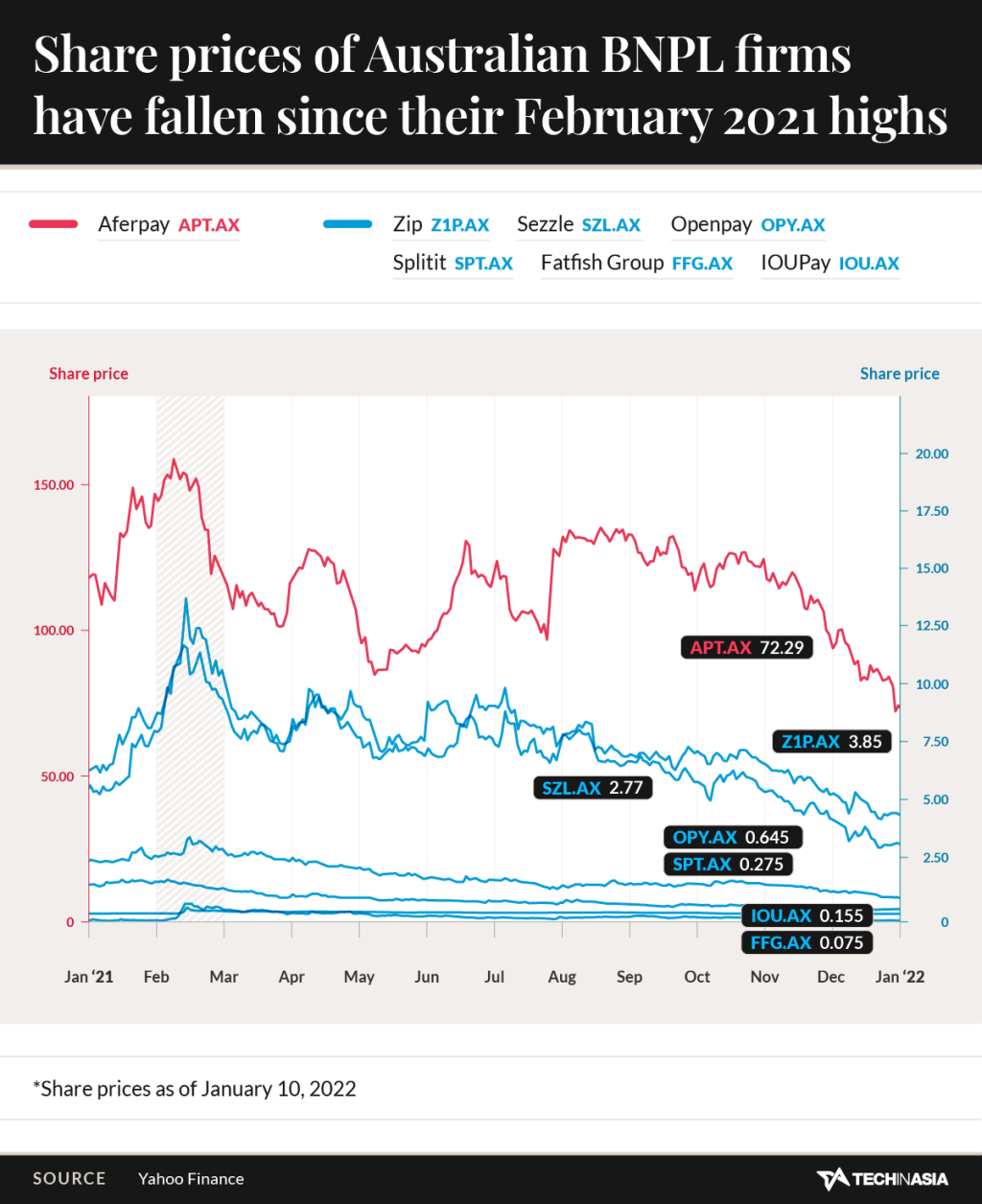
Share prices of Fatfish Group, IOUPay, Sezzle, Openpay, Zip, and Splitit have fallen since their highs in February 2021. / Image credit: Timmy Loen
The decline has been swift. Since their February highs, shares in Afterpay and its rivals – including Zip, Splitit, Openpay, and Fatfish Group – have lost between 50% and 90% of their value on the public market.
This is partly driven by concerns about the model’s defensibility amid high competition and fears that last year’s ecommerce boom may not be sustained.
And with BNPL firms facing more scrutiny from regulators worldwide, Gundlapalle expects downward pressures to persist, especially for standalone players that offer a single product.
“I would say you don’t have a lot of positive catalysts for this space in the medium term,” he warns.
A crowded market
The end of pure BNPL
Firms in Southeast Asia will evolve differently
Stay ahead in Asia’s tech landscape
This is premium content. Subscribe to read the full story.
Australian BNPL stocks have gone into a tailspin since February 2021 as the model’s defensibility and regulatory risks are called into question.
We know this is not ideal. ⌛ Sign up in 20 seconds. Cancel anytime.
Our subscriber community includes professionals from these companies:





Stay updated on the go with our mobile app.
Get latest insights with smoother, more personalized experience through TIA mobile app.









📅 Upcoming Events
22 October 2026
Payoneer x CSPN Summit 2026