- Insights This article was written by a TIA community member. Insights pieces undergo the same rigorous editorial process that newsroom-produced articles have.
 Nick Martin · · 5 min read
In the shadow of tech’s great reckoning, build for profitability
From the collapse of Silicon Valley Bank to mounting job cuts at profitable unicorns in Southeast Asia, the tech sector continues to undergo a great reckoning as its scaling approach comes under fire.
Unhealthy growth practices may have contributed to the financial instability sending shockwaves throughout the industry. However, that same energy could be harnessed to drive a more long-term growth trajectory that prioritizes profitability.
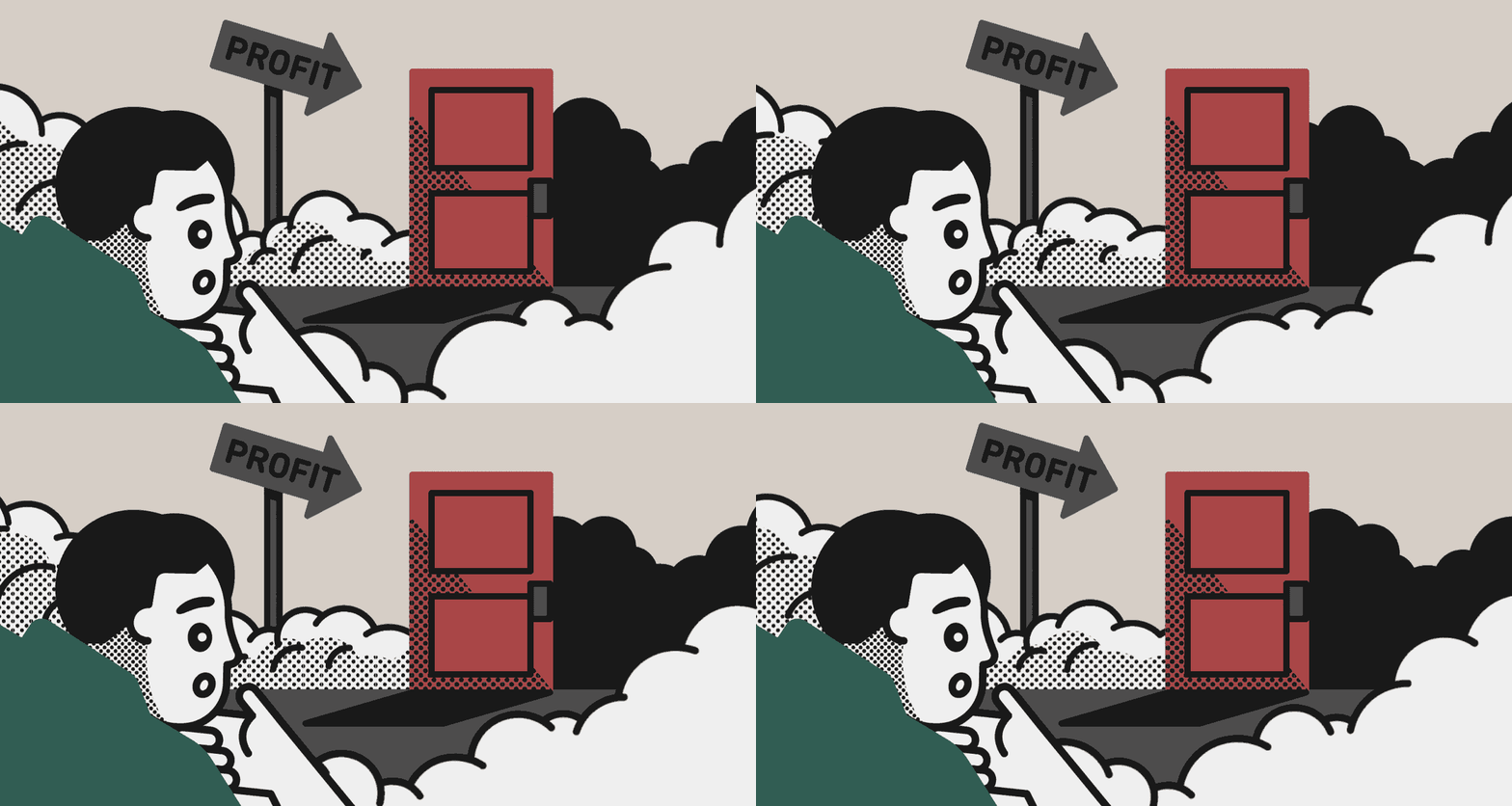
Image credit: Timmy Loen
The startup financing boom
The startup funding boom, characterized by low-interest rates and expansionary monetary policy, created the conditions for the “growth at all costs” model. Large pools of investment pursued disruptive technologies – from ride-hailing to money transfer services – that were rewriting business models.
Venture-backed businesses did not need to prioritize profitability, as money was free, so demand could be manufactured if it did not exist. This led to aggressive customer acquisition, extensive product development, and grand market expansions.
Big loss-making investments in infrastructure, personnel, and marketing made it difficult to achieve profitability at any stage, and many founders were complacent on unit economics.
All that changed in 2022. Investors globally lost US$33 trillion in equity markets. The Nasdaq, with its high concentration of Big Tech stocks, fell by a third. In Southeast Asia, Grab shares dropped to US$3.22 from US$7.13 — nearly a 55% fall in share value.
Similarly, in the private market, both startup valuations and the number of deals started to drop. For instance, leading VC financing law firm Cooley was involved in 428 VC deals worth US$23.3 billion in the final quarter of 2021. In the fourth quarter of 2022, the figure fell to 269 startups that raised a total of US$6.1 billion in venture funding.
A drop in deal flow may not be the death knell that many think it is: In fact, it could mark a new era of efficient startup operations that prioritizes profitable and sustainable growth.
High growth versus sustainable growth
To adapt to these new market conditions, founders are cutting spending. With investment flowing less freely, a loss-making growth strategy is no longer sustainable.
The clearest example of this shift in focus from growth to unit economics is Twitter. After the company bought back all its outstanding shares at US$54.20 each (US$44 billion total), Twitter traded as low as US$31.30. The company was then taken private amid Elon Musk’s claims it was losing US$4 million daily.
Since Musk took over, Twitter employee numbers have shrunk by 70%. While the nature of the cuts has been criticized, the measures have demonstrated that a tech business can still operate while restructuring.

Photo credit: kovop, Shutterstock
The path to profitability
Reasons to be optimistic





Stay updated on the go with our mobile app.
Get latest insights with smoother, more personalized experience through TIA mobile app.











📅 Upcoming Events
22 October 2026
Payoneer x CSPN Summit 2026