This article summarizes an episode of 20VC’s video series featuring Oren Zeev, founding partner of Zeev Ventures.
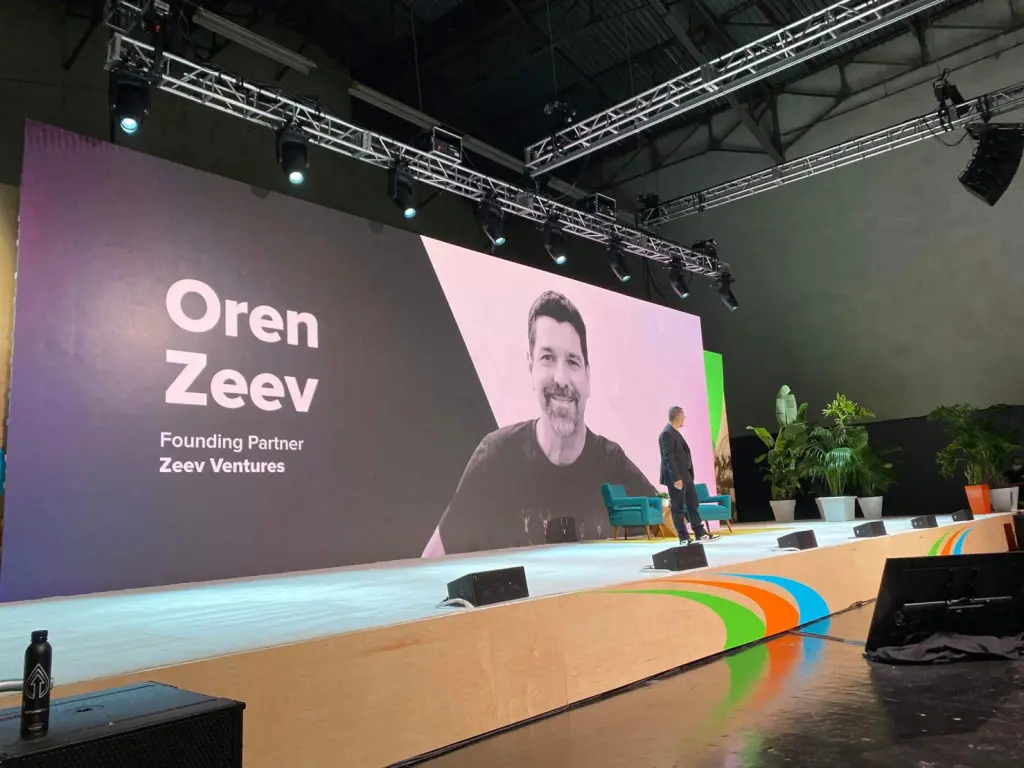
Oren Zeev, founding partner of Zeev Ventures. / Photo credit: LinkedIn
In Silicon Valley, growth is the most important thing. But when founders constantly push for more sales, they can start to care more about appearances than results. Oren Zeev, a solo capitalist, believes this high-pressure situation creates a bad cycle that can ruin even good companies.
Zeev manages over US$2.7 billion through his firm, Zeev Ventures. His investment history includes early and significant stakes in major platforms such as Audible, houzz, Navan, and Tipalti.
The danger of fast growth
Zeev argued that focusing solely on growth is dangerous. Based on his experience, he noted that prioritizing expansion above all else pushes companies to adopt unsustainable practices.
He highlighted certain tricksthat make a company appear successful even when it is not. These misleading numbers can trick investors and founders into thinking everything is fine.
He explains, “[Companies engage in] these circular deals. I’ll buy your product for a million dollars, and you buy my product for a million dollars… no value was created in this transaction, but a perceived value was created.”
The simple power of compounding
While everyone looks for the next big thing, Zeev argues that good finances are better than fast growth.
“I prefer a company that’s growing 2x with very healthy economics,” Zeev says, “[over] a company that’s growing 3x with unhealthy economics… as long as I believe that the market is large enough to continue to sustain this kind of growth.”
Basic mathematics has not changed
This idea is still true with new technology like AI, which many people think will change everything. Zeev does not think basic business rules can be ignored so easily.
He adds, “AI doesn’t change mathematics. Compounding is the same compounding before AI and after AI. Two to the power of five was 32 before AI and after AI. That has not changed.”
The venture market is splitting into two
This careful way of thinking also applies to how he sees the venture capital market. The venture capital industry has long used one main type of business plan. According to Zeev, that time is over. The market is now splitting into two different plans.
Zeev argues, “I think that naturally there is a bifurcation. Either you are one of these platforms like Andreessen, like Sequoia, like Lightspeed Ventures… or you’re going in the opposite direction, solo GPs for example, that you have other advantages.”
Trying to compete with platforms on their terms is a losing game
For small firms, this split means they should avoid competing in areas where they cannot succeed. Zeev uses his own plan as an example of how to find a secure position in the market.
The ‘messy middle’ is disappearing





Stay updated on the go with our mobile app.
Get latest insights with smoother, more personalized experience through TIA mobile app.