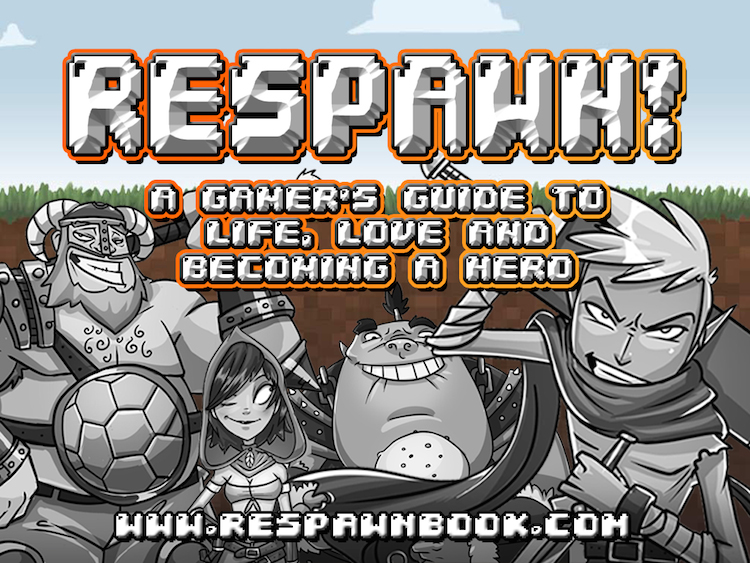
At the start of 2014, we looked at a book called Respawn: A gamer’s guide to life, love and destroying your enemies. It was a work-in-progress by Singaporean Harold Cheng, who by day is a CG artist at a Japanese game company. While Respawn did not meet its Indiegogo campaign’s funding goal, Cheng still published it, giving it a title tweak to become Respawn: A gamer’s guide to life, love and becoming a hero.
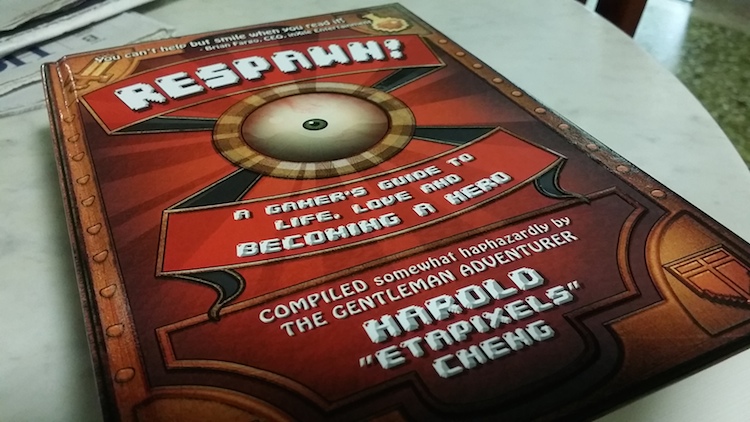
A huge hardback copy of Respawn landed on my desk recently. At 471 pages, it’s hardly a quick read, but it’s full of content designed to guide you through every part of a young adult gamer’s life in terms he or she can understand. Every other page has an illustration from Cheng, and each topic covers all the situations and escapades a millennial would find him or herself in. To sum up the book very simply, it’s a beautifully produced and useful work of art with so much stuff in it you could hurt someone by tossing it at their head.
Surprisingly, Cheng made Respawn a reality while working a full-time day job.
The gentleman adventurer’s adventure
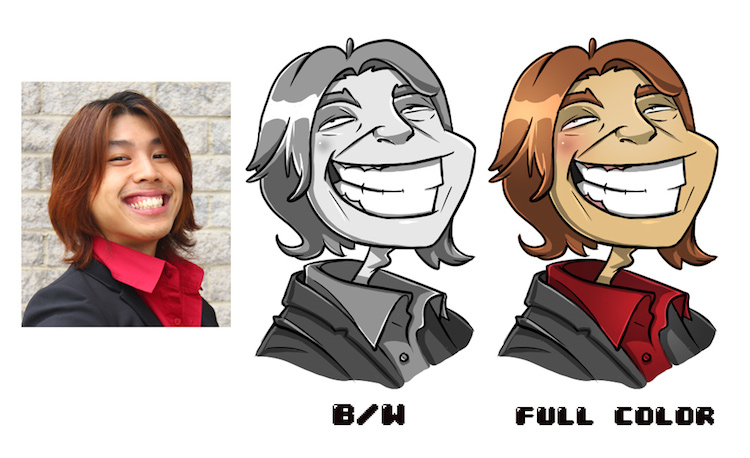
Author Harold Cheng in real life and in the book.
Cheng describes himself as a gentleman adventurer on his book cover – a far cry from the very ordinary CG artist at a Japanese game company we refer to him as. Cheng says it’s because, like other gamers, he has “travelled across worlds to defeat dark lords, evil mayors, and synthetic organic warships.” He is also “always polite to the ladies.”
Otherworldly adventures aside, Respawn took Cheng about two years of hard work before it was finally produced. He says the manuscript was done in a year, and illustrating, formatting, and marketing took up the rest of his time.
“Between work and beating Dark Souls II, things went a little slower than they should have, but it’s just one of those things that you start and know you have to finish,” he says, in the same humor that’s evident throughout the book, and which makes it such an enjoyable read.
I’ve seen self-printed books before, and they can look as cheap as they cost. Not Respawn, though. The hardcover version sent to Indiegogo backers is as premium as they come – and it didn’t come cheap.
Cheng says that while he ended up having to bootstrap most of Respawn’s production, its Indiegogo campaign, which raised about US$1,900 at its conclusion (it aimed for US$8,500), helped cover nearly everything after he cut back on some plans that wouldn’t affect the quality of the book itself. After ditching some marketing and advertising plans, he was able to use the campaign’s funds to cover the following:





Stay updated on the go with our mobile app.
Get latest insights with smoother, more personalized experience through TIA mobile app.









📅 Upcoming Events
22 October 2026
Payoneer x CSPN Summit 2026