- Premium Content It takes our newsroom weeks - if not months - to investigate and produce stories for our premium content. You can’t find them anywhere else.
 Melissa Goh · · 10 min read
Singapore’s digital bank aspirants may face an uphill battle towards profitability
The clamor for digital bank – or digibank – licenses in Singapore is mostly based on hype, at least according to one analyst in the financial sector, who thinks that the applicants’ “business models have not been thought through.”
Around 40 firms and over 20 consortia – and these numbers are changing by the day according to industry watchers – are working towards a Dec. 31 deadline up till which they can submit applications for up to five digital banking licences in the city-state.
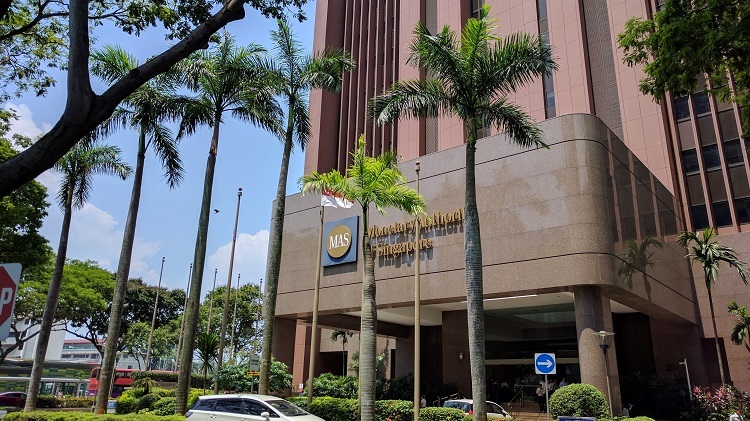
MAS headquarters in central Singapore / Photo credit: Tech in Asia
The Monetary Authority of Singapore will be accepting up to two full digital bank licences and three digital wholesale bank licences, in a development that’s shaping up to be one of the largest shake-ups in Singapore’s banking sector in recent years. Both licenses target non-retail customer segments, but the former is also specifically for retail customer segments while the latter caters to small and medium-sized enterprises, too. The race has so far garnered interest from local banks and fintech firms as well as property telecommunications companies.
Despite the enthusiasm around their potential, digital banks – particularly the fully digital ones – will attract nothing more than “a sliver of deposits,” Cyrus Daruwala, managing director at market intelligence firm International Data Corporation (IDC) tells Tech in Asia. The result, he continues, is that “nothing will change for traditional banks in the next five years.”
Based on stringent sustainability and value proposition criteria laid out by the MAS, IDC estimates that 50% of full digital bank hopefuls “won’t make it through” the applications because sustainability of their business models will become a major issue.
Running an actual bank is complex business, explains Daruwala, who advises banks including DBS, OCBC Bank, and United Overseas Bank on their technology-related initiatives. “In the other 50% who get it, I’d give them a 24-month window, by which time either they will be acquired by a traditional bank, or they will be forced into merging with the larger ecosystem – like a Grab, or an Alibaba – to be profitable.”
Photo credit: 123RF
But some firms in the city-state believe that they’re uniquely positioned to serve an underserved market. “We deliver better tech than financial services firms and better financial services than tech firms,” Kelvin Teo, co-founder and group CEO of Funding Societies says. The peer-to-peer financing platform for SMEs will be applying as part of a consortium.
MatchMove CEO Shailesh Naik tells Tech in Asia that a licence would be a natural extension of the company, which “is already operating like a bank.” The startup, which helps other businesses build sending, spending, and lending capabilities within their mobile apps, is “currently engaging potential consortium partners.”
The applicants might be optimistic about their prospects, but they’ll be up against the following:
- Access to capital will “cripple” a startup. Traditional banks fund themselves in a variety of ways, including external capital and interbank borrowing. Depositors also provide a considerable amount of funds via net interest margin (NIM), or how much a bank earns in loan interests and investments compared to what it pays out to depositors, Daruwala says. With external capital being “very expensive for a startup” and limits placed on retail deposits per individual, a new fully digital bank in Singapore will struggle to raise enough capital to bankroll its investment or loan businesses.
- Onboarding costs for retail customers will be extremely expensive for a digital bank, requiring a “dramatic” advocacy and marketing effort. A survey by CGS-CIMB Securities International on retail customers’ attitudes towards digital bank newcomers found that a majority are unlikely to place more than S$20,000 (US$14,800) in deposits with new digibanks. Furthermore, it will be costly for new digibanks to identify groups of underbanked people in Singapore and create specially tailored products as well as onboard and service the account, Daruwala adds.
- In Singapore, gaps in financial services are small to begin with. Alibaba succeeded in China because of the huge unbanked sector, while Grab and Gojek gained significant ground in Indonesia’s payments sector because the country had a wide-open market of people transacting in cash. Where servicing gaps are sizable and a large untapped market exists – in insurance tech, for example – startups have a better shot at revolutionizing the industry.
In November, several companies dropped their applications, including UK-based fintech firm Revolut, which said that it didn’t make sense to have a banking license here because of the capital requirements.
Hype versus reality
How radically could things change?
What about digital wholesale banks?
Stay ahead in Asia’s tech landscape
This is premium content. Subscribe to read the full story.
The clamor for digibank licenses in Singapore has mostly been based on hype.
We know this is not ideal. ⌛ Sign up in 20 seconds. Cancel anytime.
Our subscriber community includes professionals from these companies:





Stay updated on the go with our mobile app.
Get latest insights with smoother, more personalized experience through TIA mobile app.









📅 Upcoming Events
22 October 2026
Payoneer x CSPN Summit 2026