Wen Chuan Tan · · 4 min read
This app wants to cure insomnia and cut patients’ costs in clinical trials


Image credit: 123rf
While the most talked-about issue related to sleep is how people struggle to stay awake during the day, some actually find it difficult to doze off. According to a 2017 meta-analysis by researchers, 15 percent of general Chinese population suffer from insomnia, with younger adults reporting increased frequency compared to older adults.
Insomnia is a widespread condition, and the causes behind this disorder can range from stress to underlying psychiatric issues. Common treatments tend to involve medication such as sleeping pills, which may induce a variety of side effects, including memory impairment and eventual drug dependency.
What about taking a different approach? Susmed, a medical app developer under the Tokyo Metropolitan Government’s accelerator program X-Hub Tokyo, is doing just that. It provides cognitive behavioral therapy (CBT) to treat insomnia on an app called Yawn, which is still in clinical trials and is only available on iOS at the moment. The startup is putting Yawn on the blockchain – a move that could result in significant savings.
Established in 2015, Susmed – named after the company’s philosophy of “sustainable medicine” – was born out of CEO Taro Ueno’s experience with insomnia patients. “I saw many patients taking so many sleeping pills,” he recounts.
He then worked with fellow professionals in the industry to develop Yawn, which he hopes will revolutionize the treatment of insomnia.
Treatment via an app
CBT has been suggested as a potential treatment for chronic insomnia because it gets to the root of the problem instead of just alleviating symptoms. It’s designed to help patients “identify and replace thoughts and behaviors that cause or worsen sleep problems with habits that promote sound sleep,” according to famed US medical center Mayo Clinic.
In 2016, the American College of Physicians published a guideline recommending that all adult patients with chornic insomnia receive CBT as initial treatment. The report also cited that “data from observational studies suggest that serious adverse effects, such as dementia and fractures, may be associated with hypnotic drugs.”
However, while CBT is a structured process, it is a lengthy one that entails between five to 20 one-on-one sessions with a trained professional. Sessions can last between 30 minutes and an hour, and they can take place either weekly or fortnightly. As such, full treatment can take up to 10 months.
The lack of trained medical professionals to physically conduct CBT and the challenge of getting patients to commit for an extended period of time, however, can hinder its use for insomnia. But by placing CBT on an app like Yawn, such concerns can be addressed.
Yawn carries out CBT sessions based on data entered by the patient, such as sleep status and daytime activities. An AI-powered algorithm then analyzes the patient’s state and delivers personalized advice automatically through a chat program.
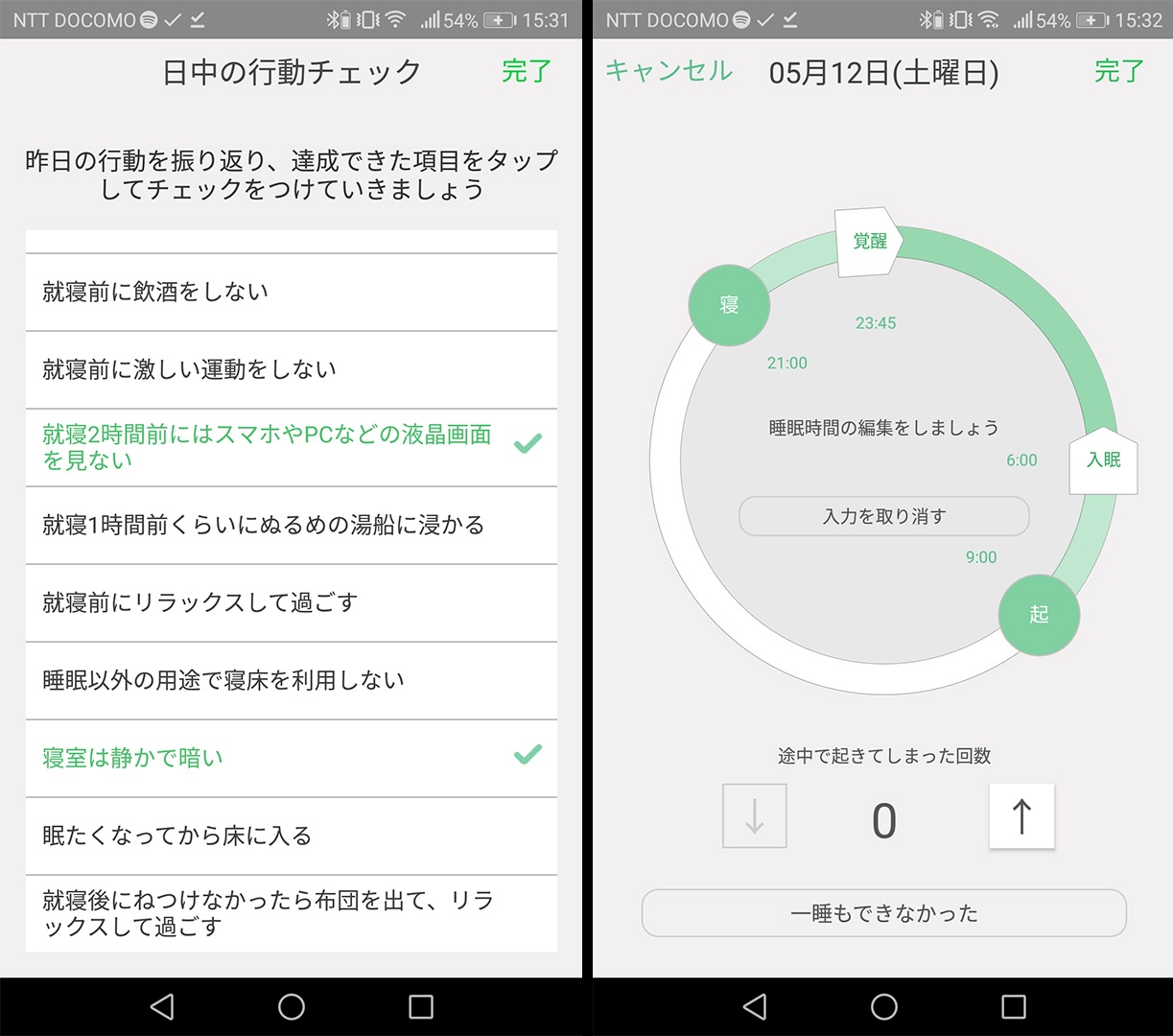
Screenshots of the Yawn app for patients to input their sleep information. Image credit: Susmed
Integrating blockchain into clinical trials
According to a study by the Pharmaceutical Research and Manufacturers of America, clinical trials in the US can cost an average of US$36,500 per patient, depending on their condition. A separate study revealed that administrative staff costs can take from 11 to 29 percent of clinical trial expenditures.
Yawn automatically puts records on the blockchain, so “the correctness of the data can be guaranteed without human resources” in clinical trials, adds Ueno. This reduced need for human intervention plays a big part in driving down costs.
In fact, he claims that placing the app’s clinical trials on the blockchain saves “20 to 50 percent of the costs” that patients incur.
Blockchain’s transparent nature also helps in maintaining Yawn’s data integrity, which means it’s easier to avoid errors in documentation while keeping records tamper-resistant and secure.
Since each transaction is traceable and foolproof, data falsification on Yawn becomes almost impossible. Combined with the fact that blockchain is difficult to hack, both patients and doctors can rest easy, knowing their records are safe.
This kind of secure access is particularly important as clinical trials typically involve several parties, including patients, doctors, governmental bodies, and sponsors. They all want to know how a trial is working out and to cross-reference information when required.
Medical treatment through technology
Currently, Susmed has US$8 million worth of funding from major investors like Sony, Dai-ichi Life Insurance Company, and Beyond Next Ventures. Ueno plans to use the funding to complete the clinical trials, and strengthen the blockchain development team. There are also plans to develop a generic clinical trial system for pharmaceutical companies and academic researchers to use.

Taro Ueno, Susmed’s CEO. Image credit: Susmed
Ueno expects Susmed to go to market globally in 2020, and is already looking forward to use his technology to help patients with other ailments. “We are looking to expand to expand uses of the app to other diseases, especially in psychiatry,” he shares.
The Yawn app is undergoing clinical trials and isn’t available to the public. Find out more about Susmed by visiting its website.
Stay updated on the go with our mobile app.
Get latest insights with smoother, more personalized experience through TIA mobile app.
Recommended reads
 Indonesian AI startup goes global
 Forrest Li on scaling Sea, building smarter bots, and founder grit
 An AI assistant that joins sales calls and scores team skills
 SGX’s CEO says it doesn’t need a unicorn to win
 SMEs want AI too, but not the kind Big Tech is selling
 Oatside’s alt-milk rise hits a profitable gear
 Alibaba’s financial health in 12 charts
 Asia’s telcos bundle AI into mobile plans. Will it pay off?
 M-Daq chases bigger clients as revenue falls, losses grow
 VC tracker: Accel raises US$3.5b, including US$550m for India





Editing by Nathaniel Fetalvero, Eileen C. Ang, and Judith Balea
(And yes, we’re serious about ethics and transparency. More information here.)